
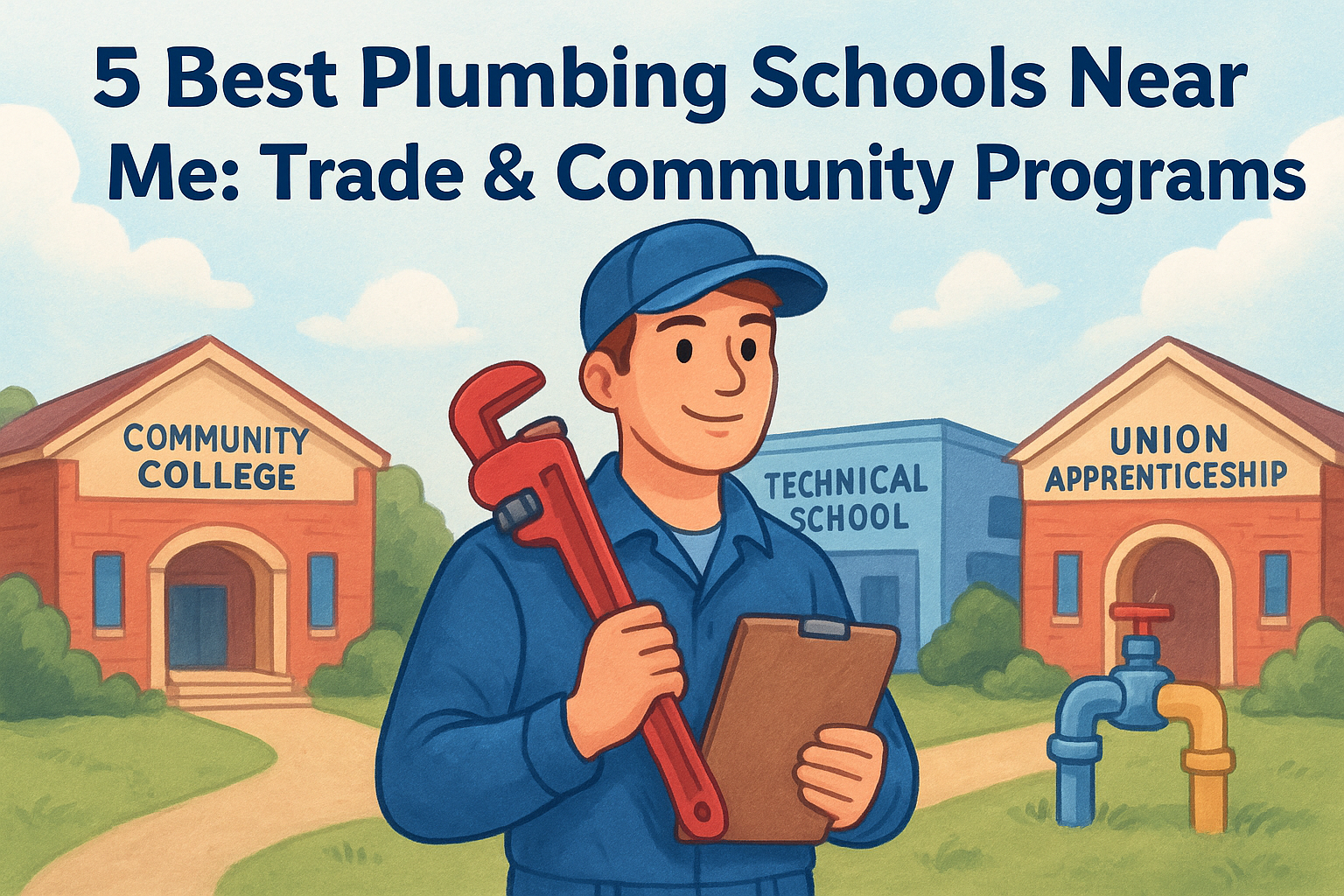
5 Best Plumbing Schools Near Me: Trade & Community Programs
A plumbing career starts with the right education. If you’ve been searching for the best plumbing schools near me, you’re already thinking ahead, proper training matters for passing licensing exams and landing jobs worth keeping.
Here’s the issue: trade schools, community colleges, and apprenticeship programs all promise to get you there, but results vary widely. The best fit depends on your budget, how fast you want to work, and your long-term goals. This article breaks down five types of plumbing programs to consider and what to look for when evaluating options in your area.
At PlumbingJobs.com, we connect trained plumbers with employers across the United States. We see daily how quality education leads to better job offers, and how cutting corners creates setbacks. Use this guide to find a program that sets you up for real career advancement, not just a certificate on the wall.
1. PlumbingJobs.com school and license directory
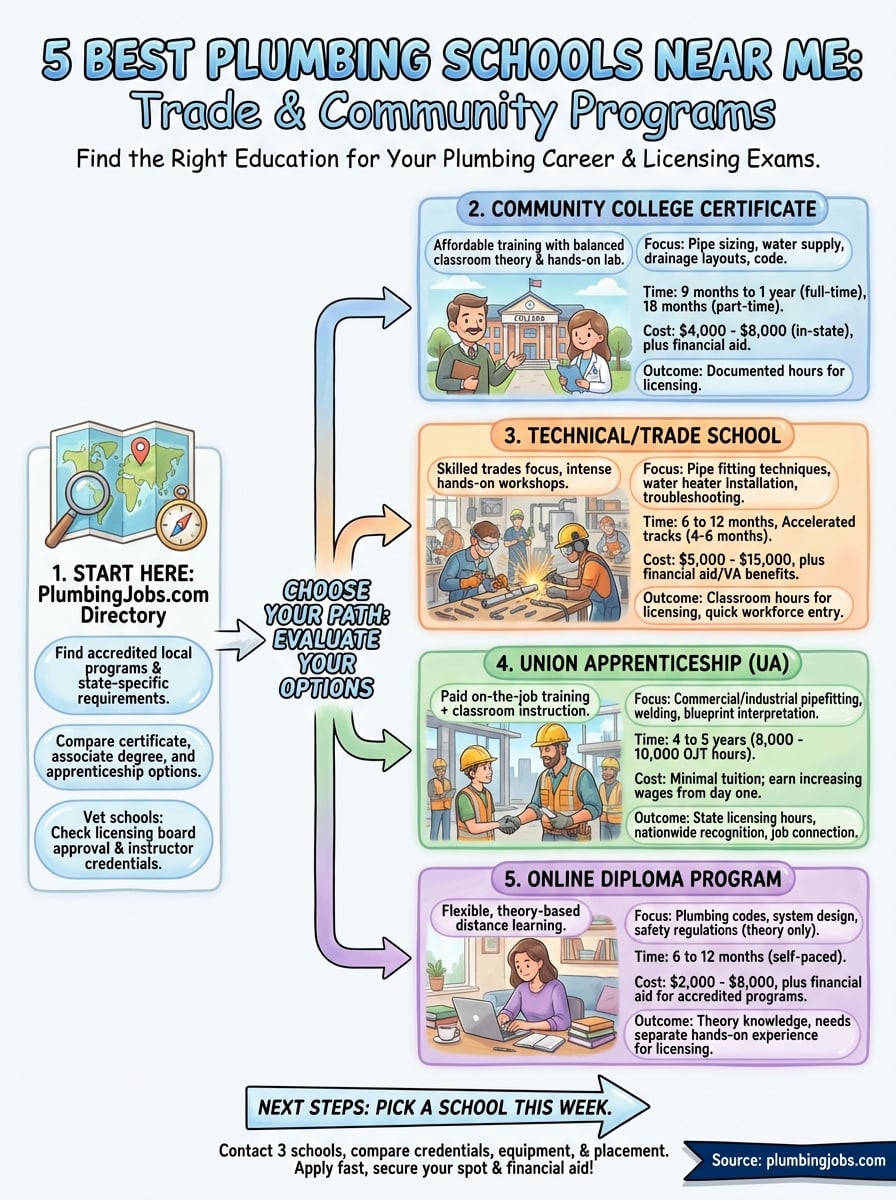
Your first stop should be our free plumbing schools directory, which lists accredited programs by state and city. This resource pulls together training options across all 50 states, so you can compare what’s available near you without jumping between search results. We also include state-specific licensing requirements, which matters when you’re trying to figure out if a school actually prepares you for the local exams you’ll face.
What you can expect to learn
The directory shows you which schools offer certificate programs, associate degrees, and apprenticeship connections in your area. You’ll see contact details, program types, and whether the school focuses on residential service, commercial pipefitting, or both. Most listed schools cover code compliance, fixture installation, pipe materials, drainage systems, and safety protocols that meet industry standards.
“Checking state-approved programs first saves you from wasting tuition on schools that don’t count toward licensure.”
How to vet the program near you
Look for schools that appear on your state licensing board’s approved list, which you can cross-reference through the directory. Call the school directly to ask about instructor credentials, lab equipment quality, and job placement rates for recent graduates. A good program will answer these questions clearly and offer a campus tour.
Typical time to finish
Certificate programs run six months to one year for full-time students. Associate degrees take two years but add general education coursework. Apprenticeships last four to five years but combine classroom hours with paid on-the-job training, so you earn while you learn.
Typical cost and financial aid
Tuition for trade school certificates ranges from $3,000 to $15,000 total, while community college programs cost $4,000 to $8,000 depending on residency. You can apply for federal financial aid through most accredited schools, and some employers offer tuition reimbursement if you commit to working for them after graduation.
How it connects to licensing and jobs
Every state requires documented training hours before you sit for a licensing exam. The directory helps you find schools that meet those hour requirements, so you don’t waste time on programs that leave you short. Once licensed, you can browse our job board to connect with employers actively hiring trained plumbers in your region.
2. Community college plumbing certificate program
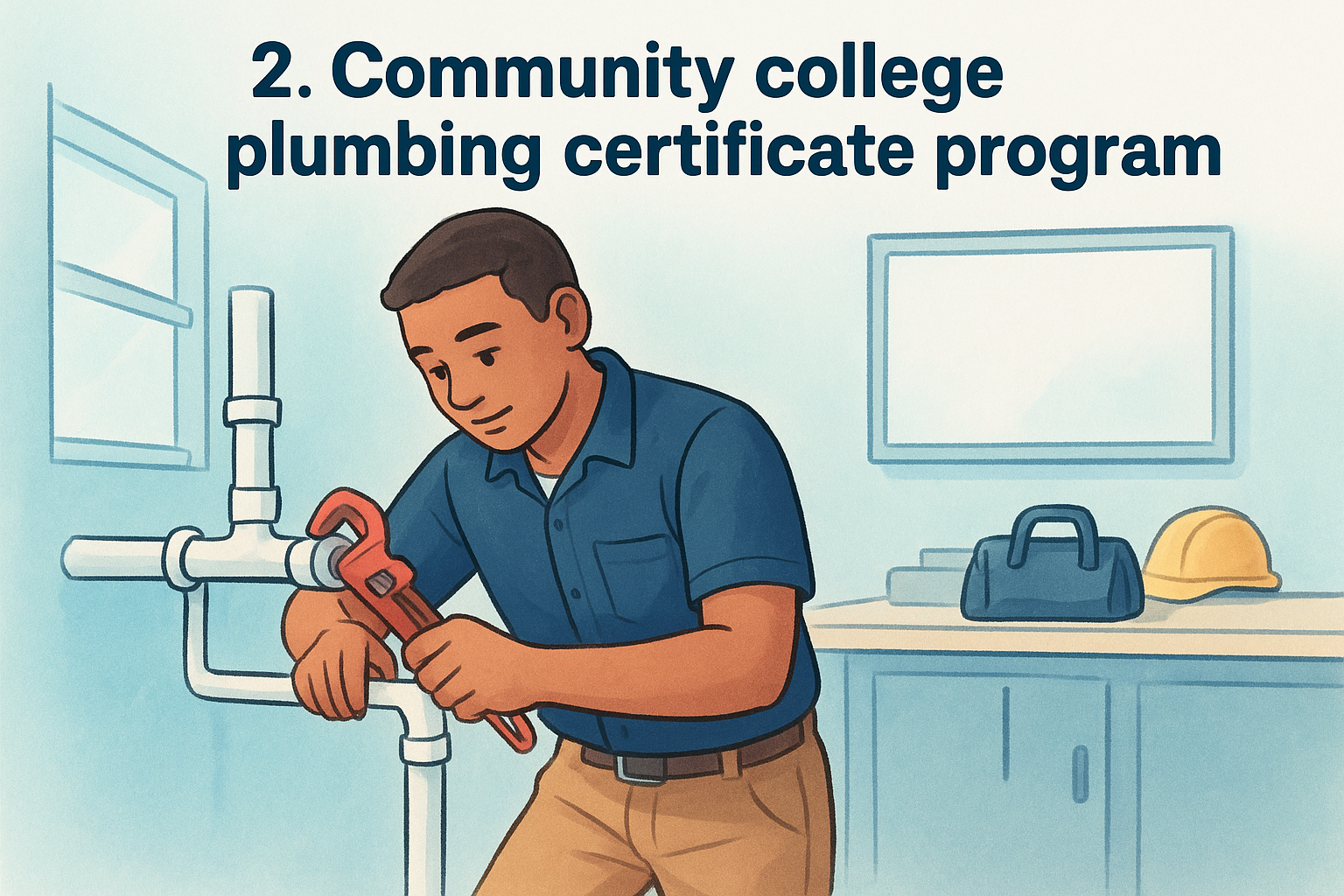
Community colleges rank among the best plumbing schools near me for students who want affordable training that balances classroom theory with hands-on shop time. These programs appeal to those seeking structured education without the higher costs of four-year schools. You’ll find smaller class sizes and instructors who often worked in the field before teaching.
What you can expect to learn
You’ll study pipe sizing, water supply systems, drainage layouts, and local building codes through a mix of lectures and lab work. Most programs include modules on safety regulations, blueprint reading, and basic tool handling. Expect hands-on projects that simulate real jobsite conditions.
How to vet the program near you
Check if the college appears on your state licensing board’s approved list and ask about instructor-to-student ratios during lab sessions. Visit the campus to inspect the workshop equipment and talk to current students about their experience.
Typical time to finish
Certificate programs run nine months to one year for full-time enrollment. Part-time schedules stretch to 18 months but let you keep working while you train.
“Community colleges often partner with local plumbing contractors to place students in apprenticeships before graduation.”
Typical cost and financial aid
Tuition averages $4,000 to $8,000 for in-state residents. You can apply for federal Pell Grants, state aid, and sometimes workforce development scholarships that reduce out-of-pocket costs.
How it connects to licensing and jobs
Completing an accredited program gives you the documented training hours required for most state licensing exams. Graduates can search for entry-level positions on job boards like ours, where employers specifically look for candidates with formal education.
3. Technical college or trade school plumbing program
Technical colleges and dedicated trade schools specialize in skilled trades education without the general education courses required at community colleges. These programs focus entirely on plumbing skills and industry certification, making them efficient options for students who want to enter the workforce quickly. You’ll spend most of your time in workshops rather than lecture halls.
What you can expect to learn
Your curriculum will cover pipe fitting techniques, water heater installation, and troubleshooting common system failures through intensive hands-on practice. Instructors typically bring decades of field experience and teach you the shortcuts professionals actually use on jobsites.
How to vet the program near you
Visit the campus to inspect their workshop tools and pipe inventory before enrolling. Ask about job placement rates and whether local contractors recruit directly from their graduates.
“Trade schools with strong contractor relationships often secure apprenticeships for students before they finish the program.”
Typical time to finish
Most programs run six to twelve months for full-time students. Accelerated tracks compress training into four to six months if you can handle the pace.
Typical cost and financial aid
Tuition ranges from $5,000 to $15,000 depending on program length and location. Many schools accept federal financial aid and VA benefits for eligible students.
How it connects to licensing and jobs
Graduates earn the classroom hours required for state licensing exams. Your completed certificate helps you stand out when applying to positions listed on job boards like ours.
4. United Association plumbing apprenticeship
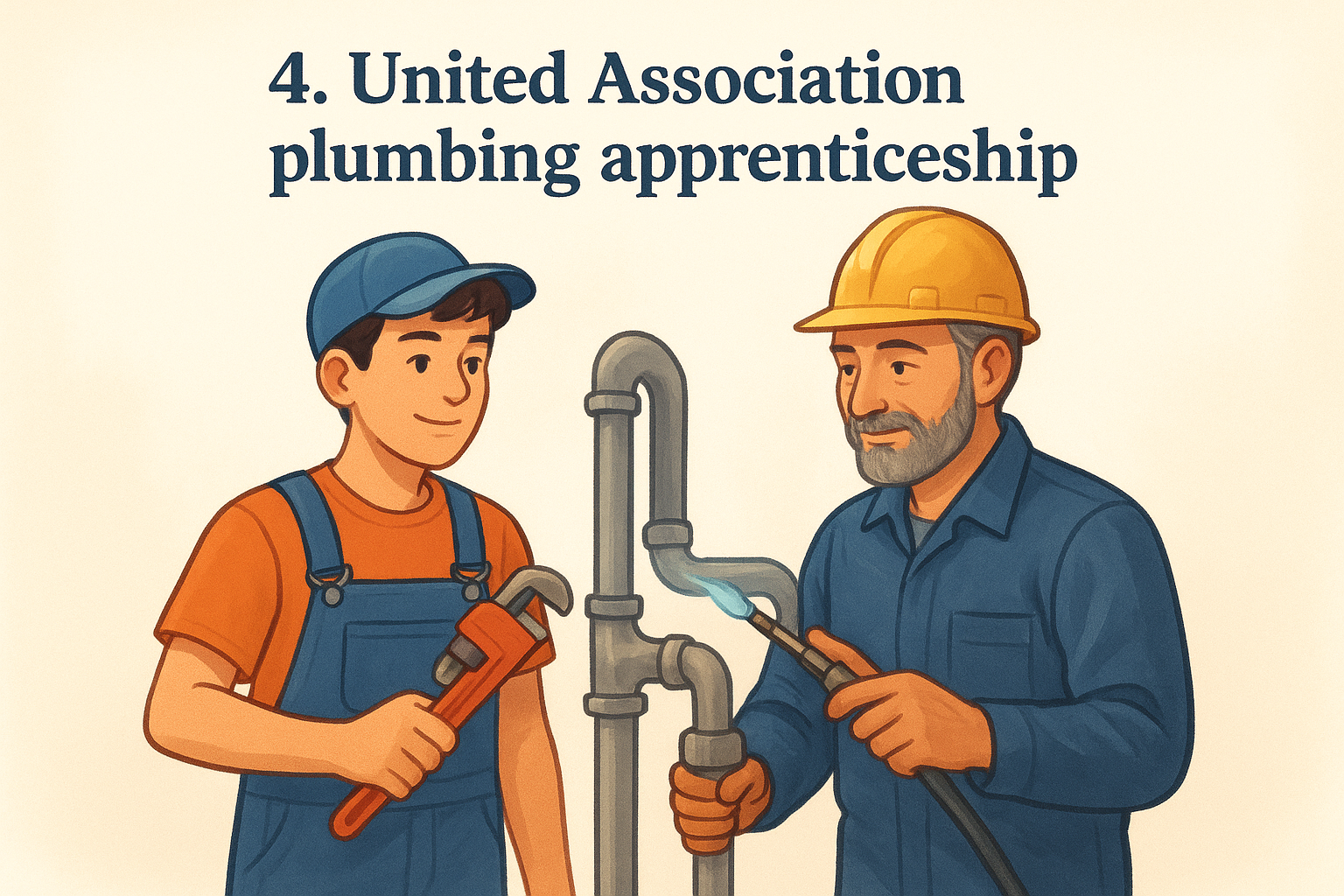
The United Association of Journeymen and Apprentices runs one of the most respected training systems in the plumbing industry. This program combines classroom instruction with paid on-the-job training through union contractors. You’ll earn a wage from day one while learning alongside experienced journeymen who teach you real-world skills.
What you can expect to learn
Your training covers commercial and industrial pipefitting, including large-scale water distribution, hydronic heating, and medical gas systems. You’ll master welding, blueprint interpretation, and code compliance beyond what most certificate programs offer.
How to vet the program near you
Contact your local UA training center directly to ask about apprenticeship openings and application requirements. Most locals require a high school diploma, passing an aptitude test, and completing an interview.
“UA apprenticeships often lead to higher starting wages because contractors trust the standardized training quality.”
Typical time to finish
You’ll complete four to five years of combined classroom hours and field work. The program requires approximately 8,000 to 10,000 on-the-job hours plus related technical instruction.
Typical cost and financial aid
Apprentices pay minimal tuition because employers fund the training. You earn a percentage of journeyman wages that increases each year as your skills develop.
How it connects to licensing and jobs
Graduates meet state licensing hour requirements and gain credentials recognized nationwide. Your union membership connects you to job opportunities through the hiring hall system.
5. Online plumbing diploma program
Online programs deliver theory-based plumbing education through distance learning platforms, letting you study code requirements, system design, and safety regulations without attending a physical campus. These courses work best for students who need flexibility around existing work schedules or live far from traditional trade schools. You’ll complete readings, watch demonstrations, and pass exams remotely before seeking hands-on training elsewhere.
What you can expect to learn
Your coursework covers plumbing codes, fixture specifications, and system troubleshooting through video lessons and digital textbooks. Most programs focus on theoretical knowledge rather than practical pipe work since you can’t practice soldering joints through a computer screen.
How to vet the program near you
Verify that your state licensing board accepts online training hours toward exam requirements before enrolling. Ask whether the program includes a hands-on component you can complete locally.
Typical time to finish
Online diplomas require six to twelve months of self-paced study. You control your schedule but must stay disciplined to complete modules on time.
“Online programs rarely satisfy full licensing requirements on their own because states mandate hands-on training hours.”
Typical cost and financial aid
Tuition runs $2,000 to $8,000 depending on program depth. Many schools accept federal financial aid for accredited online courses.
How it connects to licensing and jobs
You’ll still need supervised field experience to qualify for licensing exams. Online credentials work best when paired with apprenticeships you find through job boards like ours.
Next steps to pick a school this week
Your search for the best plumbing schools near me ends when you match a program’s strengths to your timeline and budget. Start by calling three schools from different categories we covered, ask about their next enrollment dates, and request a campus tour or virtual walkthrough. Compare their responses on instructor credentials, equipment quality, and job placement support before making your choice.
Once you narrow your options, apply this week instead of waiting for the perfect moment. Programs fill up fast, especially those with strong employer connections and hands-on training slots. Submit your application, gather required documents, and ask about financial aid deadlines so you don’t lose your spot. After you complete your training and earn your credentials, browse our plumbing industry blog for career advice, licensing updates, and market insights that help you stand out when applying to positions. Education opens the door, but your commitment to learning keeps it open.
Want plumbing jobs delivered to your inbox?
Want plumbing jobs delivered to your inbox?
Partner Site

