
Find Plumbing Apprentice Jobs Near Me: Pay, Programs & Tips
Starting a career in plumbing doesn’t require a college degree or years of classroom study, you can earn money while you learn the trade. If you’re searching for plumbing apprentice jobs near me, you’re taking the first step toward a skilled profession with strong demand and solid pay. The question is: where do you actually find these opportunities, and what should you expect?
This guide covers how to find local apprenticeship programs, what entry-level plumbers typically earn, and the differences between union and non-union paths. You’ll also get practical tips for standing out when you apply, whether you’re 18 or switching careers at 40.
At PlumbingJobs.com, we specialize in connecting plumbing professionals with employers across all 50 states. We’ve compiled real insights from current listings on our platform to help you start your apprenticeship search with a clear direction.
What to expect from plumbing apprentice jobs
You’ll spend most of your time working alongside experienced plumbers on real job sites, not sitting in a classroom. Most apprenticeship programs combine on-the-job training with technical instruction, typically requiring 2,000 to 4,000 hours of field work plus 144 to 288 hours of classroom time per year. Your day-to-day responsibilities will vary based on your employer, whether you’re working residential service calls, commercial new construction, or industrial maintenance.
Daily responsibilities and hands-on learning
Your first weeks will focus on basic tasks like loading tools, organizing materials, and assisting journeyman plumbers with installations. You’ll learn to cut and thread pipe, operate hand and power tools, and read blueprints under direct supervision. As you progress, you’ll take on more complex work like roughing-in plumbing systems, installing fixtures, and troubleshooting leaks. Expect physical demands: you’ll lift heavy materials, work in tight crawl spaces, and stand for long periods throughout the day.
“Apprentices are paid employees from day one, which sets plumbing apart from many other career paths that require unpaid internships.”
Pay structure and advancement timeline
Entry-level apprentices typically earn $15 to $22 per hour depending on your location and whether you join a union or private company program. Union apprentices often start at 40-50% of journeyman wages and receive scheduled raises every six months. Your pay increases as you complete training milestones, and most programs last four to five years before you’re eligible to test for your journeyman license. Many employers also cover your health benefits, retirement contributions, and education costs during your apprenticeship.
Step 1. Pick the right apprenticeship path
Your first decision is choosing between union-sponsored programs and non-union (independent contractor) apprenticeships, as each offers distinct advantages depending on your career goals. Union programs typically provide structured curricula, standardized pay scales, and strong benefits packages, but they often have competitive entry requirements and waitlists. Non-union apprenticeships give you more immediate openings and flexibility in choosing employers, though pay and benefits vary widely by company.
Union vs. non-union programs
Union apprenticeships run through organizations like the United Association (UA) or state-specific plumbing and pipefitting locals, offering formalized training centers and guaranteed wage progression. You’ll attend evening or weekend classes at dedicated training facilities while working full-time during the day. Non-union paths let you work directly for private contractors, service companies, or commercial builders who provide on-the-job training and often partner with local trade schools for classroom instruction.
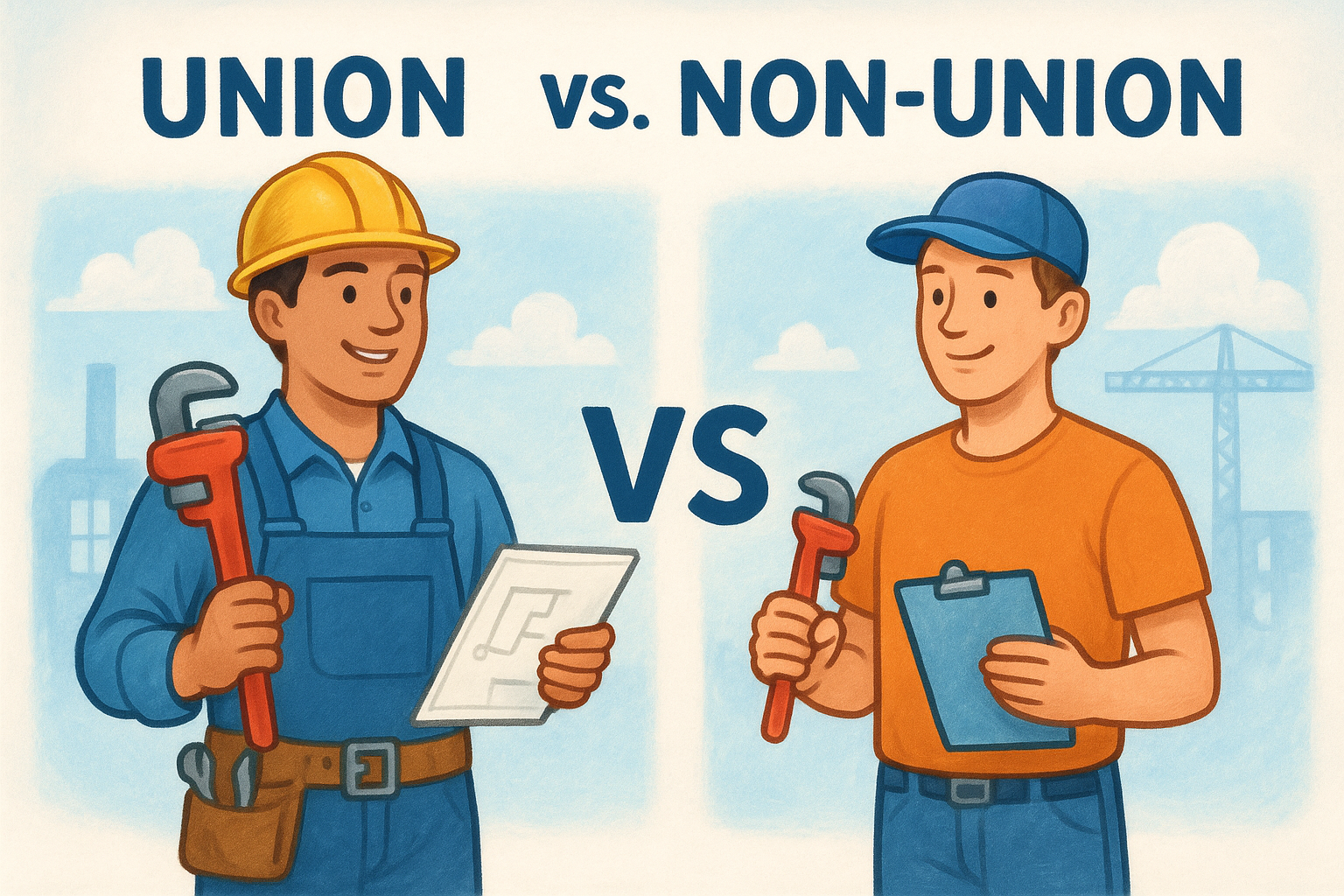
“Union programs typically take longer to enter but offer more predictable career progression, while private companies may hire you within days if you meet basic requirements.”
Evaluate your priorities before applying
Ask yourself whether you value job security and benefits over immediate employment and workplace variety. Union positions usually require aptitude tests, interviews, and background checks before acceptance, while private employers often hire based on a quick interview and drug screening. Consider your financial situation: can you wait three to six months for a union slot, or do you need to start earning within the next two weeks when searching for plumbing apprentice jobs near me?
Step 2. Search locally and find real openings
You need to combine multiple search strategies to uncover both advertised positions and unpublished opportunities in your area. Start by visiting PlumbingJobs.com and filtering by your state and city, where you’ll find active plumbing apprentice jobs near me and across the country from local contractors seeking entry-level workers. Many employers post exclusively on niche job boards like ours because they attract motivated candidates who are serious about the trade.

Check union halls and contractor associations
Contact your local union hall directly by searching “[your city] plumbers union apprenticeship” to find application dates and eligibility requirements. Visit the Associated Builders and Contractors (ABC) chapter in your region, as they sponsor non-union apprenticeship programs with participating employers. Call local plumbing supply houses like Ferguson or Hajoca and ask staff which contractors are hiring, they often know before jobs get posted online.
“The best apprenticeship openings never make it to general job boards because employers fill them through direct applications and referrals.”
Drive around and apply in person
Visit plumbing companies within a 30-minute radius of your home and ask to speak with the owner or foreman about apprentice openings. Bring printed resumes even if they’re not actively advertising positions, as many small contractors prefer hiring people who show initiative by walking through the door.
Step 3. Apply, follow up, and interview well
Your application needs to demonstrate reliability and eagerness to learn, not polished corporate experience. Most employers care more about your work ethic and availability than your resume format, so keep it simple: one page listing any manual labor jobs, relevant certifications (like OSHA 10), and your contact information. Bring a valid driver’s license, social security card, and steel-toe boots to your first interview, as many contractors will hire you on the spot if they need workers immediately.
Submit your application correctly
Fill out every field on the application form even if it seems repetitive, leaving blanks signals you didn’t read instructions carefully. When applying online for plumbing apprentice jobs near me or anywhere else, use your personal email address that sounds professional (avoid nicknames like “partyguy88@email.com“).
“Employers throw out applications with missing information or unprofessional contact details before they even review your work history.”
Call the company 48 to 72 hours after submitting your application to confirm they received it and ask when they plan to schedule interviews. Prepare two specific questions about their training process for your interview, such as “What does a typical first-year apprentice learn on your job sites?” or “How often do apprentices attend classroom instruction?” Answer questions directly without rambling, admit when you don’t know something rather than guessing, and ask about next steps before you leave.
Step 4. Evaluate pay and offers before you accept
Don’t accept the first offer without comparing total compensation packages and understanding how your pay will increase over time. Two companies offering “$18 per hour” can have drastically different actual values when you factor in overtime rates, health insurance costs, tool allowances, and scheduled raises. Create a simple comparison chart listing each employer’s starting wage, benefits start date, pay increase schedule, and whether they cover your trade school tuition or licensing exam fees.
Compare the full compensation package
Ask each employer for written details about their apprenticeship pay progression, not just verbal promises during your interview. Union programs typically publish their wage scales publicly, showing you’ll earn a percentage of journeyman wages that increases every six months (example: 50%, 55%, 60%, and so on). Private contractors may offer faster initial raises or performance bonuses, but verify these in writing before you turn down other opportunities. Calculate your take-home pay after deductions for health insurance, union dues (if applicable), and retirement contributions to understand your actual earnings.
“A lower hourly rate with full benefits and guaranteed raises often pays more over four years than a higher starting wage with no insurance or advancement plan.”
Factor in your commute costs when evaluating plumbing apprentice jobs near me versus positions farther away, as a company 45 minutes from home requires an extra $200 to $400 monthly in fuel expenses.
Your next move
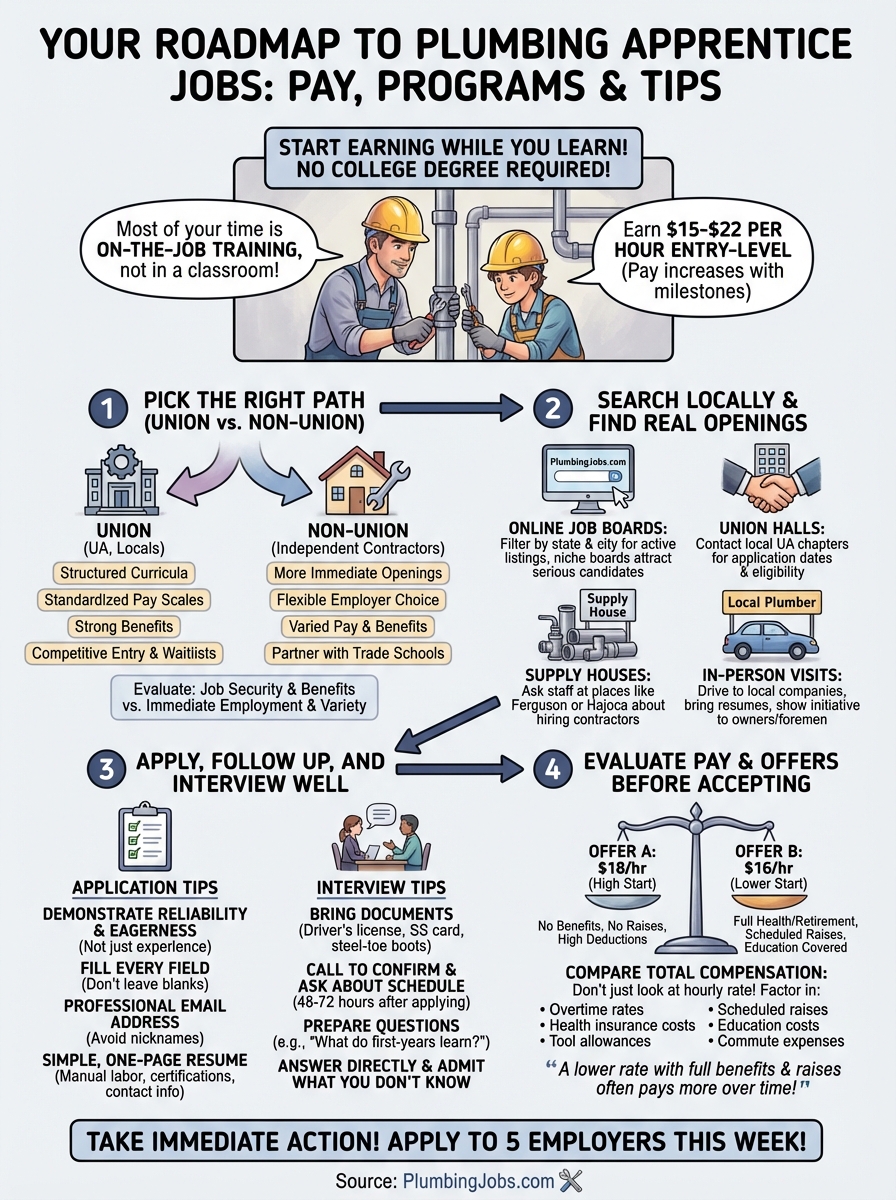
You now have a clear roadmap for finding and securing plumbing apprentice jobs near me in your area. The difference between getting hired and getting ignored comes down to taking immediate action rather than waiting for the perfect opportunity to appear. Start by choosing your apprenticeship path (union or non-union), then apply to at least five local employers this week using the strategies outlined above.
Most contractors hire based on attitude and reliability more than experience, so demonstrate those qualities in every interaction. Visit PlumbingJobs.com regularly to browse active apprentice openings and set up email alerts so you never miss new positions in your city. The plumbing trade needs skilled workers, and employers are actively searching for motivated apprentices.
Submit your first applications today and explore our plumbing career resources for ongoing industry insights as you launch your new career in the skilled trades.
Want plumbing jobs delivered to your inbox?
Want plumbing jobs delivered to your inbox?
Partner Site

