
Find Plumbing Jobs Near Me: Local Search Tips for 2026
Whether you’re a licensed journeyman ready for a change or an apprentice hunting for your first real gig, knowing how to find plumbing jobs near me can make the difference between scrolling endlessly and landing interviews within days. The plumbing trade is booming across the U.S., but local opportunities don’t always show up on generic job sites, you need to know where to look and how to search.
That’s where a focused approach pays off. Instead of wading through irrelevant listings on massive platforms, you can target plumbing-specific job boards and local resources that connect you directly with employers in your area. PlumbingJobs.com was built for exactly this purpose: matching skilled tradespeople with companies actively hiring across all 50 states, from residential service shops to commercial contractors.
This guide breaks down the strategies that actually work for finding plumbing positions close to home in 2026. You’ll learn how to optimize your local job search, which platforms deliver real results, and how to stand out when applying. Let’s get you hired.
What to know before you search locally
You can waste hours scrolling through job boards if you don’t set up your search correctly from the start. Before you type “find plumbing jobs near me” into any platform, you need to understand three factors that will shape every result you see: your certification level, your geographic range, and the seasonal cycles that control hiring in the plumbing trade.
Getting these fundamentals right means you’ll spend less time sorting through irrelevant posts and more time applying to positions you’re actually qualified for. It also helps you avoid the frustration of applying to jobs that are too far away or require credentials you don’t yet hold. Let’s break down what you need to nail before you start your search.
Understanding your license level and scope
Your license classification determines which jobs you can legally accept. If you’re an apprentice, you’ll need to filter for entry-level positions or companies that provide on-the-job training under licensed supervision. Journeyman plumbers can handle most residential and commercial work independently in many states, while master plumber licenses open doors to supervisory roles, permit signoffs, and higher-tier contracts.
State requirements vary dramatically. A journeyman license in Texas doesn’t automatically transfer to California or New York, so you need to know your state’s specific rules and whether the jobs you’re viewing require local certification. Check your state’s plumbing board website to confirm what work you’re authorized to perform before applying.
Applying to positions above your license level wastes everyone’s time and can flag you as someone who doesn’t understand the trade’s legal requirements.
Mapping your realistic commute zone
Most plumbers underestimate how much travel time cuts into their day. A job that’s 45 minutes away might look fine on a map, but when you factor in morning traffic, job-site parking, and tool transport, you’re looking at 90 minutes each way. That’s three hours of unpaid time daily, which adds up fast.
Define your maximum commute radius before you search. For most tradespeople, 30 miles is the practical limit for daily travel. If you’re willing to go farther for the right opportunity, make that decision consciously and calculate the fuel costs and vehicle wear into your salary expectations.
Timing your search with seasonal demand
Plumbing work follows predictable cycles across most U.S. regions. Winter months spike demand for emergency repairs like frozen pipes and water heater failures, while spring and summer drive new construction and renovation projects. Understanding these patterns helps you time your applications strategically.
If you’re searching during a slow season for your region, expect fewer postings and stiffer competition. You might need to broaden your geographic range or consider temporary work to bridge the gap. Conversely, launching your search during peak hiring periods (typically March through October for most states) gives you more leverage to negotiate pay and choose between multiple offers.
Companies often post their best roles 30 to 60 days before they need bodies on-site, so start your search well before you’re desperate to leave your current position. That buffer gives you time to interview properly and evaluate offers without financial pressure forcing a bad decision.
Step 1. Tighten your search terms and filters
Generic searches like “plumbing” or “plumber” pull up thousands of irrelevant results, from supply stores to DIY tutorials. You need to build precise search strings that target actual job postings in your area while filtering out noise. The right combination of location terms, job titles, and platform filters cuts your search time by 70% and delivers openings you’re actually qualified to pursue.
Build job-specific keyword combinations
Start with your exact job title plus your city or county name. Instead of typing “find plumbing jobs near me” into Google, use combinations like “journeyman plumber jobs Dallas” or “residential service plumber Houston.” Add license-specific terms when they matter, “licensed plumber,” “certified pipefitter,” or “master plumber supervisor.”
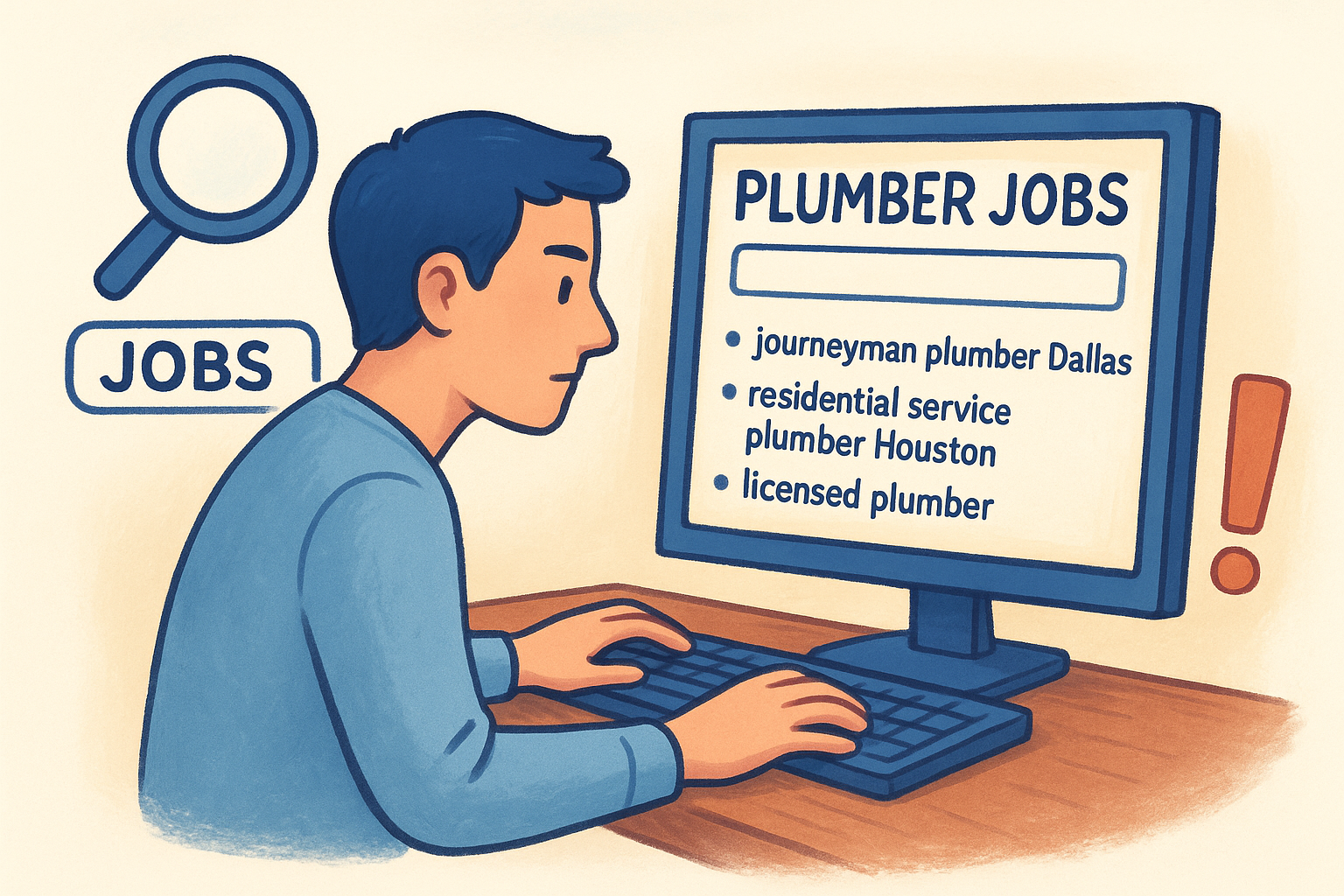
Stack multiple qualifiers to drill deeper. Try these proven search string templates:
[Job Title] + [City/County] + [State Abbreviation]
Example: "service plumber San Diego CA"

[License Level] + plumber + jobs + [Specific Area]
Example: "journeyman plumber jobs Orange County"

[Specialty] + plumber + hiring + [City]
Example: "commercial plumber hiring Austin"
Swap in your specific details and test different combinations. The goal is to surface listings that match your actual qualifications without wading through apprentice postings when you’re a journeyman or commercial jobs when you only have residential experience.
Use platform filters effectively
Every major job site offers geographic radius filters, but most plumbers ignore them. On platforms like Indeed or LinkedIn, set your distance filter to 25 miles maximum rather than accepting the default 50-mile range. This keeps commute times realistic and prevents you from wasting energy on applications for jobs you’ll never accept.
Layer in experience-level filters next. If you’re a journeyman with five years under your belt, filter out entry-level apprentice roles and senior supervisor positions. Target the middle tier where your skills align with employer expectations. Add job type filters (full-time, part-time, contract) and posting date filters (last 7 days, last 14 days) to focus on fresh opportunities.
Filtering by posting date matters because companies that posted 30+ days ago have likely filled the position or moved on to other candidates.
Check the salary range filter if the platform offers it. Setting a minimum ensures you don’t burn time applying to positions that can’t meet your financial needs. Just make sure your floor is realistic for your region and experience level.
Step 2. Find the best local listings fast
You don’t need to check 15 different platforms every day to find plumbing jobs near me that actually fit your skills. The fastest path to relevant local openings starts with specialized job boards built specifically for the plumbing trade, then expands to direct employer sites and automated alert systems. This targeted approach cuts your daily search time from hours to minutes while increasing the quality of opportunities you discover.
Check PlumbingJobs.com first for targeted results
PlumbingJobs.com consolidates plumbing-specific openings across all 50 states, letting you filter by state, city, and job title without sifting through unrelated trades. The platform pulls listings from companies that specifically need plumbers, not generic laborers or maintenance workers. You’ll find everything from apprentice positions to master plumber roles, organized by geographic location and updated regularly.
Start your search on the state-level pages, then drill down to your specific city or metro area. The platform displays job type, employer name, and posting date upfront, so you can scan dozens of relevant openings in under five minutes. Bookmark your local city page and check it three times per week during active job hunts.
Specialized trade boards connect you directly with employers who understand plumbing licensing and pay scales, eliminating the guesswork that comes with generic platforms.
Scan local contractor websites directly
Major plumbing contractors and mechanical firms post openings on their own websites before distributing them to job boards. Search for “plumbing contractors [your city]” and visit the careers or employment sections of the top 10 results. You’ll often find positions that haven’t hit public boards yet, giving you first-mover advantage.
Check these sites weekly and note which companies post frequently. That pattern signals steady growth and regular hiring, making them worth monitoring long-term even if they don’t have immediate openings.
Set up automated alerts
Configure email alerts on PlumbingJobs.com and other platforms you use regularly. Set parameters for your license level, preferred job types, and geographic radius. You’ll receive notifications within 24 hours of new postings that match your criteria, eliminating manual daily checks.
Example alert setup:
Job Title: Journeyman Plumber, Service Plumber
Location: Within 25 miles of [Your ZIP Code]
Experience Level: 3-7 years
Job Type: Full-time, Contract
Alert Frequency: Daily digest
Subscribe to the PlumbingJobs.com monthly newsletter for curated opportunities delivered directly to your inbox, giving you a backup system if you miss daily alerts.
Step 3. Apply like a pro and follow up
Submitting generic applications kills your response rate faster than anything else. Once you find plumbing jobs near me that match your qualifications, you need to customize each application to show employers you understand their specific needs. The companies that get flooded with copy-paste resumes ignore most of them, but a targeted application that addresses their exact requirements stands out immediately and moves you to the interview pile.
Tailor your application materials
Read the full job description and identify three to five key requirements the employer emphasizes. If they mention “experience with PEX installations” or “commercial backflow certification,” make sure those exact phrases appear in your resume and cover letter where they apply to your background. This isn’t lying, it’s highlighting relevant experience in the language the hiring manager uses.
Customize your resume’s skills section for each application. Here’s a template structure that works:
RELEVANT SKILLS FOR [COMPANY NAME]
- [Specific skill from job posting] - [Years of experience]
- [Technical certification they mentioned] - [Your credential]
- [Equipment or method they use] - [Your hands-on experience]
Example for a residential service position:
RELEVANT SKILLS FOR ABC PLUMBING
- Residential water heater replacement - 4 years
- Texas Master Plumber License #12345 - Active
- Tankless system installation (Rinnai, Navien) - 200+ units
Keep your cover letter to three short paragraphs: why you’re applying, what you bring that matches their needs, and when you’re available to start. Attach photos of completed work if the application system allows it, particularly for service or renovation roles where visual proof of quality matters.
Applications that mirror the employer’s language and demonstrate specific relevant experience get callbacks 3x more often than generic submissions.
Follow up strategically
Wait three business days after applying, then send a brief follow-up email. Use this template:
Subject: Following up on [Job Title] application - [Your Name]

Hello [Hiring Manager Name or "Hiring Team"],

I submitted my application for the [Job Title] position on [Date].
I have [X years] of experience with [specific skill they need] and
I'm excited about the opportunity to join [Company Name].

I'm available for an interview any weekday after 3 PM.

Thanks,
[Your Name]
[Phone Number]
[License Number if applicable]
Call the company directly if no response comes after seven days. Ask to speak with the hiring manager or operations supervisor, not just HR. State your name, mention you applied for the specific position, and ask about the timeline for interviews. Keep it under 60 seconds.
Step 4. Expand your options if results are thin
Not every city has dozens of active plumbing postings at any given moment, especially in smaller markets or during seasonal slowdowns. When your local search to find plumbing jobs near me produces only a handful of viable options, you need to widen your net without abandoning your core requirements. This doesn’t mean settling for bad fits, it means strategically exploring adjacent opportunities that still align with your skills and career goals.
Widen your geographic radius temporarily
Push your search radius to 50 miles if the 25-mile zone isn’t producing enough quality listings. Calculate the actual drive time rather than just distance, a 50-mile commute on rural highways might take less time than 30 miles through metro traffic. Consider this expansion temporary while you continue monitoring closer opportunities.
Look for positions that offer company vehicles or travel stipends for longer commutes. Many commercial plumbing contractors and service companies cover fuel costs or provide trucks for employees working regional territories, which makes a 40-mile radius far more practical financially.
Temporary geographic flexibility often leads to discovering better-paying employers you wouldn’t have considered in your immediate area.
Consider related position types
Shift your search terms to include adjacent roles that use your plumbing skills. Try these variations:
- "Pipefitter jobs [your city]"
- "HVAC plumber [your area]"
- "Maintenance plumber [region]"
- "Facilities plumber [city]"
- "Fire sprinkler fitter [location]"
Commercial facilities maintenance departments, hospitals, universities, and manufacturing plants all need licensed plumbers but often post under different job titles. These positions typically offer steady hours, benefits, and less emergency call work than traditional service companies.
Explore short-term contract work
Sign up with skilled trades staffing agencies that place plumbers in temporary assignments. Contract positions lasting 3 to 6 months keep cash flowing while you continue hunting for permanent roles. Many contractors use temp-to-hire arrangements, giving you a trial period to evaluate whether the company fits before committing long-term.
Check government contract sites for project-based work on public infrastructure, schools, or military installations. These jobs often pay prevailing wage rates and can lead to ongoing relationships with general contractors who staff multiple projects annually.
Tap local trade networks
Contact your state plumbing association or regional union hall even if you’re not a member. Many organizations maintain job boards or informal networks that share openings before they hit public sites. Attend local trade supply counter mornings where plumbers gather for materials, conversations there often reveal who’s hiring before positions get posted officially.
Next steps
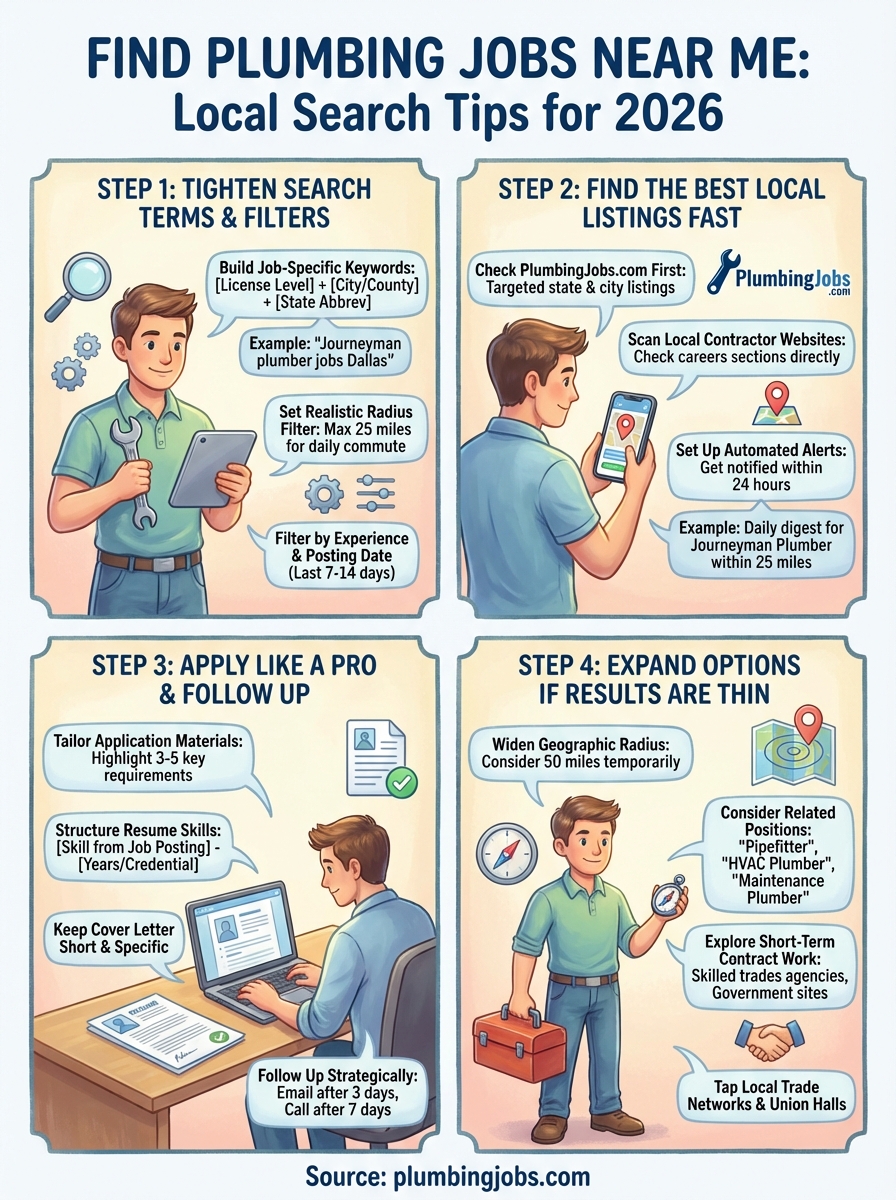
You now have a complete framework to find plumbing jobs near me that actually match your qualifications and location. Start by defining your license level and commute zone, then build targeted search strings using the specific combinations covered in Step 1. Check PlumbingJobs.com first for trade-specific listings, set up automated alerts, and scan contractor websites directly to catch openings before the competition.
Customize every application you send. Tailor your resume to mirror the employer’s language, follow up within three business days, and call after a week if you hear nothing. When local results run thin, expand your radius strategically or explore adjacent position types like facilities maintenance or contract work.
Your search doesn’t end once you land a position. The plumbing industry evolves constantly with new techniques, code changes, and licensing requirements. Visit our blog regularly to stay current on industry trends, salary benchmarks, and career advancement strategies that keep you competitive in your market.
Want plumbing jobs delivered to your inbox?
Want plumbing jobs delivered to your inbox?
Partner Site

