
How Long Is a Plumbing Apprenticeship? Hours, Years, Schedule
Starting a career in plumbing means committing to structured, hands-on training before you can work independently. If you’re wondering how long is a plumbing apprenticeship, the straightforward answer is 4 to 5 years in most U.S. states, but the details vary depending on where you live and which program you join.
During that time, you’ll complete somewhere between 8,000 and 10,000 hours of on-the-job training combined with classroom instruction. It’s a significant investment, but it leads directly to journeyman licensure and a skilled trade career with strong earning potential.
At PlumbingJobs.com, we connect plumbing professionals at every stage, from apprentices searching for their first placement to journeymen and masters ready for the next opportunity. This guide breaks down the typical apprenticeship timeline, weekly schedules, and what you can expect as you work toward becoming a licensed plumber.
Why apprenticeship length matters
Understanding how long is a plumbing apprenticeship helps you plan your career trajectory and set realistic financial expectations. The multi-year commitment isn’t arbitrary. State licensing boards and trade organizations designed these requirements to ensure you develop the full range of skills needed to work safely and independently as a journeyman plumber. You’ll encounter everything from residential service calls to commercial installation projects during this period, building the competency needed to troubleshoot problems without supervision.
What the timeline means for your license
You can’t skip ahead or fast-track your way to licensure without completing the mandated hour requirements. Each state’s plumbing board tracks your apprenticeship hours and verifies that you’ve logged the necessary on-the-job experience before you’re eligible to sit for the journeyman exam. If you try to rush through training or work under unlicensed supervision, those hours won’t count toward your total, forcing you to start over in some cases.
The length requirement exists to protect both you and the public by ensuring every licensed plumber has proven competency across residential, commercial, and code compliance work.
How duration affects your earning power
Your pay increases steadily as you progress through your apprenticeship. Most programs start you at 40 to 50 percent of a journeyman’s hourly rate, with incremental raises every six months or year based on completed hours. That means the faster you accumulate verified training hours, the sooner you reach full journeyman wages, which typically range from $50,000 to $80,000 annually depending on location and specialization. Delaying or extending your apprenticeship directly postpones your access to higher earning potential and career mobility.
Typical length in years and required hours
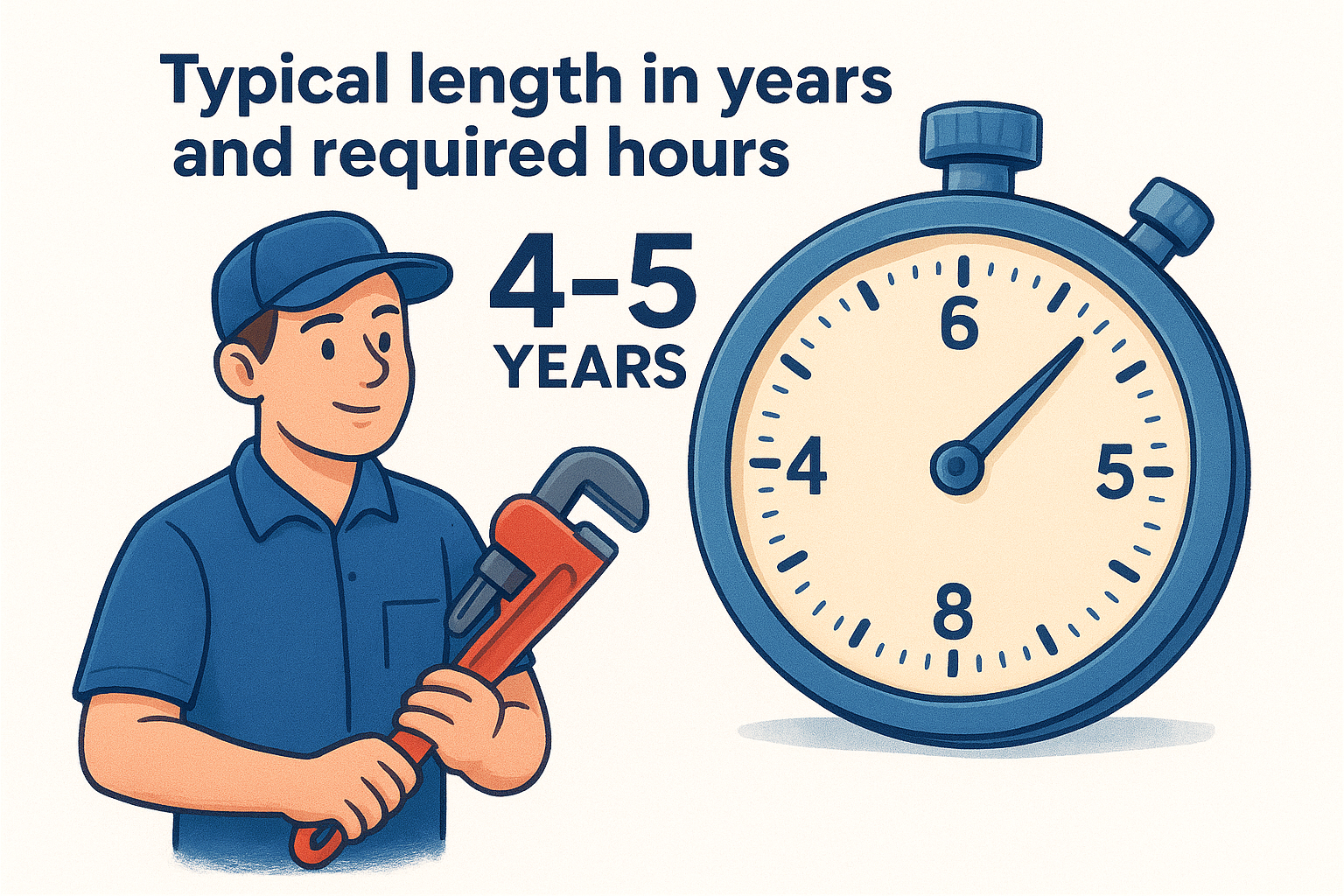
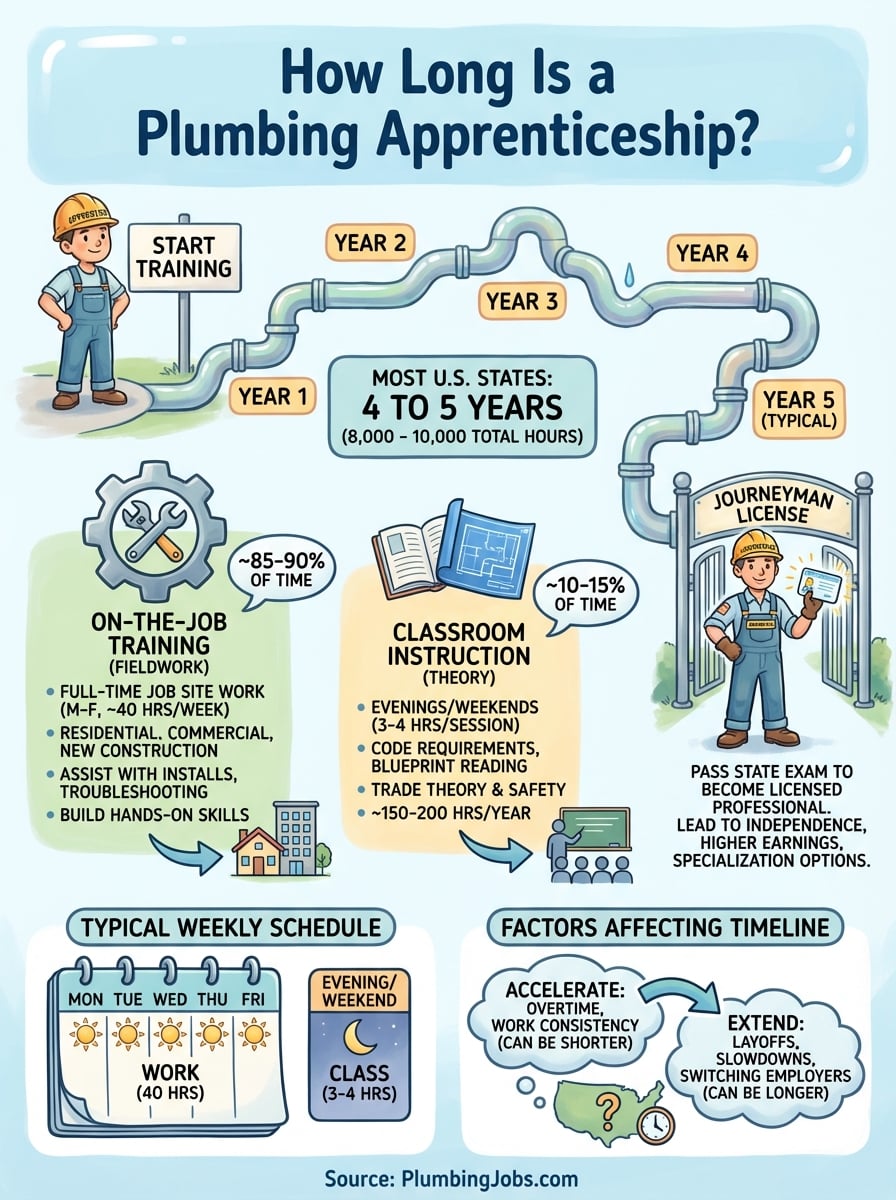
The standard answer to how long is a plumbing apprenticeship is 4 to 5 years for most U.S. states, though some jurisdictions allow completion in as little as 3 years if you work full-time and attend all required classes. This timeframe isn’t just about calendar years. It’s about accumulating the specific number of on-the-job training hours mandated by your state’s licensing board.
Standard duration across most states
You’ll find that four years is the most common requirement from California to New York, with each year representing roughly 2,000 hours of supervised work experience. Some states like Texas and Florida require 8,000 total hours, while others like Washington and Oregon push that number to 10,000 hours before you’re eligible to test for your journeyman license. Your apprenticeship officially ends when you’ve logged every required hour and passed the state exam, not simply when a certain number of years has passed.
The hour requirement matters more than calendar time, so working overtime or taking on extra shifts can shorten your overall apprenticeship period.
Breakdown of training components
Your total hours split between hands-on fieldwork (typically 85 to 90 percent) and classroom instruction (10 to 15 percent). That classroom time usually means 144 to 200 hours annually spent learning code requirements, blueprint reading, and trade theory through your sponsoring union or trade school.
What a weekly schedule looks like
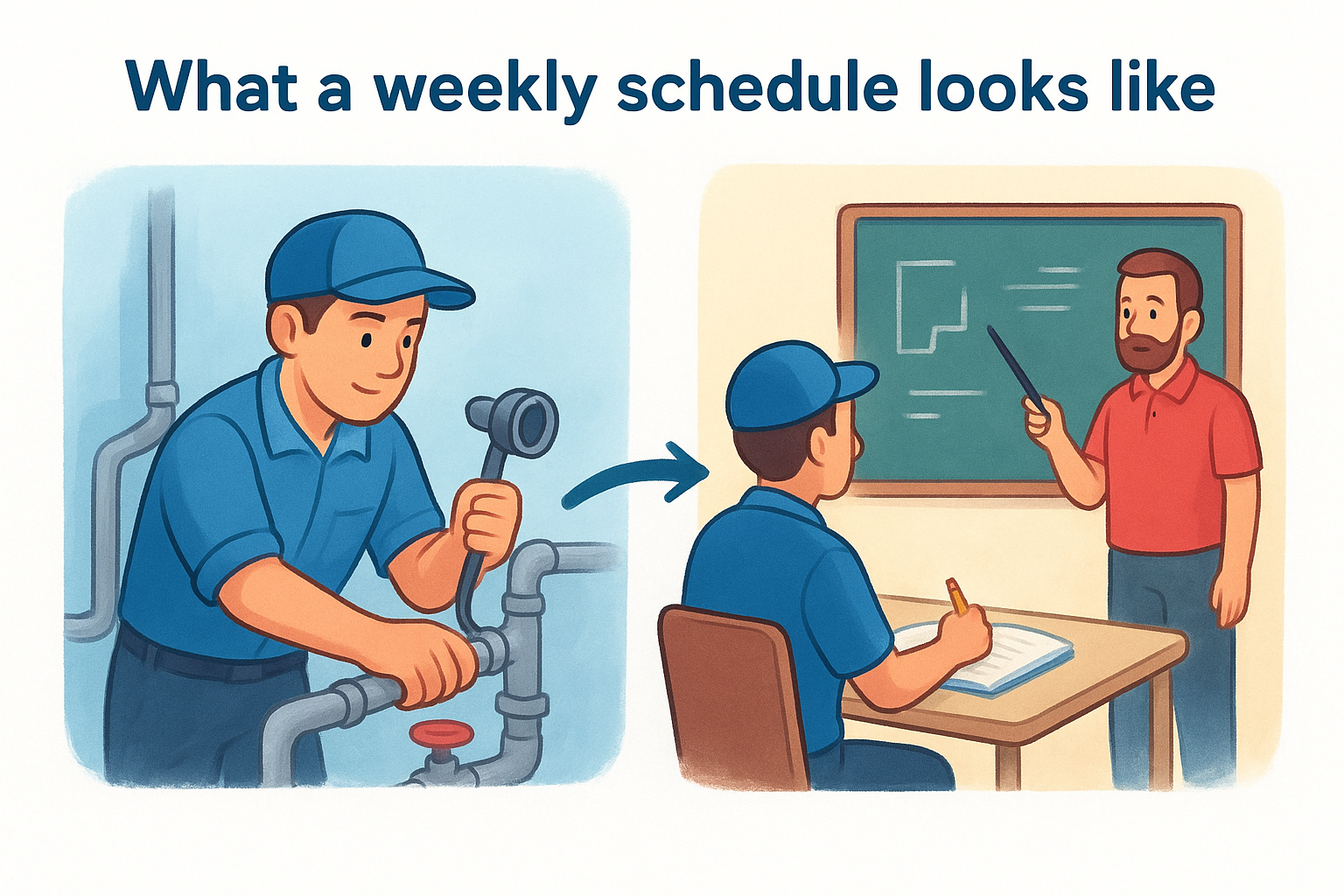
Your typical week as a plumbing apprentice combines full-time job site work with structured classroom instruction during evenings or weekends. Most apprentices log 40 hours per week on the job, which translates to roughly 2,000 hours annually if you work consistently throughout the year. That on-the-job time is where you build hands-on skills under a licensed journeyman or master plumber.
Standard workday structure
You’ll spend Monday through Friday at active work sites, starting as early as 6:00 or 7:00 AM depending on your employer’s schedule. Your days include residential service calls, commercial installations, or new construction projects where you assist with pipe fitting, fixture installation, and system troubleshooting. Overtime is common in this trade, and those extra hours count toward your total apprenticeship requirement, potentially shortening how long is a plumbing apprenticeship for you.
Classroom time requirements
Trade schools and union training centers typically schedule classes one evening per week or every other Saturday to accommodate your work schedule. These sessions run three to four hours and cover code updates, blueprint reading, and theoretical knowledge you can’t learn solely through fieldwork.
Expect to dedicate 150 to 200 hours per year to formal instruction, which remains separate from your on-the-job hour count.
What can change your apprenticeship timeline
Several factors can accelerate or extend how long is a plumbing apprenticeship, even within the same state. Your work consistency and program structure play the biggest roles in determining whether you complete training closer to three years or push past five. Understanding these variables helps you anticipate delays and take advantage of opportunities to finish faster.
State-specific variations
Your state’s licensing board sets the baseline hour requirement, which ranges from 8,000 to 10,000 hours depending on where you work. Some jurisdictions like Michigan allow credit for military plumbing experience or previous construction work, potentially reducing your total by 1,000 to 2,000 hours. Others maintain strict requirements with no substitutions allowed, meaning every hour must come from a registered apprenticeship program.
Work availability and overtime
Layoffs, seasonal slowdowns, or switching employers can interrupt your hour accumulation and extend your timeline by months or even a full year. Conversely, accepting overtime assignments and working 45 to 50 hours weekly instead of the standard 40 can shorten your apprenticeship by six months or more.
Tracking your hours meticulously and maintaining steady employment directly controls how quickly you reach journeyman status.
From apprentice to journeyman and beyond
Once you complete your required hours and understand how long is a plumbing apprenticeship in your state, you’ll face the journeyman licensing exam. This test evaluates your knowledge of plumbing codes, installation techniques, and safety practices you’ve learned throughout your training. Passing this exam transforms you from a supervised apprentice into a licensed professional who can work independently, bid on jobs, and command significantly higher wages.
Testing for your journeyman license
You’ll need to apply through your state licensing board and pay the examination fee, which typically ranges from $100 to $300 depending on your location. The exam format varies by state but generally includes both written and practical components covering residential and commercial plumbing systems. Most testing centers require you to bring your own code books, and you can expect questions on pipe sizing, fixture installation, venting requirements, and local amendments to national codes.
Preparing with practice exams and review courses increases your pass rate significantly, especially for states with failure rates above 30 percent.
Career options after journeyman
Your journeyman license opens doors to specialized fields like medical gas installation, fire sprinkler systems, or backflow prevention. Many plumbers work three to five years as journeymen before pursuing their master plumber license, which allows you to own a business, supervise other tradespeople, and pull permits independently. Specialization can boost your annual earnings by $10,000 to $20,000 beyond standard journeyman rates.
What to do next
Now that you understand how long is a plumbing apprenticeship and what the full commitment looks like, you can start researching registered apprenticeship programs in your state and reaching out to plumbing contractors who actively sponsor new apprentices. Most union training centers and community colleges maintain application waitlists that fill up months in advance, so submitting your paperwork early in the year gives you the strongest chance of securing a position when you’re ready to start. Your state licensing board’s website lists all approved programs alongside the specific hour requirements, classroom obligations, and examination procedures for your jurisdiction.
For those already working through their apprenticeship or actively searching for their next placement, PlumbingJobs.com connects skilled professionals with employers hiring at every experience level. Explore our plumbing industry blog for additional resources covering state licensing updates, regional wage data, and career advancement strategies that help you succeed in the trade.
Want plumbing jobs delivered to your inbox?
Want plumbing jobs delivered to your inbox?
Partner Site

