

How Much Do Plumbers Make Per Hour in 2026? Pay Guide
Plumbing remains one of the most in-demand skilled trades in the United States, and compensation reflects that reality. If you’re researching how much do plumbers make per hour, the answer depends on several factors, your experience level, location, union membership, and specialization all play a role.
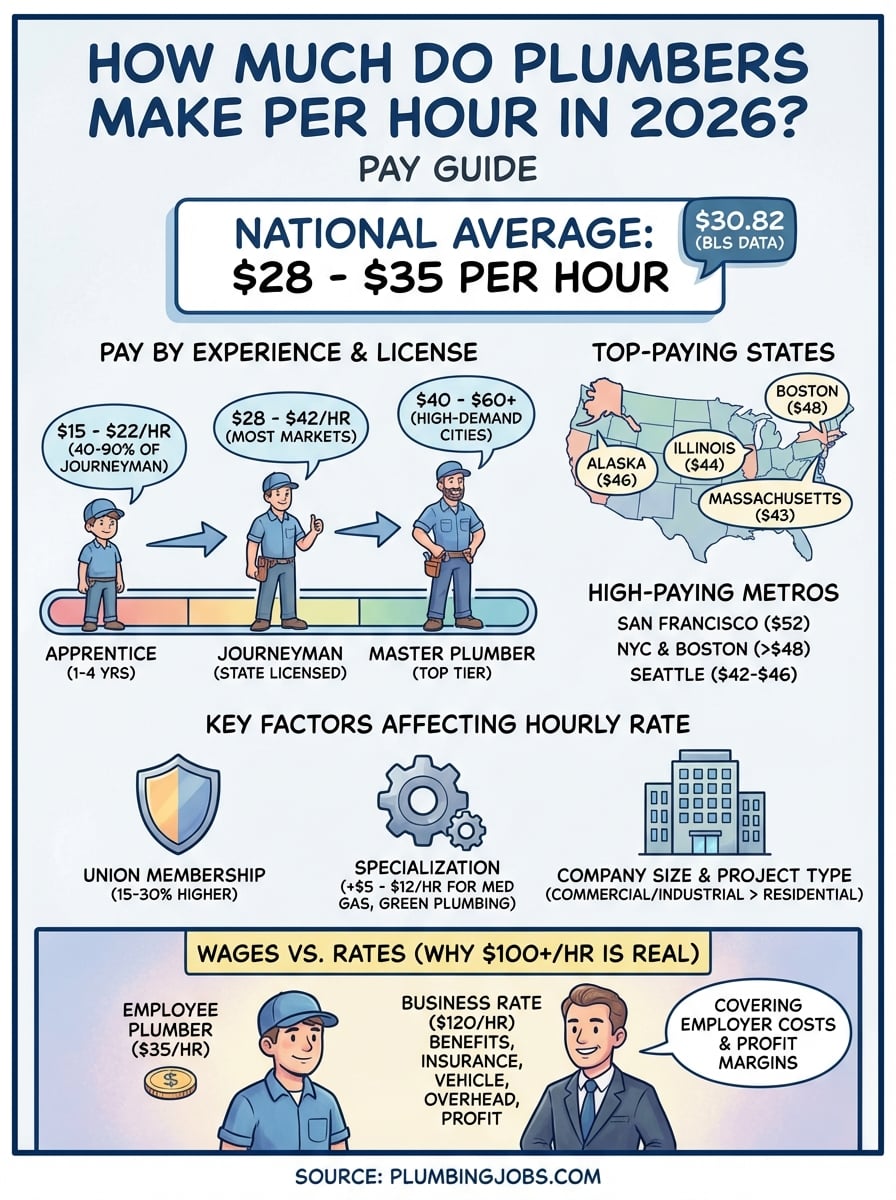
As of 2026, the national average hourly wage for plumbers falls between $28 and $35, but that number can climb significantly higher in certain states or for master-level professionals. Whether you’re an apprentice mapping out your career path or a journeyman considering a move to a higher-paying market, understanding these pay structures helps you make smarter career moves.
At PlumbingJobs.com, we connect plumbing professionals with employers across all 50 states, and salary transparency is part of that mission. This guide breaks down hourly rates by state, experience level, and other key factors so you can see exactly where you stand and where you could be heading.
What plumbers make per hour in 2026
The national average hourly wage for plumbers in 2026 stands at $30.82, according to the most recent Bureau of Labor Statistics data. This translates to roughly $64,000 annually for full-time work, but your actual earnings will vary based on where you work and what credentials you hold. Understanding these baseline numbers gives you a realistic starting point for salary negotiations and career planning.
National average and wage ranges
When you look at how much do plumbers make per hour across the country, the middle 50% of plumbers earn between $25 and $38 per hour. Entry-level positions typically start around $18 to $22 per hour, while experienced master plumbers can command $45 to $55 per hour or more in competitive markets. These figures represent W-2 employee wages before taxes and benefits, not the rates that self-employed plumbers charge their customers.
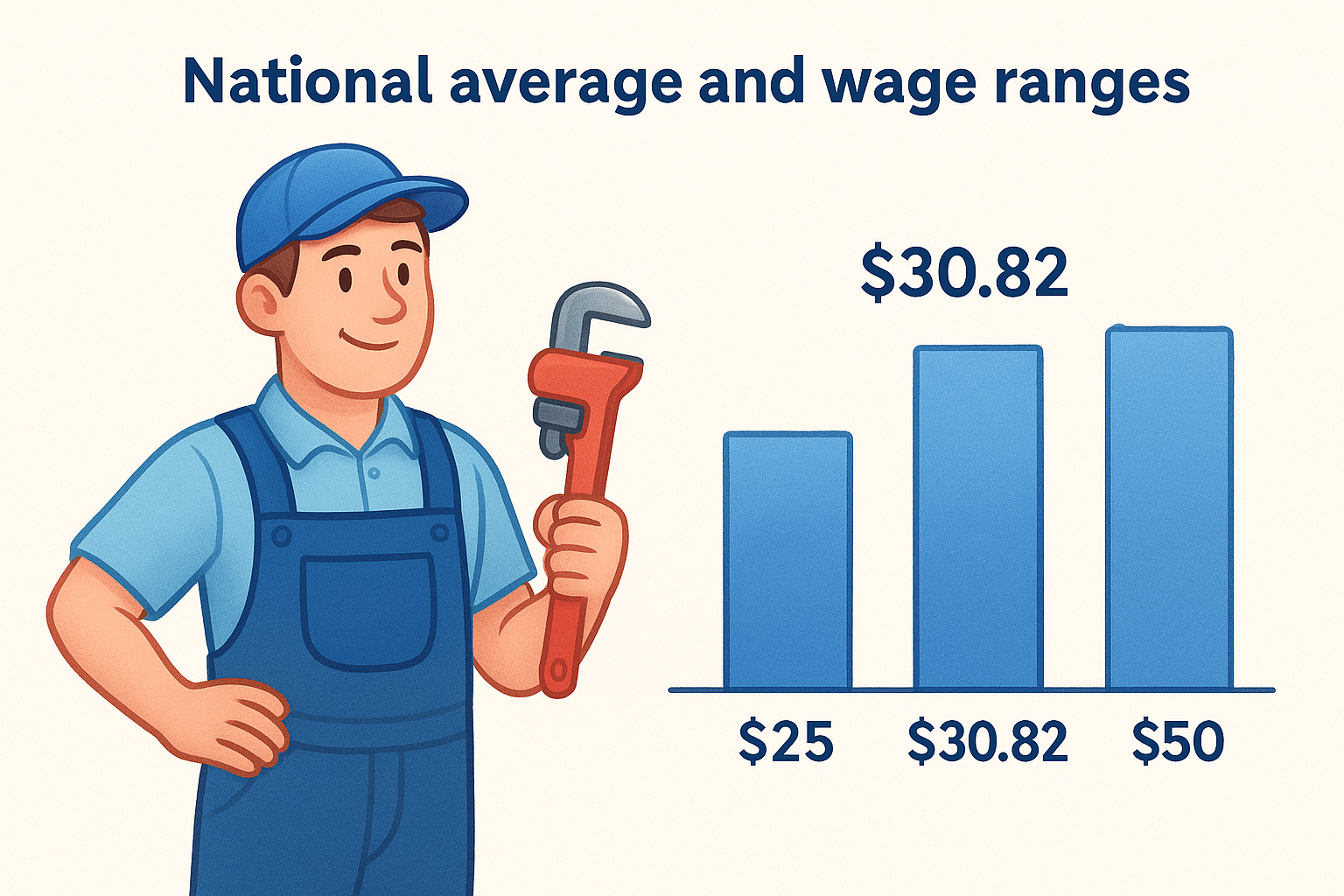
The 10th percentile earns about $19 per hour, while the 90th percentile reaches $50 or higher. If you’re just entering the field, expect to spend your first two to three years in that lower bracket as you build skills and work toward your journeyman license.
Your hourly wage reflects not just your technical ability but also your professional credentials and the local demand for plumbing services.
How the 2026 market compares
Plumber wages have grown steadily over the past five years, outpacing inflation in many regions due to persistent labor shortages. From 2021 to 2026, average hourly rates increased by roughly 18%, driven by retirements among experienced tradespeople and construction booms in Sun Belt states. You’re entering the field at a time when employers compete harder for qualified talent, which translates to better starting offers and faster wage progression.
The residential service sector tends to offer lower hourly base pay but includes commission structures that can boost your take-home significantly. Commercial and industrial plumbing roles often provide higher base wages and union benefits but may involve longer commutes or travel requirements. Your choice of employer type directly impacts your hourly compensation and long-term earning potential.
Plumber hourly pay by experience and license
Your hourly wage as a plumber directly correlates with your license level and years in the field. The progression from apprentice to master typically spans five to seven years, and each stage brings meaningful pay increases that reflect your growing expertise and legal authorization to work independently.
Apprentice and helper wages
Starting as an apprentice, you’ll earn between $15 and $22 per hour depending on your region and whether you work union or non-union. Most apprenticeships follow a structured pay scale that increases every six months or after completing specific training hours. You’re typically paid a percentage of journeyman wages, starting at 40-50% in year one and reaching 80-90% by your final apprentice year. Union apprentices often earn on the higher end of this range with guaranteed raises built into their training agreements.
Journeyman plumber rates
Once you pass your journeyman exam and obtain state licensing, your hourly rate jumps to $28 to $42 per hour for most markets. This credential allows you to work without direct supervision and take on more complex projects, which employers value highly. Journeymen with three to five years of post-licensing experience typically sit in the $32 to $38 range, while those approaching master-level skills command the higher end.
Your journeyman license opens doors to specialized work like medical gas systems or commercial backflow prevention that pay premium rates.
Master plumber earnings
Master plumbers represent the top tier of the profession, earning $40 to $60 per hour as employees. This license requires additional years of experience, passing rigorous exams, and often completing continuing education requirements. You can supervise other plumbers, pull permits, and handle the most complex installations. When asking how much do plumbers make per hour, master-level professionals in high-demand cities like San Francisco or Seattle can exceed $65 per hour before overtime or specialty bonuses.
Plumber hourly pay by state and city
Geographic location creates the single largest variation in plumber compensation across the United States. When you’re asking how much do plumbers make per hour, the state you work in can shift your earnings by $15 to $25 per hour for the same job title and experience level. Cost of living, union density, construction activity, and local licensing requirements all contribute to these regional differences.
Top-paying states for plumbers
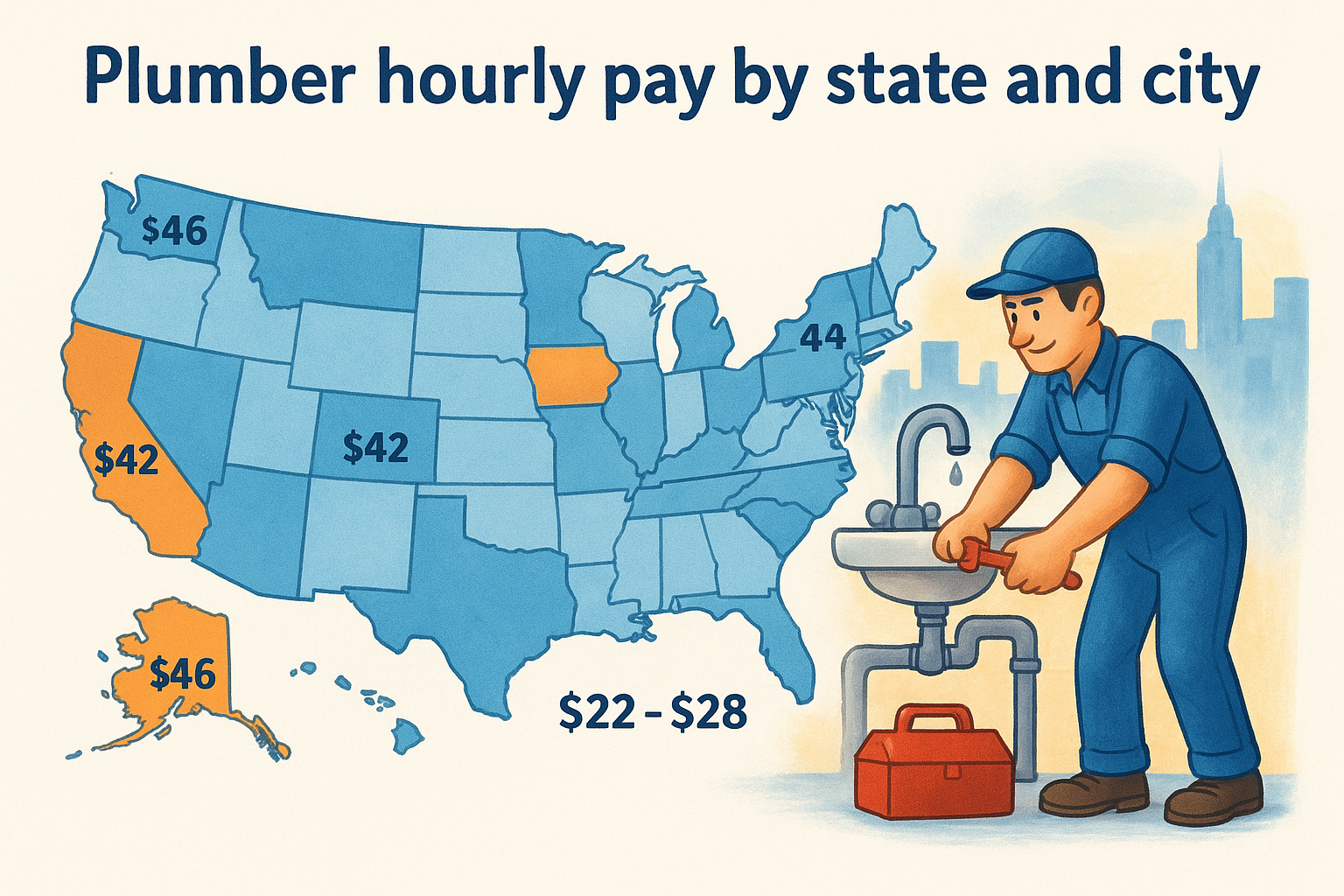
Alaska leads the nation with average plumber wages of $46 per hour, followed closely by Illinois at $44 and Massachusetts at $43. These states combine strong union presence with high demand for skilled tradespeople. Washington, New York, and Hawaii round out the top tier, all exceeding $40 per hour for journeyman-level workers. You’ll find the most lucrative opportunities in states where licensing standards remain rigorous and where construction booms drive competition for qualified labor.
Southern and rural states typically offer $22 to $28 per hour, reflecting lower living costs but also less competitive markets. Mississippi, Arkansas, and West Virginia sit at the bottom of the pay scale, though your purchasing power in these regions may balance out the lower nominal wages.
High-paying metro areas
Within top-paying states, major metropolitan areas push rates even higher. San Francisco plumbers average $52 per hour, while New York City and Boston both exceed $48. Seattle, Chicago, and Washington D.C. consistently offer $42 to $46 per hour for experienced journeymen. Your earning potential in these cities reflects both the elevated cost of living and the complex commercial projects that demand advanced skills.
Metro areas with aging infrastructure and strict code enforcement create sustained demand that keeps your hourly rate competitive year after year.
What affects a plumber’s hourly rate
Multiple factors beyond your experience level determine how much do plumbers make per hour in any given market. Understanding these variables helps you identify opportunities for higher pay and make strategic career decisions that maximize your earning potential over time.
Union membership and collective bargaining
Union plumbers typically earn 15% to 30% more per hour than their non-union counterparts in the same region. Your membership provides negotiated wage scales, guaranteed annual raises, and comprehensive benefits packages that increase your total compensation. Collective bargaining agreements set minimum hourly rates that prevent underbidding, and union halls often connect you with higher-paying commercial and industrial projects that require certified labor.
Union apprenticeships offer structured pay progression that non-union shops may not guarantee, giving you predictable wage growth throughout your training.
Specialization and certifications
Adding specialized skills to your toolkit directly increases your hourly value. Medical gas certification, backflow prevention licensing, or green plumbing expertise can add $5 to $12 per hour to your base rate. Employers pay premium wages for plumbers who handle regulated work like hospital systems or water treatment facilities because these projects carry higher liability and stricter compliance requirements.
Company size and project type
Working for large mechanical contractors on commercial or industrial projects typically pays more than residential service companies. You’ll find that new construction and municipal work offer $3 to $8 per hour above residential rates, though residential service often includes commission structures on parts and upgrades. Your employer’s revenue model and project portfolio shape your hourly compensation as much as your personal skill level.
Wages vs rates: why $100 an hour can be real
You’ve likely heard that plumbing companies charge $100 to $150 per hour for service calls, which seems disconnected from the $30 to $40 per hour wages we’ve discussed. This gap confuses many people asking how much do plumbers make per hour, but understanding the difference between employee wages and business rates clarifies everything. Your hourly wage as an employee represents only one piece of your employer’s total operating costs.
Employee wages vs business rates
When a plumbing company bills $120 per hour for your labor, you’re seeing the business rate, not your personal compensation. Your employer uses that revenue to cover your benefits, insurance, licensing fees, vehicle costs, tools, office overhead, and profit margins. A plumber earning $35 per hour typically generates $80 to $100 in billable revenue for their employer after accounting for efficiency losses and non-billable time like travel or equipment maintenance.
Your W-2 wage represents roughly 30-40% of what your employer charges customers, with the remainder covering business expenses that enable you to work.
What’s included in that rate
Business rates include workers’ compensation insurance, liability coverage, vehicle depreciation, fuel, specialized tools, continuing education, licensing renewals, and administrative support. Your employer also factors in downtime between jobs, callbacks for warranty work, and seasonal fluctuations in demand. Self-employed plumbers charging $100 per hour take home significantly less after covering these same expenses themselves, often netting $45 to $60 per hour after all business costs.
Final takeaways
Understanding how much do plumbers make per hour gives you concrete benchmarks for salary negotiations and career planning in 2026. Your earning potential ranges from $18 per hour as an apprentice to $60+ as a master plumber, with geography and specialization creating the widest pay variations. States like Alaska, Illinois, and Massachusetts consistently offer the highest wages, while union membership and certifications add measurable premiums to your hourly rate.
Your next step depends on where you are in your career. Apprentices should focus on completing training hours and targeting higher-paying regions, while experienced journeymen can boost earnings through specialization or relocation to metro markets. Master plumbers considering self-employment need to factor business costs into their rate calculations to maintain the same net income.
If you’re ready to explore opportunities that match these wage expectations, browse plumbing jobs across all 50 states to find positions aligned with your skills and salary goals.
Want plumbing jobs delivered to your inbox?
Want plumbing jobs delivered to your inbox?
Partner Site

