
How To Become A Plumber: Steps, Training, And Licensing
Plumbing offers a career with strong earning potential, genuine job security, and work that actually matters. If you’re researching how to become a plumber, you’re probably weighing trade school against apprenticeships, trying to decode state licensing requirements, and wondering how long the whole process really takes.
The path from beginner to licensed plumber typically spans 4-5 years and combines hands-on training with classroom education. Each state sets its own rules for licensing, which can make planning feel complicated, but it doesn’t have to be.
This guide walks through every step, from choosing your training route to passing your licensing exam. At PlumbingJobs.com, we connect plumbing professionals with employers across all 50 states, and we’ve built this resource to help you understand exactly what the journey looks like, so when you’re ready to start applying, you’ll know where you stand.
What to know before you start
Plumbing requires physical stamina and problem-solving skills more than academic credentials. You’ll spend time in crawl spaces, working with tools, lifting equipment, and troubleshooting systems under pressure. If you prefer desk work or have physical limitations that prevent kneeling, lifting, or working in tight spaces, this might not be the right fit.
Physical and practical requirements
The work demands that you handle heavy materials (pipes, water heaters, fixtures), work in uncomfortable positions, and respond to emergencies during nights or weekends. You’ll deal with messy situations, from clogged drains to burst pipes, so squeamishness doesn’t serve you well here. Most plumbers also need a valid driver’s license to travel between job sites and transport tools.
Plumbing is hands-on from day one. You won’t spend years in a classroom before touching actual pipes.
Your manual dexterity and willingness to follow safety protocols matter more than prior construction experience. Many successful plumbers started with zero background in the trades.
Time and financial commitment
Expect to invest 4-5 years from your first day of training to becoming a fully licensed plumber. Apprenticeships typically pay you while you learn ($15-$25 per hour starting out), but trade school programs can cost $5,000-$20,000 upfront. You’ll need to budget for tools, work boots, licensing exam fees, and potentially a vehicle if you don’t already own one.
During your training period, your earning potential grows as you gain skills and hours. Most apprentices see regular pay increases tied to their progress. Understanding how to become a plumber means accepting that the front-end investment (time, money, or both) pays off through consistent work and strong wages once you’re licensed.
Step 1. Check your state licensing path
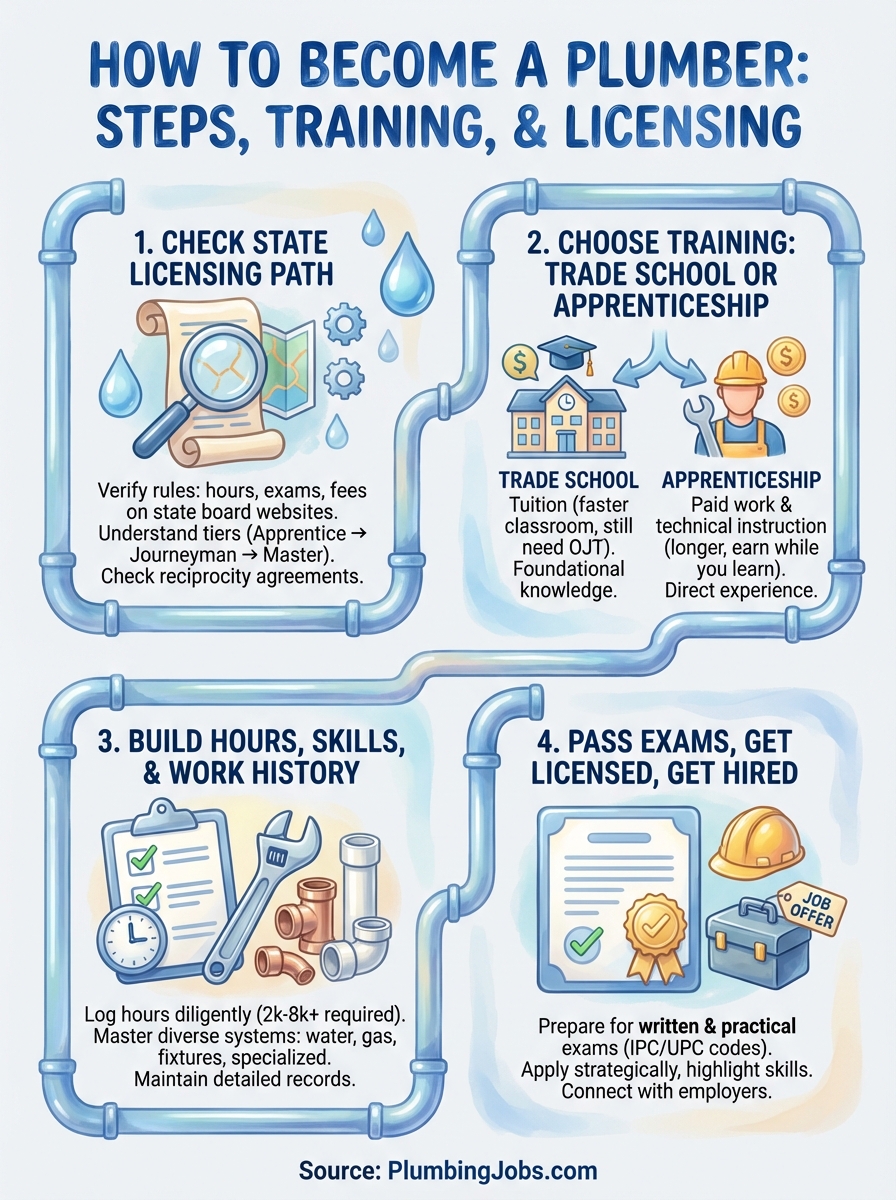
Your first move is to verify your state’s licensing requirements before you invest time or money in training. Each state regulates plumbing differently, and understanding how to become a plumber in your location prevents wasted effort. Some states require four years of apprenticeship hours, while others allow shortcuts through military service or prior trade experience.
Where to find your state’s rules
Start at your state’s licensing board website (search “[Your State] plumbing license board” or “[Your State] contractor licensing”). These sites list the exact hour requirements, exam details, and application fees you’ll need to meet. Most states break licenses into tiers: Apprentice, Journeyman, and Master Plumber, each with distinct requirements.
State licensing boards publish the exact number of training hours required, the types of acceptable training programs, and whether reciprocity agreements exist with neighboring states.
Look for three specific details:
- Minimum training hours (typically 2,000 to 8,000 hours, depending on the license level)
- Classroom hour requirements (usually 144 to 576 hours of technical instruction)
- Exam prerequisites (some states require sponsorship from a licensed plumber before you can test)
If you plan to move states eventually, check whether your future state recognizes licenses from where you start. A few states have reciprocity agreements that simplify transferring your credentials.
Step 2. Choose training: trade school or apprenticeship
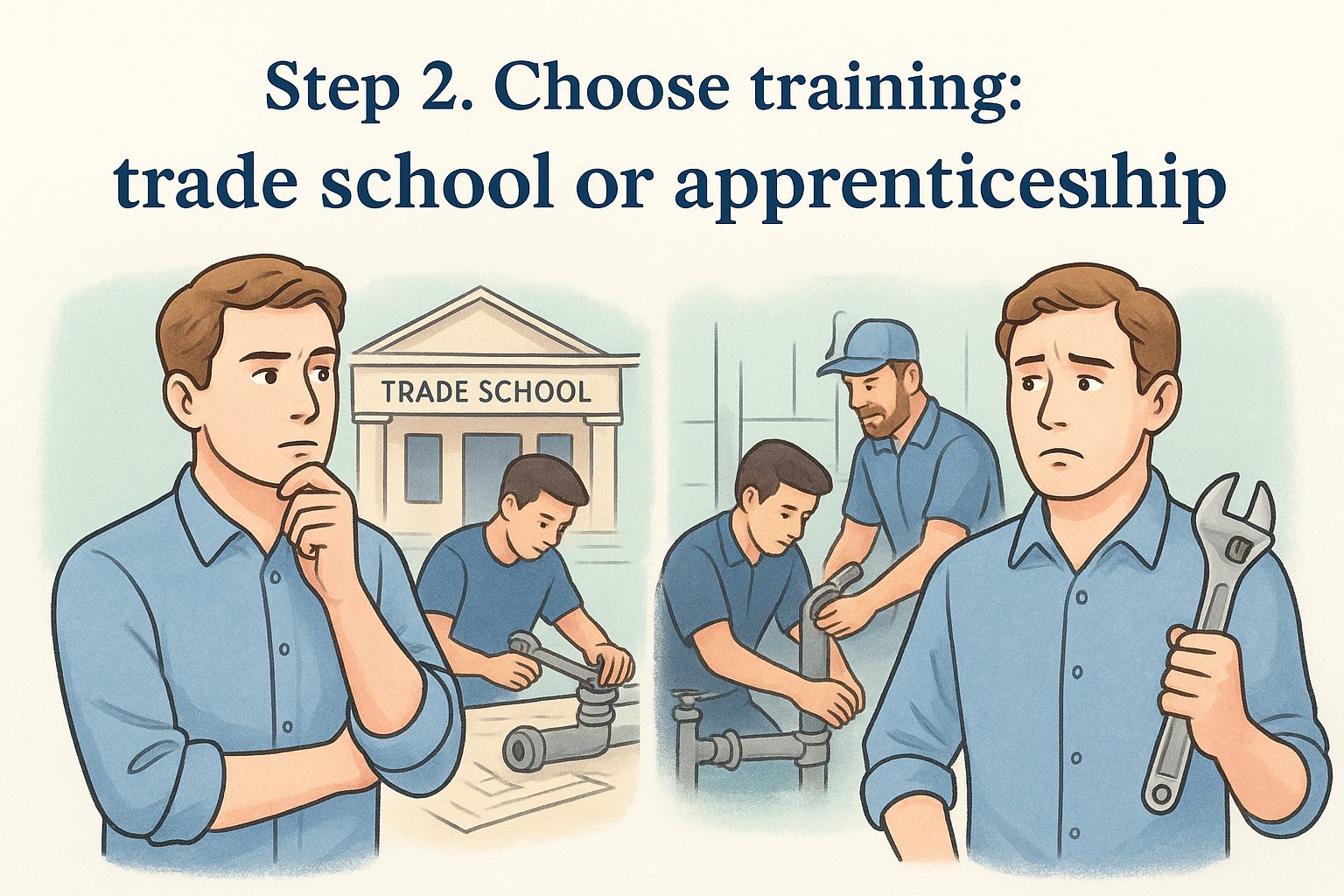
You have two main paths when learning how to become a plumber: enroll in a trade school program or enter a registered apprenticeship. Both routes teach the same core skills (pipe installation, code compliance, repair techniques), but they differ in cost structure, pace, and learning environment.
Trade school programs
Trade schools offer structured classroom training combined with hands-on labs, typically lasting 6 months to 2 years. You’ll pay tuition upfront (usually $5,000 to $20,000), but you complete your education faster and can start applying for apprenticeships with foundational knowledge already established. Programs cover blueprint reading, local plumbing codes, and basic installations through simulated job scenarios.
Trade schools accelerate your classroom hours, which count toward state licensing requirements, letting you enter the workforce with credentials that employers recognize.
After graduation, you still need on-the-job hours through an apprenticeship or entry-level position to qualify for licensing.
Apprenticeship programs
Apprenticeships combine paid work with technical instruction, typically spanning 4 to 5 years. You earn wages ($15 to $25 per hour starting) while accumulating the required hours under a licensed plumber’s supervision. Unions, contractors, and government programs sponsor most apprenticeships, and you’ll attend evening or weekend classes alongside your day job. This path costs little upfront but takes longer to complete.
Step 3. Build hours, skills, and a work history
Once you start training (whether through trade school, apprenticeship, or both), your focus shifts to accumulating verifiable hours and building competencies that employers value. States require between 2,000 and 8,000 hours of supervised work experience before you qualify for journeyman licensing, and you’ll need documented proof of every hour worked.
Track your hours from day one
Keep a detailed logbook that records your daily tasks, hours worked, and the supervising plumber’s name. Most licensing boards require this documentation when you apply for your license, and gaps or inconsistencies can delay your application. You’ll log residential repairs, commercial installations, new construction, and service calls separately because some states mandate experience across multiple categories.
Your logbook becomes your career proof. Without accurate records, you’ll struggle to demonstrate you’ve met minimum hour requirements.
Expand your skill set strategically
Learning how to become a plumber means mastering water supply systems, drainage networks, gas lines, and fixture installations. During your training, seek assignments that expose you to different systems. Volunteer for projects involving backflow prevention, water heaters, or sprinkler systems because specialized skills increase your marketability and hourly rate once licensed.
Step 4. Pass exams, get licensed, and get hired
After you complete your required hours, the final stage involves passing state exams and securing employment as a licensed professional. Most states require both a written exam covering codes, regulations, and technical knowledge, plus a practical assessment where you demonstrate actual installation and repair skills.
Prepare for your licensing exam
Your state licensing board publishes study guides and reference materials that outline exactly what the exam covers. Focus on the International Plumbing Code (IPC) or Uniform Plumbing Code (UPC), depending on which your state follows. Practice tests help you identify weak areas and familiarize yourself with question formats.
Plan for three to six months of study time before scheduling your exam, especially if you’re balancing work commitments.
Most exams cost $100 to $300, and you’ll need approved reference materials on test day.
Apply and interview strategically
With your license in hand, target employers who value experience level and specializations you’ve built. PlumbingJobs.com lists openings across all 50 states, letting you filter by certification requirements and pay ranges. During interviews, reference specific projects from your training that demonstrate problem-solving ability and code compliance knowledge. Understanding how to become a plumber means recognizing that employers hire based on proven skills and reliability, not just credentials alone.
Next steps
You now understand the complete process of how to become a plumber, from researching state requirements to passing your licensing exam. Your immediate actions should focus on contacting your state licensing board to confirm exact hour requirements and approved training programs, then choosing between trade school enrollment or applying directly to apprenticeship programs in your area.
Start building your professional network today by connecting with local plumbing contractors who hire apprentices. Many businesses post openings on job boards dedicated to the trades, where you can apply directly and begin earning while you learn. Browse current plumbing apprenticeships and entry-level positions at PlumbingJobs.com, which lists opportunities across all 50 states with filters for experience level and certification requirements.
Track every hour you work from your first day, maintain your logbook diligently, and prioritize learning diverse systems during training. The licensing process takes commitment, but it leads to stable work with strong earning potential and consistent demand.
Want plumbing jobs delivered to your inbox?
Want plumbing jobs delivered to your inbox?
Partner Site

