
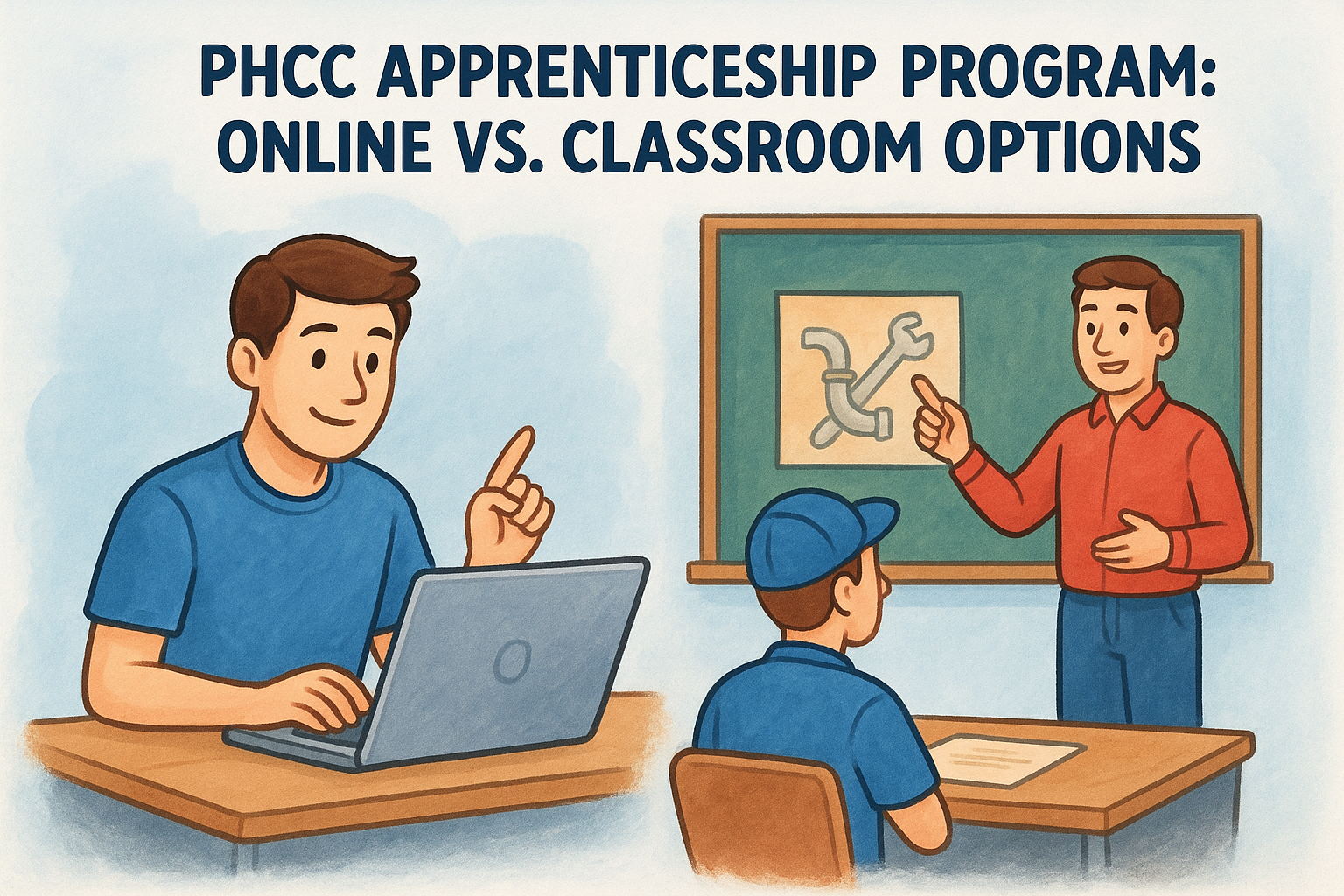
PHCC Apprenticeship Program: Online Vs. Classroom Options
Starting a career in plumbing requires proper training, and the PHCC apprenticeship program remains one of the most respected pathways into the trade. Whether you’re weighing online coursework against traditional classroom instruction, understanding your options upfront can save time and help you make the right choice for your situation.
At PlumbingJobs.com, we connect trained plumbers with employers across the country, and we regularly see job listings that prefer or require PHCC-certified credentials. That’s why knowing how this program works, from enrollment to Department of Labor certification, directly impacts your job prospects and earning potential.
This guide breaks down the key differences between online and classroom PHCC apprenticeship options, covers state-specific program requirements, and walks you through what completion actually looks like. By the end, you’ll have a clear picture of which learning format fits your schedule, budget, and career goals.
Why PHCC apprenticeships matter for your career
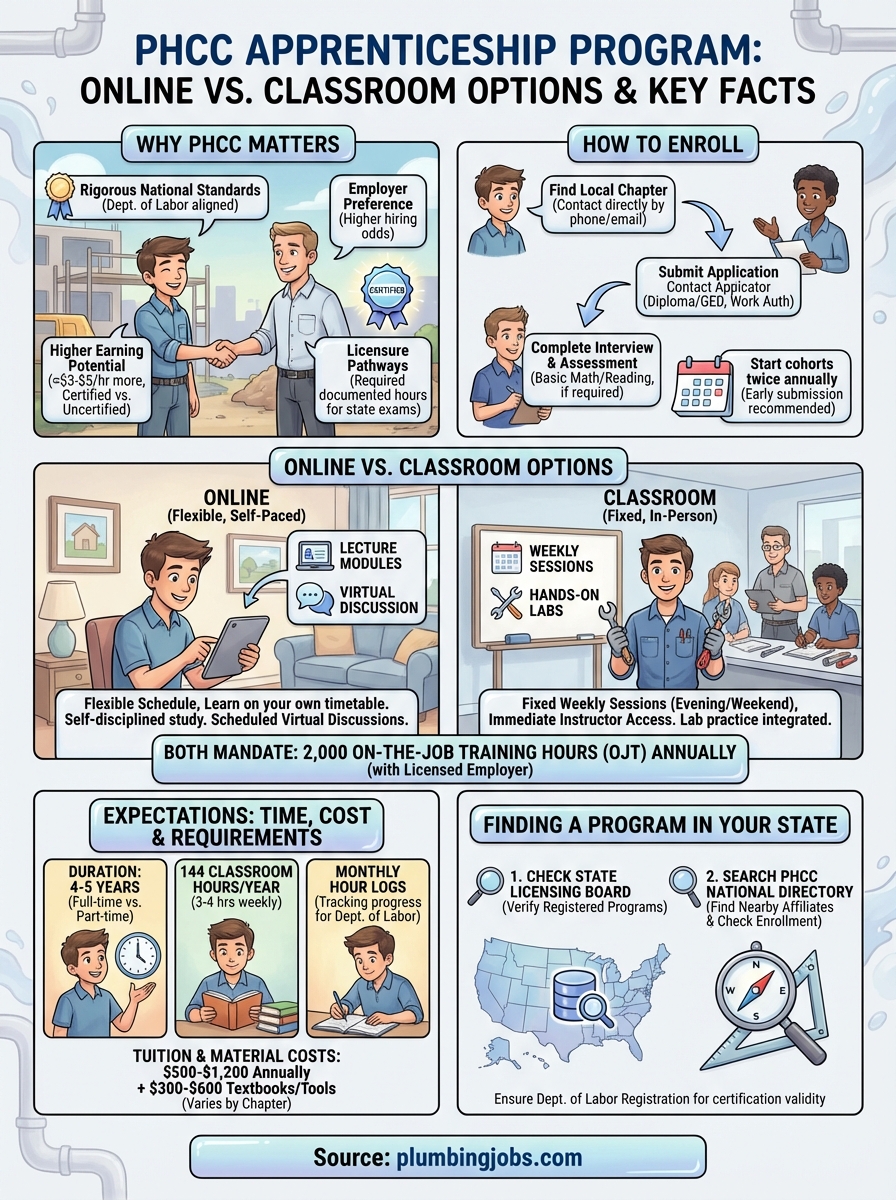
Employers across the plumbing and HVAC industries actively seek candidates who complete structured training programs, and PHCC credentials signal that you’ve met rigorous national standards. When you finish a PHCC apprenticeship program, you gain both technical skills and proof of completion that sets you apart from self-taught workers or those with informal training backgrounds.
Industry recognition and employer preference
Hiring managers know that PHCC-trained apprentices follow a curriculum aligned with Department of Labor requirements, which means you’ve covered safety protocols, code compliance, and hands-on techniques that matter on real job sites. Many companies list PHCC certification as a preferred or required qualification in their job postings because it reduces onboarding time and liability concerns. You’ll notice this pattern if you browse openings on PlumbingJobs.com, where contractors specifically mention apprenticeship completion or related credentials in their listings.
Competitive salary advantages
Completing a recognized apprenticeship directly affects your starting pay and long-term earning potential. Workers who document formal training through programs like PHCC typically command higher hourly rates than those without verified credentials, especially when bidding for union positions or working on commercial projects that require certified labor.
“Certified apprentices often start $3 to $5 per hour higher than uncertified entry-level hires in metropolitan markets.”
Your completed apprenticeship also opens doors to licensure pathways in states that require documented training hours before you can sit for journeyman or master exams. Without that paper trail, you may struggle to meet eligibility requirements even if you have years of hands-on experience. States like California, Texas, and New York enforce strict documentation rules, so having a PHCC certificate simplifies the entire licensing process and keeps your career progression on track.
How to enroll in a PHCC apprenticeship
Enrollment in a PHCC apprenticeship program starts with contacting your local chapter rather than a national office, because each affiliate runs its own program with state-specific requirements. You’ll work directly with regional coordinators who handle applications, schedule interviews, and manage class placements for both online and in-person tracks.
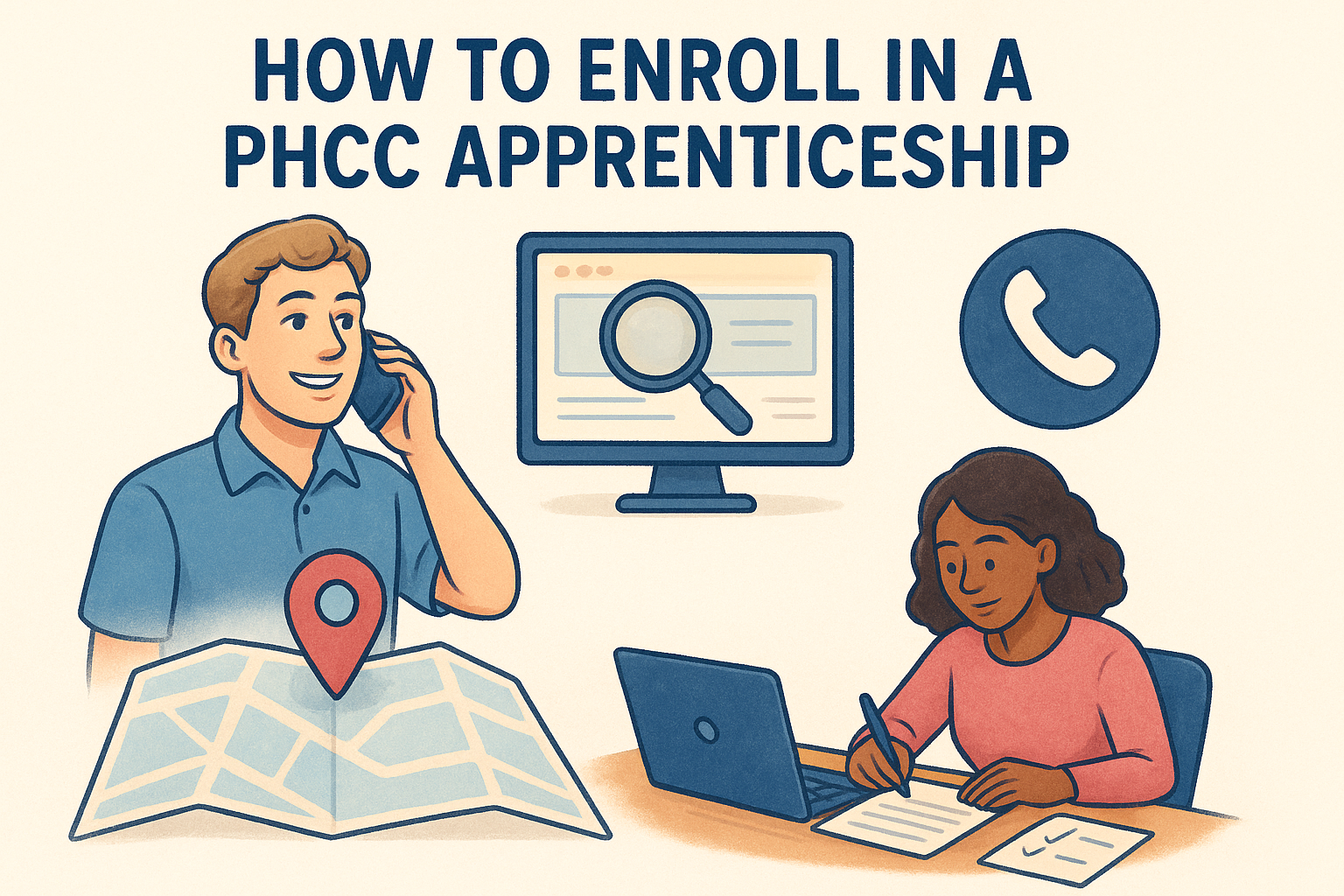
Find your local PHCC chapter
Visit the official PHCC website to locate the chapter nearest your address, then reach out by phone or email to request enrollment details. Most chapters maintain open application periods during specific months, so timing your inquiry matters if you want to start training in the next available cohort. You can also check with your state’s Department of Labor apprenticeship office, which maintains records of all registered PHCC programs operating in your area.
Submit your application materials
You’ll typically need a high school diploma or GED, a completed application form, and proof of legal work authorization to meet baseline eligibility standards. Some chapters require a basic math and reading assessment during the interview process to confirm you can handle technical coursework.
“Most PHCC programs accept applications year-round but only start new cohorts twice annually, so early submission increases your placement odds.”
After acceptance, you’ll receive instructions for tuition payments, textbook orders, and your first day of instruction.
Online vs. classroom options compared
Choosing between online coursework and traditional classroom instruction depends on your work schedule, learning preferences, and how quickly you need to complete your training. Both formats within a PHCC apprenticeship program deliver the same core curriculum and Department of Labor certification, but the structure and daily experience differ significantly.

Flexibility and scheduling differences
Online programs let you complete lecture-based modules on your own timetable, which works well if you already hold a full-time job or need to balance family responsibilities. You’ll typically log in to a learning platform, watch recorded sessions, submit assignments digitally, and participate in scheduled virtual discussions with instructors and classmates. Classroom programs require you to attend fixed weekly sessions at a physical location, usually in the evening or on weekends, which limits flexibility but provides immediate access to instructors when you have questions.
“Online students finish theory coursework 20% faster on average because they control their study pace, but they must maintain strict self-discipline to stay on track.”
Hands-on training requirements
Both formats mandate the same on-the-job training hours with a licensed employer, so you’ll still work directly under supervision regardless of how you complete the classroom portion. Traditional programs often integrate lab sessions into in-person classes, giving you practice with tools and fixtures before you arrive at actual job sites.
What to expect: time, cost, and requirements
Most PHCC apprenticeship programs require four to five years to complete, combining classroom instruction with documented on-the-job hours under a licensed plumber or HVAC contractor. You’ll need to balance theoretical learning with practical work experience throughout the entire duration, so understanding these commitments upfront helps you plan financially and professionally.
Program duration and hourly requirements
You must complete 144 classroom hours annually alongside 2,000 on-the-job training hours per year to meet Department of Labor certification standards. That breaks down to roughly three to four hours of instruction weekly during the academic term, plus full-time employment with a qualified sponsor who tracks your work activities. Your employer submits monthly hour logs to your local PHCC chapter, and falling behind schedule can delay your completion date or disqualify you from sitting for certification exams.
“Apprentices who work full-time typically finish within four years, while part-time schedules can extend completion to six or seven years.”
Tuition and material costs
Expect to pay $500 to $1,200 annually for classroom instruction, depending on whether your local chapter receives state funding or operates independently. You’ll also purchase textbooks and tools totaling $300 to $600 in your first year, though some employers reimburse these expenses as part of your hiring agreement.
Finding a PHCC program in your state
Locating an active PHCC apprenticeship program in your area requires checking both your state’s licensing board and the national PHCC chapter network, since not every region offers registered programs under this specific organization. You’ll want to verify that any program you find carries Department of Labor registration, which ensures your completed hours count toward state licensing requirements and future certification exams.
Check your state licensing board first
Start by visiting your state’s Department of Labor apprenticeship page to review all registered plumbing programs operating in your jurisdiction. Most states maintain an online database where you can search by trade, location, and sponsoring organization. This step confirms whether a PHCC chapter near you runs an officially recognized program, or if you need to consider alternative sponsors that meet the same credentialing standards.
“States like Florida, Pennsylvania, and Ohio host multiple PHCC chapters, while rural states may only offer one or two registered programs statewide.”
Search the PHCC national directory
Navigate to the PHCC website’s chapter locator tool and enter your zip code to find nearby affiliates. Contact each chapter directly to ask about current enrollment status, waiting lists, and whether they offer online or classroom formats.
Next steps
Choosing between online and classroom formats for your PHCC apprenticeship program comes down to your work schedule, learning style, and local availability. Start by contacting your nearest PHCC chapter to confirm enrollment deadlines and program formats, then verify that your chosen option carries Department of Labor registration through your state’s apprenticeship office. You should also line up a qualified employer sponsor early, since your on-the-job training hours begin as soon as you accept a position.
Once you complete your apprenticeship and earn certification, you’ll need reliable job opportunities that recognize your training. Browse current openings that specifically request PHCC credentials or apprenticeship completion on our platform, and explore our plumbing career blog for updates on licensing changes, salary trends, and hiring patterns across different states. Staying informed about industry developments helps you make strategic career moves after you finish your program.
Want plumbing jobs delivered to your inbox?
Want plumbing jobs delivered to your inbox?
Partner Site

