

Plumber Salary: Hourly & Annual Pay By State (U.S. 2026)
Whether you’re considering a career in plumbing or looking to negotiate your next raise, understanding plumber salary data gives you a real advantage. The trade offers solid earning potential, but actual pay varies significantly depending on where you work, your certifications, and years of experience. Knowing the numbers helps you make smarter career moves, and that’s exactly what we’re breaking down here.
At PlumbingJobs.com, we connect plumbing professionals with employers across all 50 states, so we see firsthand how compensation differs from region to region. This guide pulls together current salary benchmarks for 2026, including hourly rates, annual averages, and state-by-state comparisons. We’ve also included insights on how apprentices, journeymen, and master plumbers can expect their earnings to grow over time.
Below, you’ll find the data you need to evaluate job offers, plan your next career step, or simply understand what the market pays for your skills.
Why plumber pay varies so much
Your location plays the biggest role in determining how much you earn as a plumber. States with higher costs of living typically pay more to attract and retain skilled workers, but that doesn’t automatically mean better purchasing power. Local demand for plumbing services also fluctuates based on population density, new construction activity, and the age of existing infrastructure. A plumber in a booming metro area with aging pipes will command higher rates than someone in a slow-growth rural county.
Cost of living and local demand
When you work in expensive urban centers, employers adjust pay upward to match housing and transportation costs. New York, California, and Massachusetts consistently rank among the highest-paying states for plumbers because rent, groceries, and taxes eat up a larger share of your budget. Construction booms and infrastructure projects drive up demand and push wages higher in specific regions. States investing heavily in public works or experiencing rapid residential growth need more licensed professionals, which tightens the labor market and increases what companies are willing to pay.
Plumber salary can differ by $20 to $40 per hour between states, even for identical experience levels.
Union vs. non-union work
Union membership changes your earning trajectory significantly. Union plumbers typically negotiate better wages, benefits, and pension contributions through collective bargaining agreements, which often result in higher base pay and overtime rates. Non-union shops may offer more flexibility in scheduling or faster advancement, but total compensation packages usually fall below union scale. Your choice between union and non-union work depends on what matters most to you: structured pay increases and strong benefits versus entrepreneurial freedom and direct negotiation with employers.
Specialization and service type
The type of plumbing work you perform directly impacts your paycheck. Commercial and industrial plumbers handle complex systems in large buildings, water treatment plants, and manufacturing facilities, which require advanced skills and command premium rates. Residential service plumbers earn well too, especially when they build a loyal customer base or work for established companies with high call volumes. Emergency and after-hours work adds another layer of earning potential, with overtime and weekend rates pushing your annual income higher. Certifications in specialized areas like medical gas systems, backflow prevention, or green plumbing technology make you more valuable and help justify higher billing rates.
Average plumber salary in the U.S. in 2026
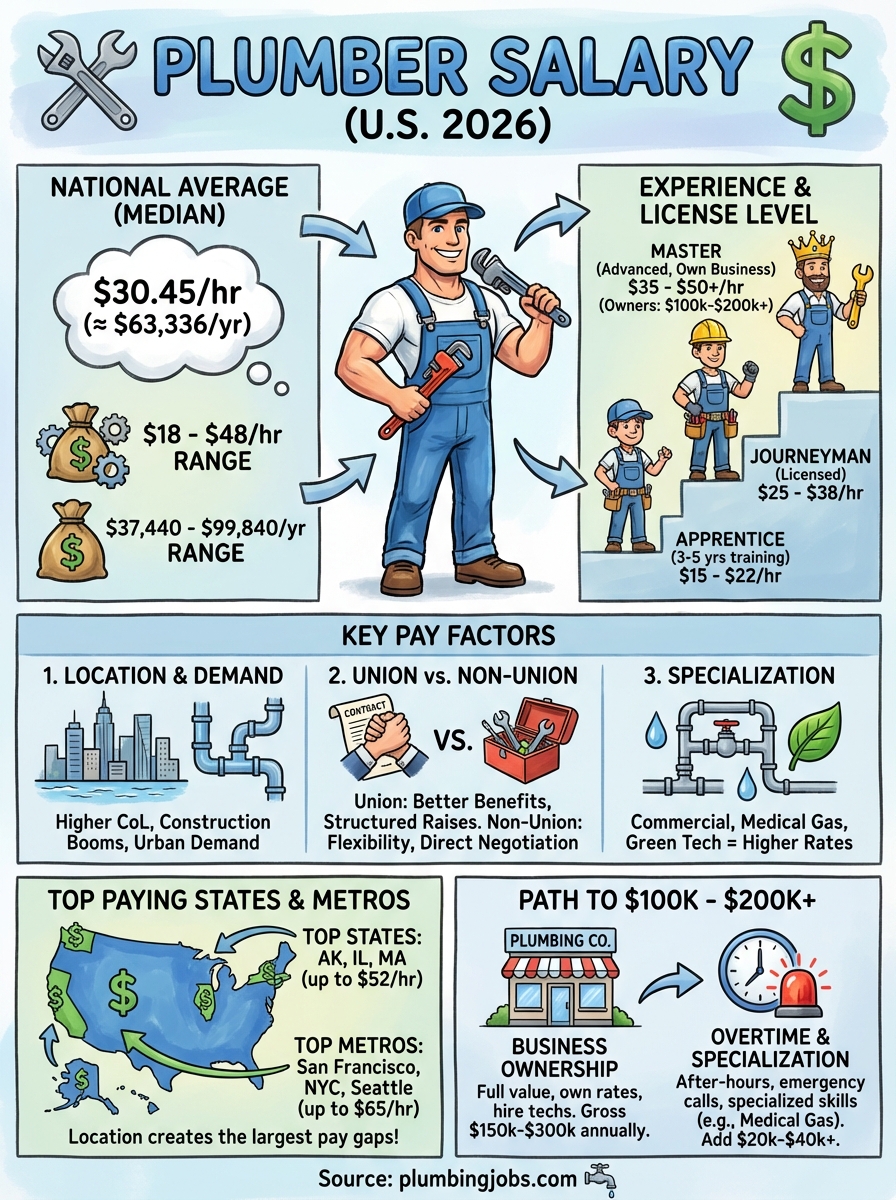
The typical plumber salary sits at $30.45 per hour, which translates to roughly $63,336 annually for full-time work. These figures represent the median point, meaning half of all plumbers earn more and half earn less. Your actual take-home depends on how many hours you log each week, whether you receive overtime pay, and if your employer offers performance bonuses or profit sharing.
National hourly and annual benchmarks
Hourly rates for plumbers range from $18 to $48 across the country, with most professionals clustering between $24 and $38 per hour. Entry-level positions start at the lower end of this spectrum, while experienced technicians with specialized skills reach the upper limits. Annual income spreads from $37,440 to $99,840 when you factor in regional differences and varying work schedules. Full-time plumbers working 40 hours weekly without overtime land near the $63,000 mark, but many professionals exceed this by taking on additional hours or pursuing higher-paying projects.
Most plumbers can expect to earn between $50,000 and $75,000 per year with consistent full-time work.
How the numbers stack up against other trades
Plumbing pays competitively compared to other skilled trades. Electricians average $31.20 per hour, while HVAC technicians earn around $27.90 per hour nationally. Plumbers often out-earn carpenters and general construction workers, though high-level electricians and elevator mechanics can pull ahead in certain markets. Your earning potential in plumbing matches or exceeds most trades when you factor in job stability, demand growth, and opportunities for self-employment.
Plumber pay by experience and license level
Your plumber salary climbs steadily as you accumulate experience and earn advanced licenses. Entry-level apprentices start near the bottom of the pay scale, while master plumbers with a decade of experience command top rates and often run their own businesses. Each certification milestone unlocks higher earning potential and access to more complex, better-paying projects.

Apprentice earnings and entry-level pay
Apprentice plumbers typically earn $15 to $22 per hour during their training period, which usually lasts three to five years. Your pay increases incrementally as you complete each year of your apprenticeship and demonstrate mastery of core skills. Most programs structure wages as a percentage of journeyman scale, starting around 40% to 50% in your first year and reaching 80% to 90% by your final year. Union apprenticeships often provide better starting rates and guaranteed annual raises compared to non-union training programs.
Journeyman rates and mid-career growth
Licensed journeyman plumbers earn $25 to $38 per hour on average, with your exact rate depending on location and specialty. You can work independently at this level, which opens doors to overtime opportunities and side jobs that boost your annual income. Your earning power grows fastest in the first five years after licensure as you build a reputation, expand your skill set, and take on leadership roles within your company.
Journeyman plumbers with five years of field experience often earn 30% to 50% more than newly licensed technicians.
Master plumber income potential
Master plumbers command $35 to $50 per hour working for established companies, but many at this level launch their own businesses and earn significantly more. Your master license allows you to pull permits, supervise other plumbers, and bid on commercial projects that journeymen cannot legally touch. Business owners at the master level frequently gross $100,000 to $200,000 annually once they build a client base and hire additional technicians.
Plumber salary by state and top-paying metros
Your earning potential changes dramatically depending on which state you choose to work in. Geographic location creates the largest pay gaps in the plumbing trade, with top states paying nearly double what bottom states offer. Understanding these regional differences helps you target markets where your skills command premium rates and where job opportunities align with your income goals.
States where plumbers earn the most
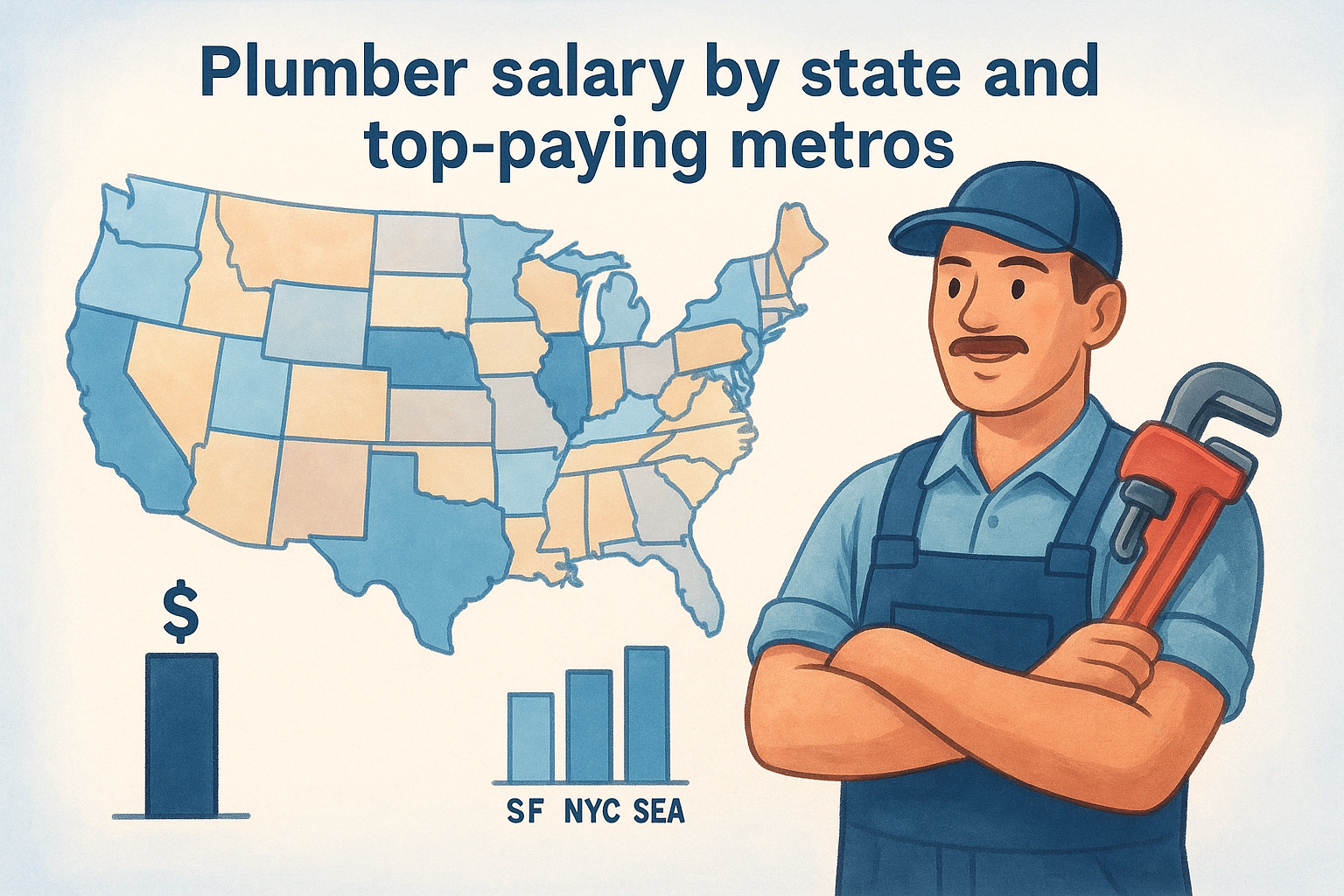
Alaska, Illinois, and Massachusetts consistently rank as the highest-paying states for plumbers, with hourly rates reaching $45 to $52 in major cities. Alaska’s remote locations and harsh weather drive up demand and compensation, while Illinois benefits from strong union presence in Chicago. Massachusetts plumbers average $36 to $48 per hour due to high cost of living and strict licensing requirements that limit labor supply. New York, Oregon, and Hawaii also offer above-average plumber salary ranges, typically between $34 and $46 hourly.
Plumbers in Alaska can earn 70% more than their counterparts in lower-paying southern states.
High-paying metropolitan areas
San Francisco, New York City, and Seattle lead the nation in plumber compensation, with experienced professionals earning $50 to $65 per hour for standard work. Your location within these metros matters too, as suburban areas often pay slightly less than urban cores where emergency calls and complex commercial projects concentrate. Chicago, Boston, and Los Angeles round out the top-paying cities, offering $42 to $55 hourly for journeyman-level work. These markets combine high demand with strict building codes that require skilled professionals, pushing your earning potential significantly above national averages.
How plumbers reach $100,000 to $200,000 plus
Breaking into six-figure plumber salary territory requires more than technical skill alone. You need to combine strategic career choices with consistent execution across multiple income streams. The highest earners typically run their own businesses, work in premium markets, or stack overtime hours in high-demand sectors. Your path to $100,000 depends on whether you prefer building a company or maximizing your value as an employee.
Business ownership and profit margins
Launching your own plumbing company gives you the most direct route to six figures and beyond. You capture the full value of each job instead of splitting revenue with an employer, and you set your own rates based on market demand. Successful plumbing business owners typically gross $150,000 to $300,000 annually once they establish a client base and hire additional technicians to handle overflow work. Your profit margins increase as you build efficiency, reduce callbacks, and develop relationships with commercial accounts that provide steady monthly revenue.
Master plumbers who transition from employee to business owner often double their annual income within three years.
Overtime, emergency work, and specialization
Maximizing billable hours through overtime and emergency calls pushes your earnings higher without changing employers. Plumbers who accept after-hours work, weekend assignments, and holiday emergency calls frequently add $20,000 to $40,000 to their base salary. Specializing in high-value services like medical gas systems, industrial pipefitting, or commercial backflow prevention opens doors to projects that pay $45 to $65 per hour. Your combination of availability and specialized skills makes you indispensable to clients who need reliable expertise quickly.
Quick recap and next steps
Understanding plumber salary ranges across the U.S. gives you the power to negotiate better pay, choose the right market, and plan your career trajectory. You’ve seen how location, experience level, and specialization directly impact your earning potential, from apprentice wages starting around $15 per hour to master plumbers clearing six figures annually. State-by-state differences matter, with top markets like Alaska and Illinois paying nearly double what lower-tier states offer.
Your next move depends on where you stand today. If you’re actively searching for higher-paying opportunities, browse current listings on PlumbingJobs.com to compare what employers offer in different regions. Licensed professionals looking to advance should focus on certifications that unlock premium work, while apprentices benefit from tracking wage progression within union and non-union programs. Take action now by researching positions that match your skills and income goals.
Want plumbing jobs delivered to your inbox?
Want plumbing jobs delivered to your inbox?
Partner Site

