
Service Plumber Salary: Hourly & Annual Pay By State (2026)
Whether you’re negotiating a raise, weighing a job offer, or deciding if a career in service plumbing is worth pursuing, knowing what the role actually pays matters. The average service plumber salary sits around $61,000 per year nationally, but that number shifts significantly depending on where you work, how long you’ve been at it, and the type of employer signing your checks. Hourly rates can range from the mid-$20s to well over $40, and the gap between the lowest- and highest-paying states is wider than most people expect.
We built PlumbingJobs.com to connect plumbing professionals with employers across all 50 states, and salary transparency is a big part of making that connection work. Our team tracks compensation trends across thousands of job listings posted on the platform, giving us a front-row seat to what companies are actually offering right now. That data, combined with Bureau of Labor Statistics figures and real-world reports from working plumbers, informs everything you’ll find below.
This guide breaks down service plumber pay by state, experience level, and hourly versus annual figures for 2026. You’ll find detailed salary tables, context on what drives pay differences, and practical insight you can use whether you’re job hunting or benchmarking your current compensation. Let’s get into the numbers that actually matter for your career.
What a service plumber does
A service plumber handles residential and light commercial plumbing repairs, maintenance calls, and system replacements for existing buildings. Unlike new-construction plumbers who rough-in pipe systems on active job sites, service plumbers respond to calls from homeowners and businesses that already have plumbing in place. Your job is to diagnose problems quickly, explain options clearly, and complete the repair the same visit whenever possible.
Core daily responsibilities
Service plumbers cover a wide range of tasks on any given day. The work is fast-paced and customer-facing, which means strong diagnostic skills and communication ability matter as much as technical know-how. A typical day might include any combination of the following:
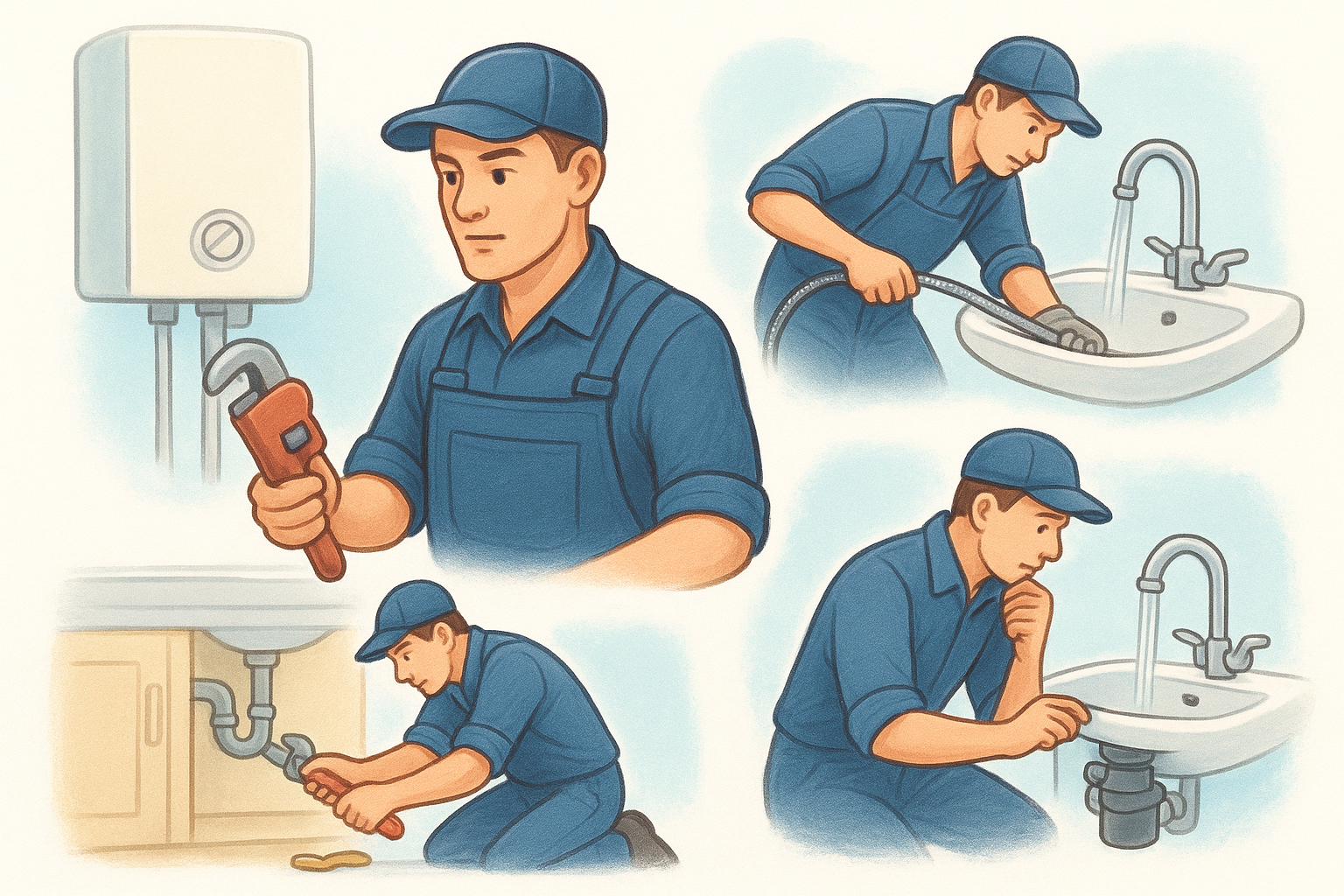
- Replacing water heaters, both traditional tank and tankless units
- Clearing clogged drains and sewer lines using snakes or hydro-jetting equipment
- Fixing or replacing faucets, toilets, and fixtures
- Diagnosing and repairing low water pressure problems
- Responding to emergency leak calls
- Installing garbage disposals and appliance connections
- Inspecting and recommending preventive maintenance
The ability to identify additional problems during a service call and explain the value of fixing them on the spot is a skill that directly drives your income as a service plumber.
Because the work takes you into customers’ homes and businesses daily, professionalism and the ability to explain technical issues in plain language separate high earners from average performers. This matters for the service plumber salary conversation because many employers structure bonuses around customer satisfaction scores and average job ticket value, not just hours logged.
How service plumbers differ from construction and commercial plumbers
Service plumbers work on a fundamentally different schedule and skill set compared to their counterparts in new construction and commercial pipefitting. Construction plumbers often spend weeks or months on the same job site, while service plumbers typically run three to six separate calls per day across different locations. That variety demands faster problem-solving and a broader working knowledge of existing systems since you rarely know exactly what you’re walking into before you arrive.
Commercial and industrial pipefitters focus on large-scale systems, while service plumbers focus on the systems that homeowners and small businesses depend on every day. Compensation structures in service plumbing often reflect that difference with a base hourly rate paired with performance incentives tied directly to call volume and upsell conversions.
Service plumber pay in 2026: national averages
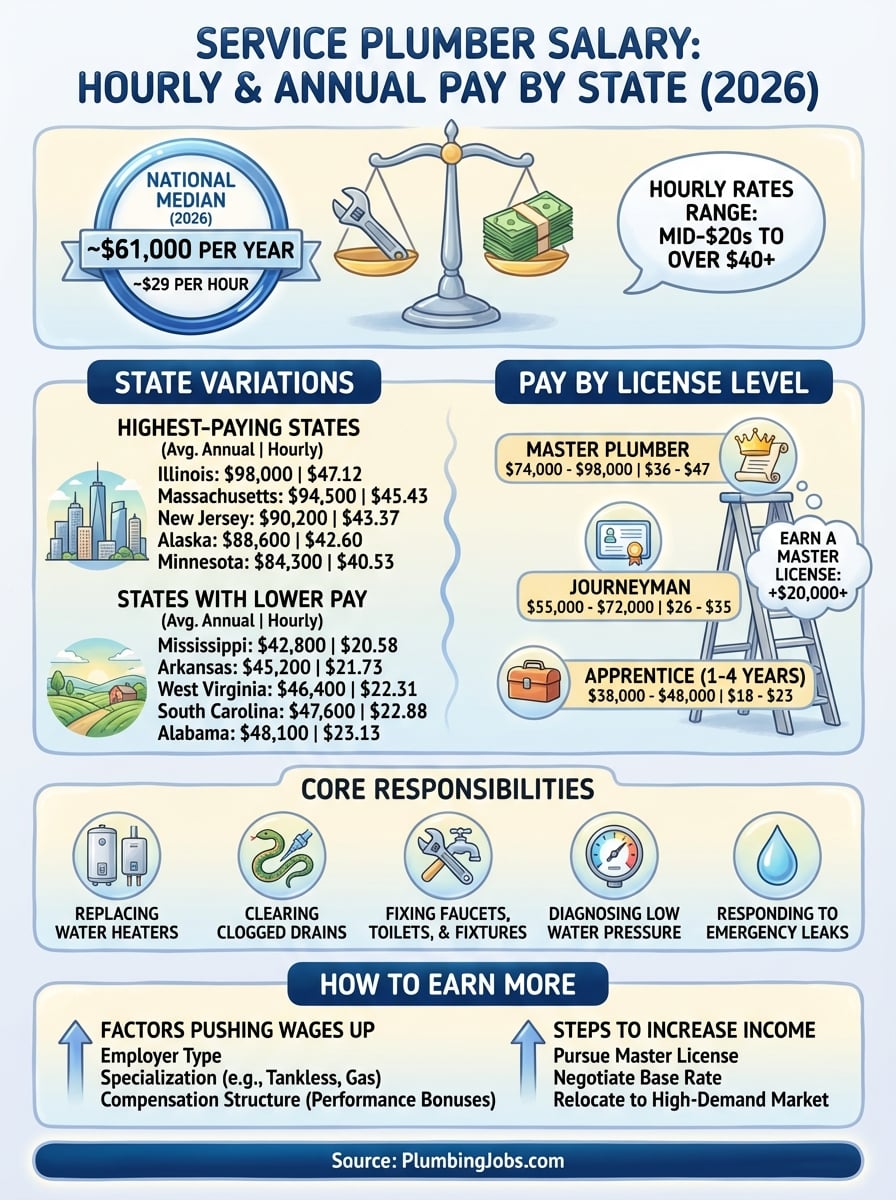
The national median service plumber salary sits at approximately $61,000 per year in 2026, according to Bureau of Labor Statistics data for plumbers, pipefitters, and steamfitters. That translates to roughly $29 per hour at the median, but the full range runs from around $22/hour for entry-level technicians to $45/hour or more for experienced journeymen working high-demand markets.
Annual vs. hourly: which number matters more
For service plumbers specifically, the hourly rate is often the more practical benchmark because most employers structure pay around an hourly base with performance bonuses layered on top. A technician earning $28/hour but pulling in consistent performance bonuses tied to ticket value and call volume can easily clear $70,000 annually, while someone locked into a flat salary with no incentive structure might net less even with a nominally higher base.
Your total compensation package, not just the base wage, determines whether a job offer is actually competitive.
Where the national average comes from
The Bureau of Labor Statistics tracks plumber compensation through its Occupational Employment and Wage Statistics program, which surveys employers across all industries and states. Those figures cover all plumber classifications combined, blending apprentices just starting out with master plumbers who have decades on the job. When you isolate service plumbing specifically, the upper tier of earners pulls the average upward, which means your actual pay depends heavily on experience, license level, and the state where you work.
Service plumber salary by state
State matters more than almost any other variable when you’re comparing service plumber salary figures. The spread between the highest- and lowest-paying states runs over $50,000 annually, meaning two plumbers with identical experience and licenses can earn dramatically different incomes based purely on geography.
Moving from a low-wage state to a high-demand market can add more to your income than a decade of experience in the same location.
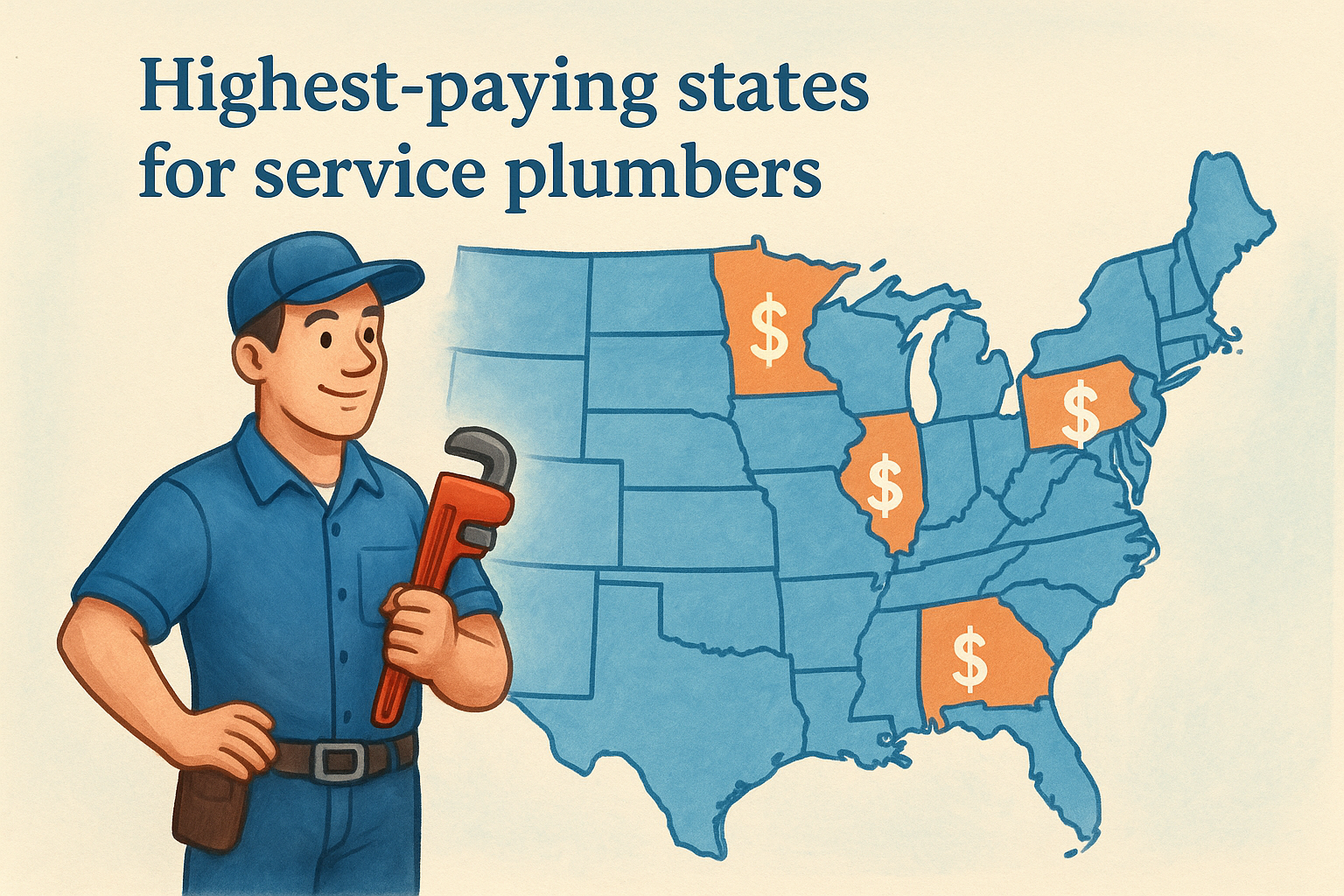
Highest-paying states for service plumbers
Union density, cost of living, and regional demand all push wages up in certain markets. The following states consistently rank at the top for plumber compensation:
| State | Avg. Annual Salary | Avg. Hourly Rate |
|---|---|---|
| Illinois | $98,000 | $47.12 |
| Massachusetts | $94,500 | $45.43 |
| New Jersey | $90,200 | $43.37 |
| Alaska | $88,600 | $42.60 |
| Minnesota | $84,300 | $40.53 |
States with lower average pay
In several states, lower union density and reduced commercial demand keep wages below the national median. If you work in these markets, performance bonuses and specialty certifications become your primary tools for closing the gap.
| State | Avg. Annual Salary | Avg. Hourly Rate |
|---|---|---|
| Mississippi | $42,800 | $20.58 |
| Arkansas | $45,200 | $21.73 |
| West Virginia | $46,400 | $22.31 |
| South Carolina | $47,600 | $22.88 |
| Alabama | $48,100 | $23.13 |
These figures reflect averages across all experience levels. Your actual pay within any state depends heavily on the employer and your license classification, as well as local market conditions specific to your metro area.
Pay by experience and license level
Your license classification is one of the most direct factors that determines your service plumber salary. Moving from apprentice to journeyman to master plumber represents real jumps in both legal authorization and earning power, and employers price that progression into their compensation structures from day one.
How license level shapes your base pay
Each license tier carries different responsibilities and risks, which is why pay increases stay consistent as you advance through the ranks. Here is how the three main levels typically compare on a national basis:
| License Level | Avg. Annual Salary | Avg. Hourly Rate |
|---|---|---|
| Apprentice (1-4 years) | $38,000 – $48,000 | $18 – $23 |
| Journeyman | $55,000 – $72,000 | $26 – $35 |
| Master Plumber | $74,000 – $98,000 | $36 – $47 |
Earning your master plumber license can add $20,000 or more to your annual income compared to staying at the journeyman level.
Experience beyond the license
Your license sets the floor, but years of hands-on service experience push your actual earnings above the base range for your tier. Employers pay a premium for technicians who can close high-ticket calls efficiently and keep callback rates low, and those skills build over time in the field, not in a classroom.
A journeyman with seven or more years of service work regularly out-earns a newly licensed master plumber because the market rewards proven field performance alongside credentials. Once you hit five years as a journeyman, your average ticket value and customer satisfaction scores become real leverage in salary negotiations.
What affects pay and how to earn more
Several variables directly shape your service plumber salary beyond state and license level. Understanding which ones you can control lets you build a strategy instead of just waiting for your next annual review.
Factors that push wages up
Employer type and compensation structure make a significant difference in your take-home pay. A plumbing company that runs a performance-based model, where bonuses tie to ticket value and call volume, typically pays more than a flat-rate shop with no incentive layer. Specialization also drives wages up because technicians who can handle tankless water heater installs, backflow testing, or gas line work command higher rates than generalists who stick to basic service calls.
Adding one or two high-demand specializations to your skill set can increase your hourly rate by $5 to $10 without requiring a new license.
Steps to increase your income
Pursuing your master plumber license is the single highest-return move available to most journeymen, and it directly expands the scope of work you can legally oversee and invoice. Beyond licensing, negotiating your base rate at every job change rather than accepting the first number offered consistently separates high earners from average ones.
Relocating to a higher-demand market is another lever worth calculating seriously. A move from a low-wage state to a top-paying market can deliver a salary increase larger than years of incremental raises in the same region. Track what local employers are advertising, compare it against your current rate, and treat every offer as a data point in your compensation research.
Key takeaways and next steps
Service plumber salary figures tell a clear story: where you work and what license you hold matter more than almost anything else when it comes to your pay. The national median sits at roughly $61,000 per year, but top-paying states like Illinois and Massachusetts push that figure well above $90,000 for experienced journeymen and master plumbers.
Your next move depends on where you stand in your career right now. If you’re at the apprentice level, pursuing your journeyman and master plumber license is the fastest path to a meaningful pay increase. If you’re already licensed, relocating to a high-demand market or adding a high-value specialization can deliver raises that outpace years of incremental bumps at the same employer.
Ready to see what employers are paying in your state? Browsing current listings is the most direct way to benchmark your rate. Visit the PlumbingJobs.com blog for more industry insights and resources to support your next career move.
Want plumbing jobs delivered to your inbox?
Want plumbing jobs delivered to your inbox?
Partner Site

