

Union Plumber Salary: Hourly Pay, Benefits, Pay Scales
Union plumbers in the United States earn significantly more than their non-union counterparts, with compensation packages that extend far beyond the hourly wage. If you’re considering joining a union or negotiating your next position, understanding the full picture of union plumber salary data, from base pay to fringe benefits, gives you real leverage.
At PlumbingJobs.com, we track plumbing positions across all 50 states, and union roles consistently rank among the highest-paying opportunities in the trade. Whether you’re an apprentice weighing your options or a journeyman exploring new chapters, knowing what UA locals pay in different regions helps you make informed career moves.
This guide breaks down national averages, state-by-state comparisons, and the often-overlooked benefits that make union compensation stand out. You’ll find specific pay scales, hourly rates, and total compensation figures to help you benchmark your earning potential.
What union plumber salary includes
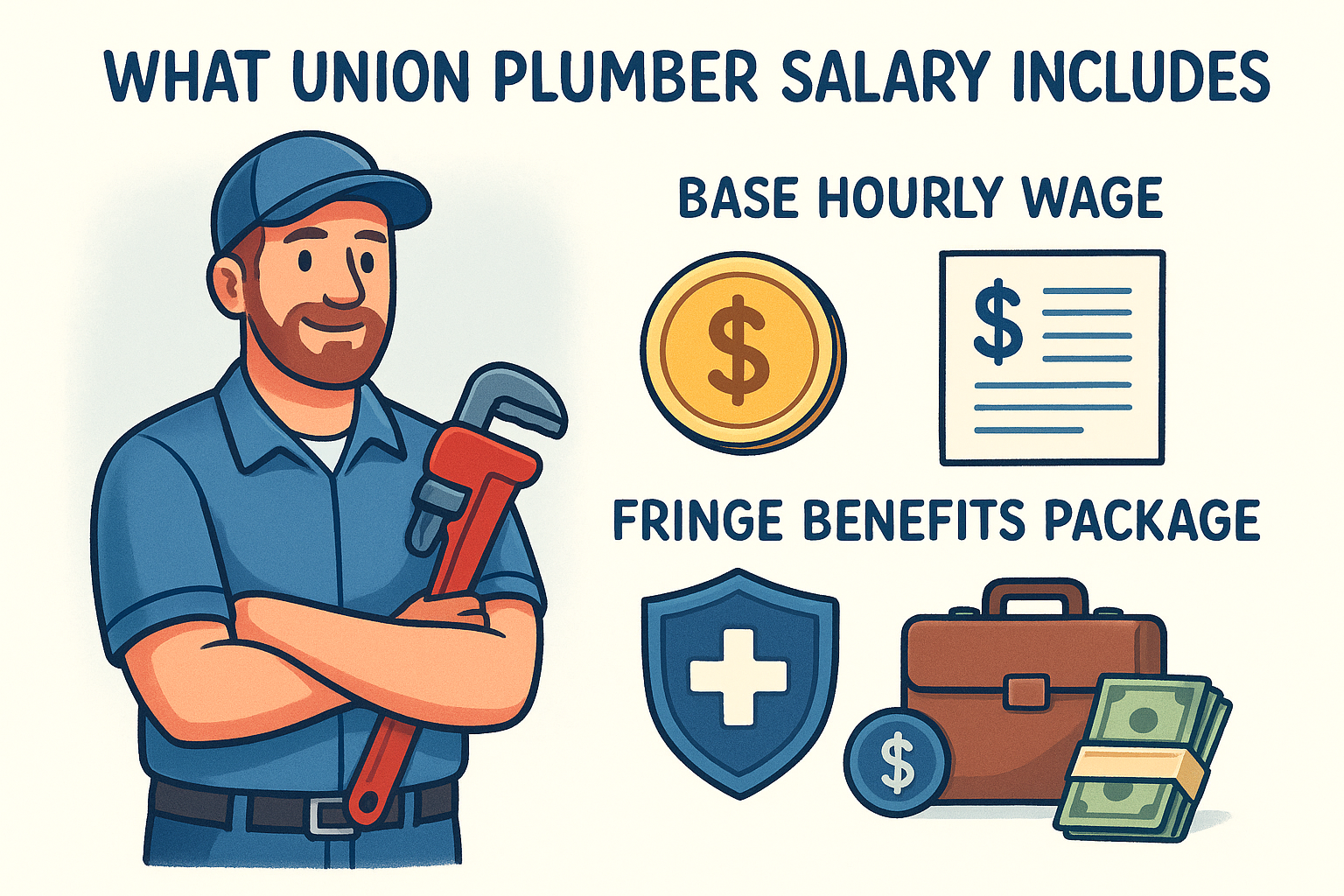
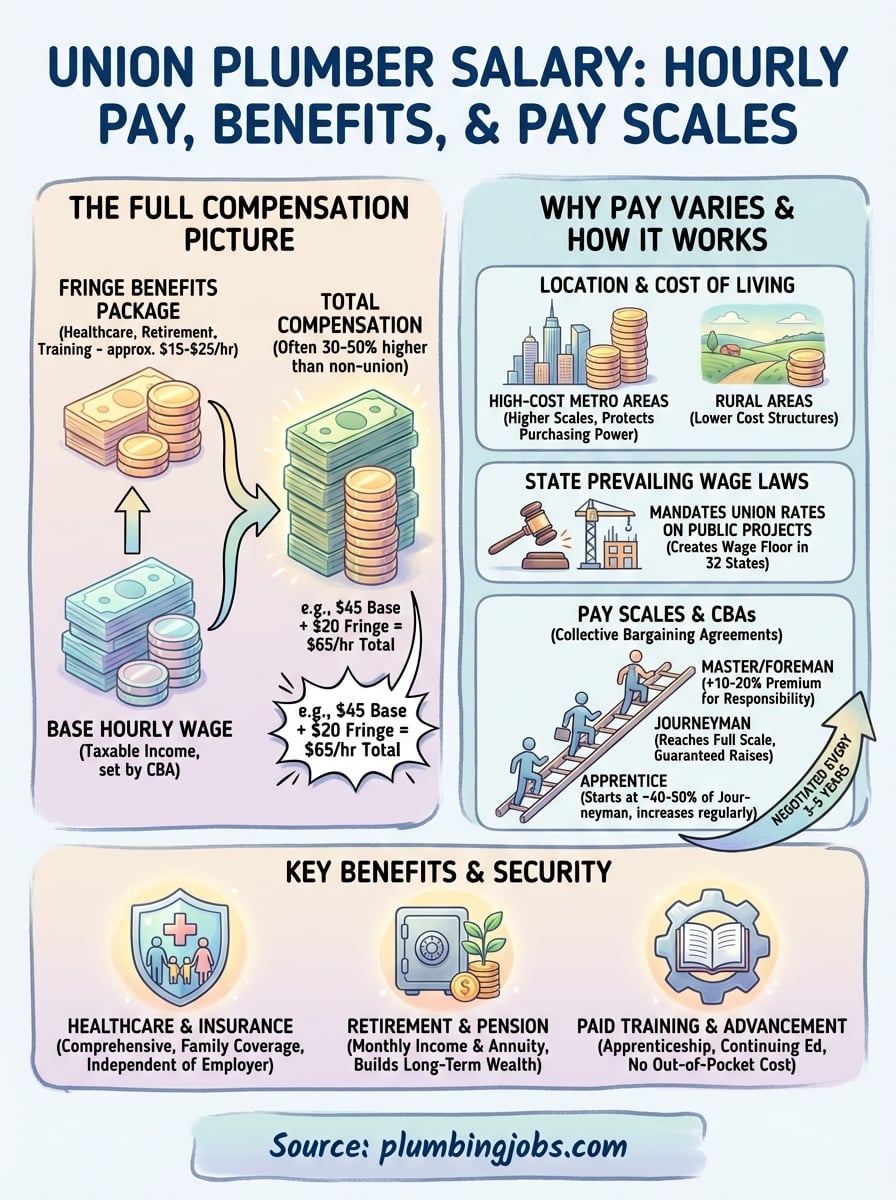
When you see a union plumber salary figure, you’re looking at more than just an hourly rate. Union compensation divides into two distinct categories: your base wage that appears on every paycheck, and a fringe benefits package that covers healthcare, retirement, and training. Together, these elements form your total compensation, which often exceeds what non-union plumbers receive by 30 to 50 percent.
Base hourly wage
Your base wage represents the taxable income you earn for each hour worked, and it’s the number most people reference when discussing pay. This rate appears in your collective bargaining agreement (CBA) and typically increases on a predetermined schedule as you gain experience or advance from apprentice to journeyman to master plumber status. For example, a first-year apprentice might start at 40 percent of the journeyman rate, progressing to 50 percent in year two, then 60 percent in year three, until reaching full scale.
Union base wages reflect negotiated minimums, not ceilings, so your actual take-home can exceed the scale depending on overtime, shift differentials, or specialty work.
Fringe benefits package
The fringe package adds significant value beyond your hourly check, covering expenses you’d otherwise pay out-of-pocket. Your health insurance premium, pension contributions, and annuity deposits all flow directly from your employer to union-administered trust funds. Most UA locals also allocate funds for continuing education, apprenticeship training programs, and industry advancement courses that keep your skills current without draining your wallet. These benefits typically add $15 to $25 per hour on top of your base wage, creating a total compensation package that reflects the true cost of employing a union tradesperson.
Why union plumber pay varies by location
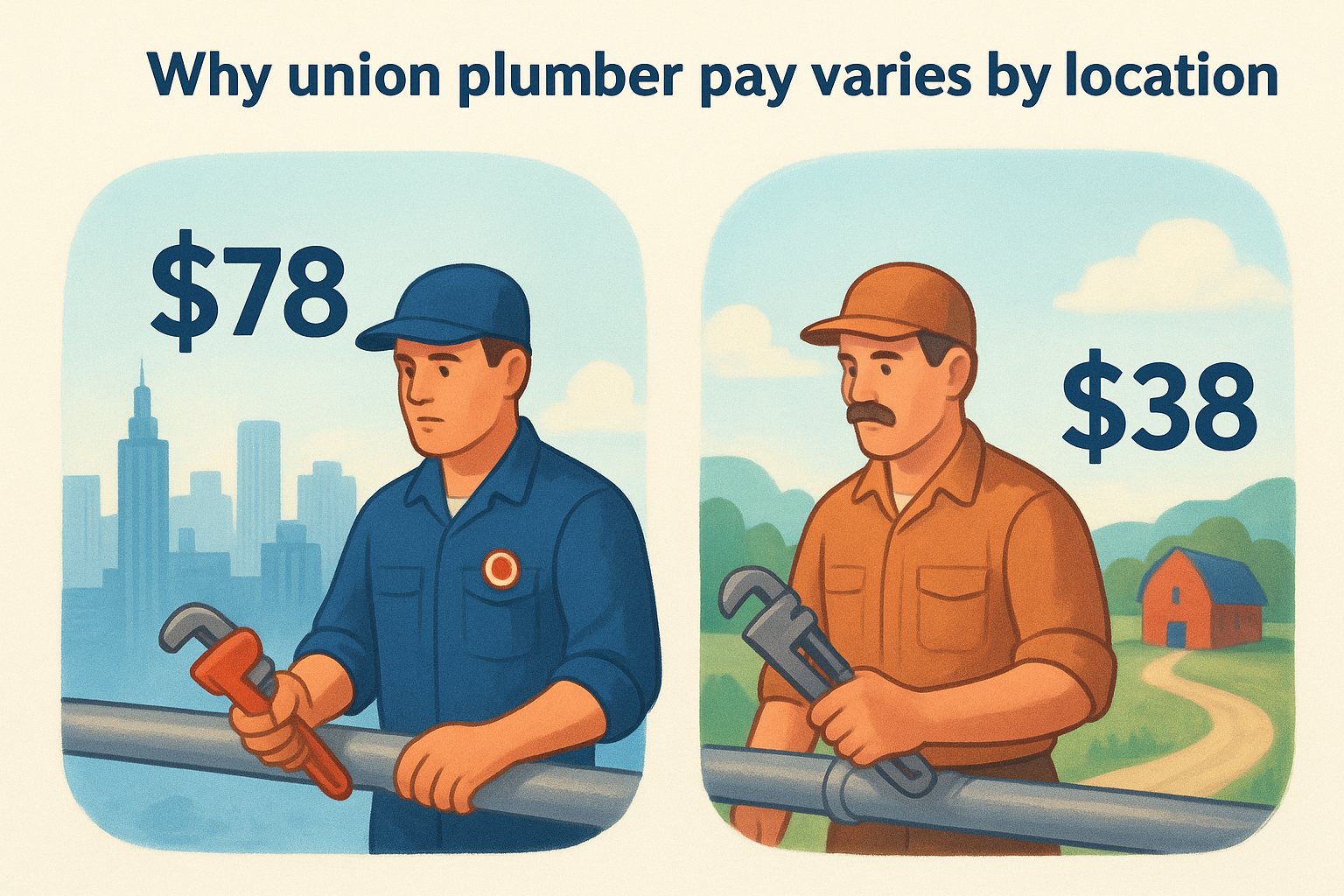
Your union plumber salary can swing by $20 to $40 per hour depending on where you work, even within the same state. Geographic pay differences reflect a combination of local economic conditions, state labor laws, and the strength of your UA local’s bargaining power. A journeyman plumber in San Francisco’s Local 38 might earn $78 per hour while a peer in a rural Alabama chapter earns $38, not because of skill differences but because each market operates under different cost structures and competitive pressures.
Cost of living adjustments
Your paycheck in high-cost metropolitan areas compensates for elevated housing, transportation, and daily living expenses that make it impossible to survive on rural wage scales. Union locals in cities like New York, Boston, and Seattle negotiate higher base rates because a $60,000 annual income doesn’t stretch the same distance in Manhattan as it does in rural Pennsylvania. This adjustment protects your purchasing power and maintains a middle-class lifestyle regardless of your chapter’s zip code.
Metropolitan union scales often include automatic cost-of-living increases that adjust your pay when inflation erodes your buying power.
State prevailing wage requirements
Prevailing wage laws in 32 states mandate that public construction projects pay union-scale rates, which lifts compensation across entire regions and creates a wage floor that non-union contractors must match. These statutes prevent low-bid contractors from undercutting union shops on government work, stabilizing your earning potential even during economic downturns.
How UA pay scales and CBAs work
Your union plumber salary follows a standardized pay scale that your local chapter negotiates through a collective bargaining agreement (CBA), a legally binding contract between the United Association and signatory contractors. These agreements spell out exact hourly rates for each classification, from first-year apprentices to master plumbers, and they guarantee annual wage increases that protect you from stagnant earnings. Unlike non-union shops where your boss decides your pay based on favoritism or budget constraints, your CBA removes guesswork and ensures every member doing the same work receives the same rate.
Scale structure and progression
The pay scale operates on a percentage system that starts apprentices at 40 to 50 percent of the journeyman rate and increases by set increments every six to twelve months. A typical five-year apprenticeship might progress from 40 percent to 50 percent to 60 percent to 75 percent to 85 percent before you reach full scale. Master plumbers and foremen command premiums above the journeyman rate, often 10 to 20 percent higher, reflecting their additional responsibilities and credentials.
Your advancement through the scale happens automatically based on documented work hours, not supervisor opinions or company politics.
Contract negotiation cycle
CBAs typically run three to five years before your local renegotiates terms with contractor associations, giving you regular opportunities to secure raises that outpace inflation. During negotiations, your business representatives present wage proposals backed by regional cost-of-living data, competitor analysis, and membership priorities.
Union benefits and total compensation
Your union plumber salary extends beyond the hourly wage because the fringe package adds substantial value that most non-union workers never see. When you compare offers, calculating your total compensation reveals the real difference between union and non-union positions. A $45 base wage with $20 in fringes puts you at $65 per hour in total compensation, which translates to roughly $135,200 annually if you work full-time.
Healthcare and insurance coverage
Union health plans provide comprehensive medical coverage for you and your family without the high deductibles or premium increases that plague individual marketplace policies. Your employer contributes to a trust fund that covers dental, vision, prescription drugs, and often includes short-term disability benefits. These plans operate independently from your specific contractor, so you maintain continuous coverage even when switching between union jobs or during brief periods between projects.
Retirement and pension plans
Your pension contributions accumulate throughout your career based on documented work hours, guaranteeing monthly retirement income that supplements Social Security. Most UA locals also offer annuity programs where your employer deposits additional funds into accounts you control, creating a two-tier retirement strategy that builds wealth beyond your immediate paycheck.
Union retirement benefits often provide $3,000 to $5,000 monthly pension payments after 30 years of service, independent of market volatility.
How to estimate your union plumber earnings
Your union plumber salary calculation starts with your local chapter’s published pay scale, which lists exact hourly rates for each classification level. Most UA locals post their current collective bargaining agreements on official websites, giving you transparent access to the numbers that determine your paycheck. You combine your base wage with documented fringe contributions to arrive at your total compensation figure, which provides the clearest picture of your earning power.
Find your local’s current scale
Contact your UA local directly or check their official website for the most recent CBA documents that outline exact wage rates and benefit contributions. These contracts specify your hourly base pay and the per-hour fringe amount your employer deposits into trust funds. Regional councils and state associations also maintain databases that compare scales across neighboring chapters, helping you benchmark your local’s competitiveness.
Calculate total annual compensation
Multiply your hourly rate by 2,080 hours for a full-time annual estimate, then add your fringe package multiplied by the same hours to reach your total compensation. Factor in overtime opportunities at time-and-a-half or double-time rates, which can boost your yearly earnings by 10 to 30 percent depending on project demand and your availability.
Accurate earnings projections require you to account for both regular hours and realistic overtime patterns in your specific market.
What to do next
Your research into union plumber salary data gives you the foundation to negotiate better positions or recruit qualified talent in your local market. Armed with specific wage scales, fringe benefit breakdowns, and state-by-state comparisons, you can approach union membership decisions or hiring conversations with confidence that reflects real compensation benchmarks instead of guesswork.
Job seekers should contact their nearest UA local to inquire about apprenticeship openings and current wage packages in their classification level. Check whether your state enforces prevailing wage laws that guarantee union-scale pay on public projects, which expands your job opportunities beyond strictly union contractors. Employers looking to fill positions with qualified tradespeople can explore our plumbing industry resources at PlumbingJobs.com, where thousands of skilled professionals search daily for career opportunities that match their credentials. Whether you’re calculating your earning potential or budgeting for your next hire, understanding the full compensation picture separates informed professionals from those who settle for less than market value.
Want plumbing jobs delivered to your inbox?
Want plumbing jobs delivered to your inbox?
Partner Site

