
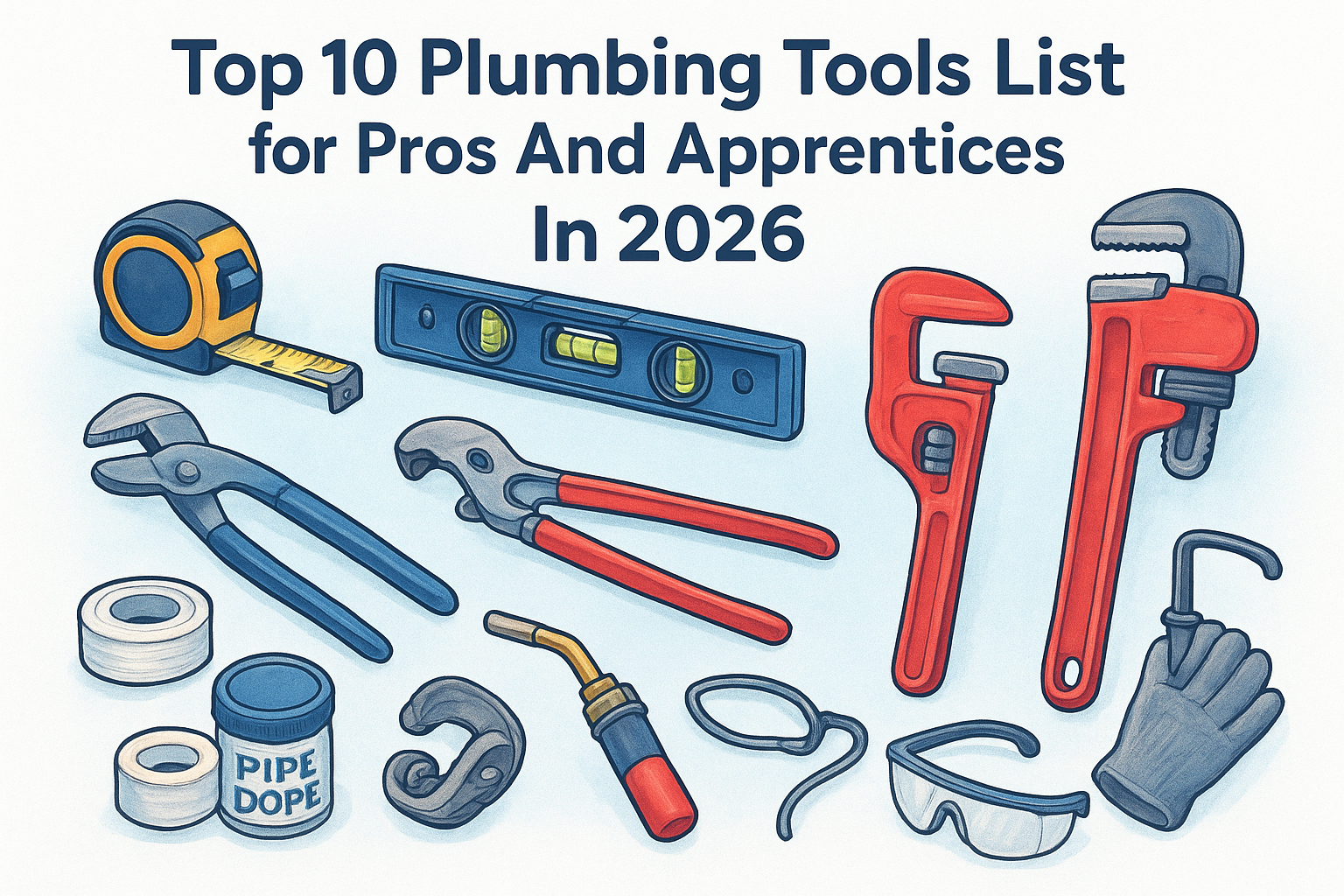
Whether you’re gearing up for your first apprenticeship or building out a service van after landing a new gig, having the right plumbing tools list matters more than most people think. The difference between a smooth job and a frustrating one often comes down to what’s in your toolbox, and whether you actually know how to use each piece.
At plumbingjobs, we help plumbers at every career stage find work across the United States. We talk to employers daily, and one thing comes up constantly: they expect candidates to show up prepared. That means owning your own core tools and understanding which ones a specific job calls for. It’s a basic signal of professionalism that hiring managers notice right away.
This list breaks down the top 10 plumbing tools that every pro and apprentice should have on hand in 2026, with real explanations of what each tool does and why it earns a spot in your kit. No filler, just the gear that actually gets used on the job.
1. Tape measure and torpedo level
These two tools are the foundation of accurate plumbing work. Before you cut a single pipe or position a single fitting, you need to know your measurements and whether your work sits perfectly level or plumb. Skipping either one leads to misaligned pipes, failed inspections, and a frustrated foreman.
What it does
A tape measure lets you take precise linear measurements so pipes fit exactly where they need to go with no guesswork. A torpedo level, typically around 9 inches long, is shorter than a standard carpenter’s level, which means it fits into tight spaces like under sinks, inside wall cavities, and along close pipe runs. It tells you instantly whether a pipe or fixture is sitting level, plumb, or at a 45-degree angle.
Plumbers who skip the torpedo level on drain line installations often create low spots that collect debris and cause recurring blockages.
When you’ll use it on the job
You’ll reach for both of these tools constantly throughout any plumbing job. Use the tape measure during rough-in work when pipe offsets need to hit specific dimensions, when locating fixture positions, and when calculating how much material to order before heading to the supply house. Pull out the torpedo level when setting a toilet flange, pitching a drain line to the correct slope, or mounting a water heater bracket flush against a wall.
Both tools earn a permanent spot on any serious plumbing tools list because nothing else replaces them for fast, reliable field measurements.
What to look for when buying
Look for a tape measure with a blade width of at least 1 inch so it holds itself out without folding on longer pulls. A magnetic hook tip helps when you are measuring solo. For the torpedo level, choose one with three vials covering level, plumb, and 45 degrees so you cover every common angle. A rubber grip body helps it survive being dropped repeatedly in confined spaces.
Typical price range
A quality 25-foot tape measure runs between $15 and $35 at major hardware retailers. A reliable torpedo level costs between $10 and $30. Buying both together keeps your total investment under $65, making this the most affordable pairing on the entire list.
2. Pipe wrench
No plumber leaves the house without a pipe wrench. This tool is one of the most recognizable pieces of the trade, and it earns that reputation by handling the heavy-duty pipe work that lighter tools simply cannot manage.
What it does
A pipe wrench grips and turns threaded pipes and fittings using a self-tightening jaw that bites harder as you apply more torque. The serrated jaws dig into rounded surfaces, giving you maximum leverage on steel and iron pipe that would strip smooth-jawed tools completely.
When you’ll use it on the job
You’ll pull out a pipe wrench whenever you’re working with galvanized steel or black iron pipe, which is common in gas lines and older water supply systems. Most plumbers carry two: one to hold the pipe still and one to turn the fitting. Any serious plumbing tools list for professional work includes at least one matched pair.
Carrying two pipe wrenches of different sizes lets you work faster and prevents pipe from spinning inside walls when you’re making connections.
What to look for when buying
Look for a 14-inch wrench for general work and an 18-inch for heavier pipe runs. Cast iron construction holds up longer than aluminum under daily job site abuse. Check that the jaw adjustment moves smoothly without sticking before you buy.
Typical price range
A reliable pipe wrench runs between $20 and $50 per unit depending on size and brand. Buying a two-wrench set typically costs between $40 and $90 total.
3. Adjustable wrench
An adjustable wrench belongs on every plumbing tools list because it handles a wide range of fastener sizes without requiring a separate wrench for each one. Unlike a pipe wrench, it uses smooth jaws that grip nuts and bolts without damaging the finish on supply lines, fixture hardware, and compression fittings.
What it does
This tool works by letting you dial the jaw opening to match the exact size of whatever nut or bolt you are turning. That versatility makes it one of the most frequently reached-for tools during any plumbing job, covering everything from supply stop valves to packing nuts on shutoff valves.
When you’ll use it on the job
You’ll use it constantly during finish plumbing work when installing faucets, connecting supply lines under sinks, and tightening compression fittings on copper or braided supply lines. It also works well in tight spaces where a pipe wrench would be too bulky to maneuver effectively.
Using smooth jaws instead of serrated ones protects chrome and polished fixture hardware from scratching during final installation.
What to look for when buying
Choose a wrench with a 10-inch or 12-inch jaw capacity for the most versatility across common plumbing fastener sizes. Look for a laser-etched scale on the jaw so you can read the opening without guessing, and confirm the adjustment wheel turns smoothly without slipping under pressure.
Typical price range
A reliable adjustable wrench costs between $15 and $40 depending on size and brand. Buying one 8-inch and one 12-inch covers nearly every situation you will encounter on the job.
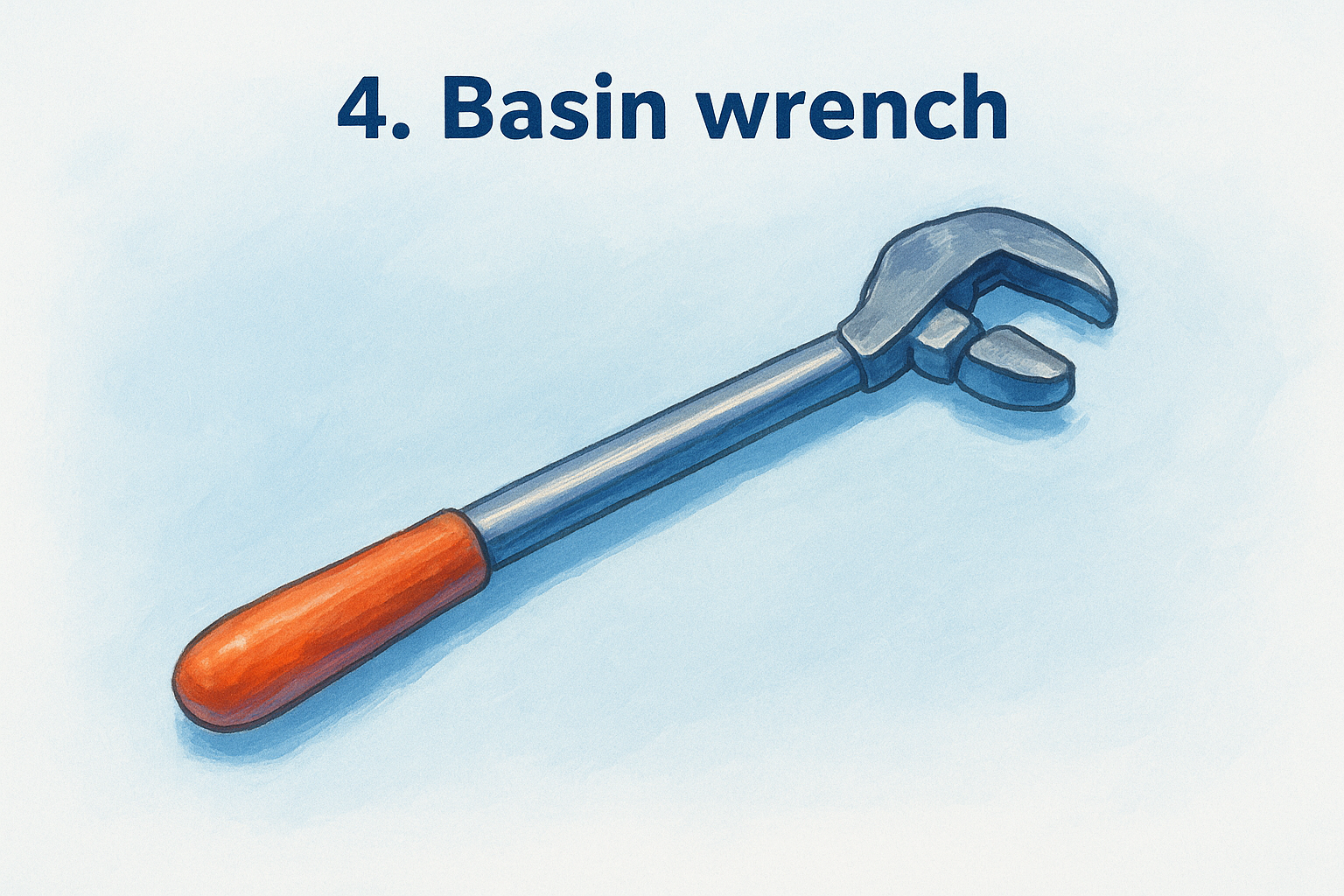
4. Basin wrench
A basin wrench is one of those tools that feels oddly specific until you actually need it, and then you realize nothing else on this plumbing tools list can do the same job. It handles a very particular task that a standard wrench or pliers simply cannot reach.
What it does
A basin wrench has a long shaft with a pivoting jaw at the end that grips and turns nuts in extremely tight, confined spaces. The jaw swivels 180 degrees so it tightens or loosens depending on which direction you need, making it the only practical option for reaching deep back under sink basins where no other hand tool fits.
Skipping a basin wrench and trying to reach faucet mounting nuts with regular pliers turns a simple faucet swap into a 45-minute ordeal.
When you’ll use it on the job
You will pull this tool out every time you install or remove a kitchen or bathroom faucet. The mounting nuts sit far back behind the sink basin, completely out of reach for standard wrenches. Without a basin wrench, that job becomes a long, awkward struggle that slows your whole day down.
What to look for when buying
Choose a model built with these features:
- Telescoping shaft that extends from 10 to 17 inches to match different sink depths
- A spring-loaded jaw that locks in position without slipping while you work without a direct line of sight
Typical price range
A reliable basin wrench runs between $15 and $45 depending on shaft design and build quality.
5. Tongue-and-groove pliers
Tongue-and-groove pliers, often called by brand names like Channellock, are one of the most versatile gripping tools on any serious plumbing tools list. Their adjustable jaw design lets you clamp onto pipes, fittings, and fixtures of widely different sizes without switching tools mid-job.
What it does
This tool uses an offset pivot mechanism that lets the jaw open to multiple widths while keeping the handles parallel. That design gives you a firm, controlled grip on everything from small compression fittings to large drain trap nuts without your hand slipping or the tool losing purchase under torque.
When you’ll use it on the job
You will reach for these pliers constantly during both rough-in and finish work. They shine when you need to grip plastic or metal trap assemblies under sinks, remove stuck cleanout plugs, and hold fittings in place while you tighten connections with another tool.
Wrapping the jaw with electrical tape or using a rag protects chrome drain hardware from scratching during final trim-out work.
What to look for when buying
Choose a pair with at least 12-inch handles for strong leverage without overexerting your grip. Look for laser-hardened teeth that stay sharp after repeated use and an adjustment mechanism that locks firmly without slipping when you apply force.
- 10-inch for tight, confined spaces
- 12-inch for general plumbing tasks
Typical price range
A reliable pair runs between $15 and $35. Most plumbers carry both a 10-inch and a 12-inch pair to cover every situation.
6. Tubing cutter
A tubing cutter deserves a permanent spot on every plumbing tools list because it makes cleaner, faster cuts on copper pipe than any other hand tool available. Unlike a hacksaw, it produces perfectly square, burr-minimal cuts that sit flush when you sweat a joint or press on a fitting.
What it does
A tubing cutter works by rolling a hardened cutting wheel around the outside of copper or soft aluminum tubing while you gradually tighten the frame with each rotation. The result is a clean, square cut that requires only light deburring before you solder or connect a fitting, saving you significant time compared to cutting by hand.
When you’ll use it on the job
You will reach for a tubing cutter on every job that involves copper pipe, from rough-in supply line work to replacing sections of damaged line during service calls. Many models also cut CPVC and thin-wall tubing when equipped with a scoring blade, giving you more range from a single tool.
A square cut makes the difference between a joint that seals on the first try and one that leaks during pressure testing.
What to look for when buying
Choose a cutter with a cutting capacity of at least 1-1/8 inches to cover the most common residential pipe sizes. A built-in reamer blade mounted directly on the frame saves you from carrying a separate deburring tool in your kit.
Typical price range
A reliable tubing cutter costs between $10 and $30 depending on cutting capacity and brand.
7. Thread sealing tape and pipe dope
Thread sealing tape and pipe dope are two consumable sealing products that keep threaded connections from leaking. No serious plumbing tools list is complete without both, because each one handles specific materials and connection types where the other falls short.
What it does
Thread sealing tape, commonly called PTFE or Teflon tape, wraps around male pipe threads before you assemble a fitting. It fills microscopic gaps in the threads and lubricates the joint so the connection tightens without binding. Pipe dope, also called pipe joint compound, works similarly but in paste form and bonds more aggressively to metal threads for high-pressure or gas line applications.
Using the wrong sealant on a gas line fitting is a serious safety hazard, so always confirm which product your local code requires before starting the job.
When you’ll use it on the job
You will apply one or both of these products on nearly every threaded connection you make, from water supply lines and shower arms to gas valves and hose bibs. Most plumbers apply tape to plastic fittings and dope to metal-to-metal iron or steel connections to match material compatibility.
What to look for when buying
Choose yellow PTFE tape specifically rated for gas lines if your work covers both gas and water systems. For pipe dope, pick a product labeled for all-purpose or multi-purpose use so it handles both plastic and metal threads without cracking over time.
Typical price range
PTFE tape typically costs between $1 and $5 per roll. A reliable tub of pipe dope runs between $6 and $15 depending on size and brand.
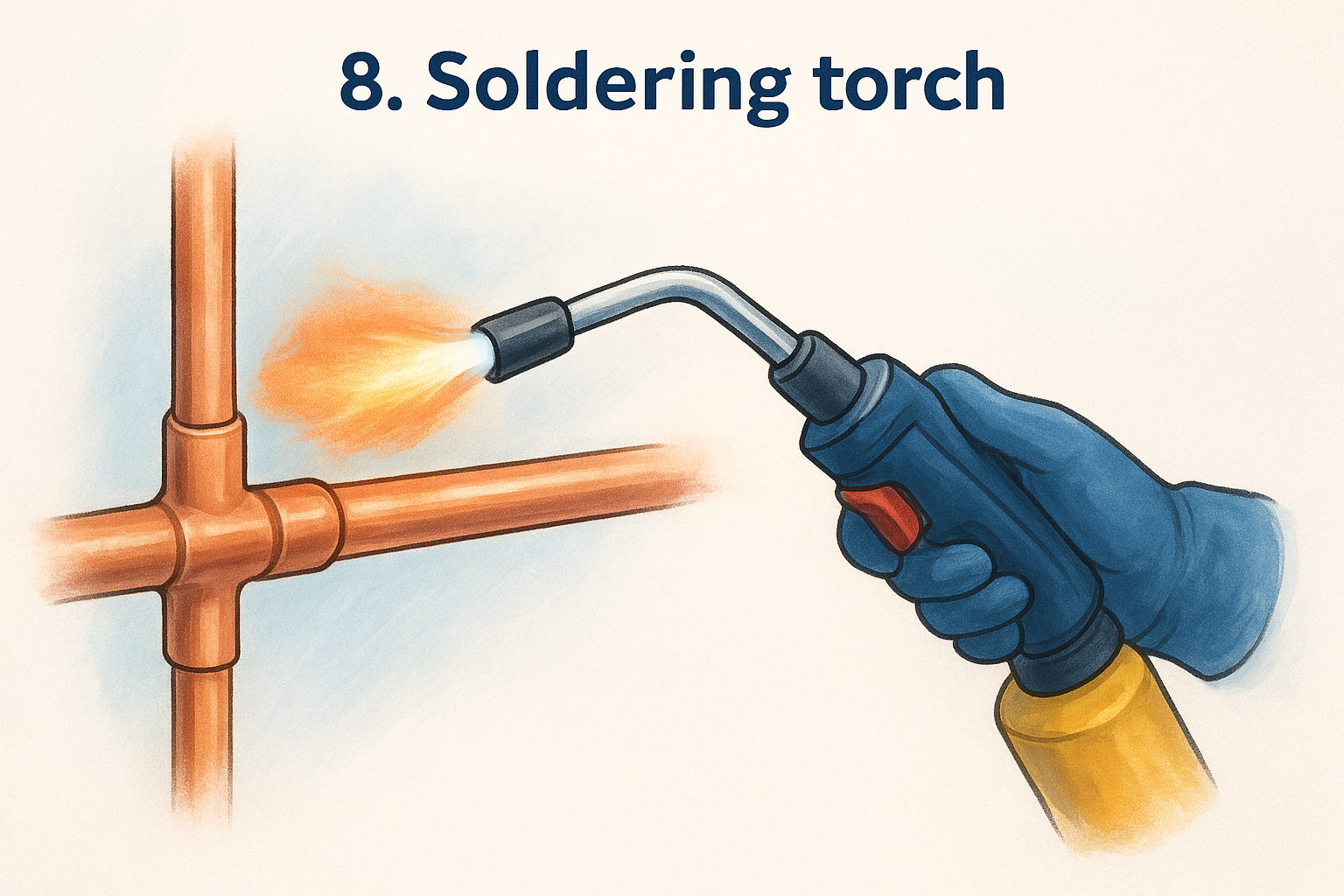
8. Soldering torch
A soldering torch is the go-to tool for making permanent copper pipe connections, and it earns its place on any complete plumbing tools list used in residential and light commercial work. Without it, you cannot sweat a joint, and without a solid sweat joint, copper supply systems will fail under pressure.
What it does
A soldering torch applies direct, concentrated heat to a copper fitting and pipe so the solder flows into the joint through capillary action and bonds permanently when it cools. Most plumbers use a MAPP gas or propane torch depending on the pipe diameter and how quickly they need to build heat on the joint.
MAPP gas burns hotter than propane, which makes it the faster choice when working on larger diameter copper pipe or back-to-back joints in tight timelines.
When you’ll use it on the job
You will need a torch on any job that involves cutting and replacing copper pipe, soldering new supply line runs during rough-in, or repairing a damaged section of existing copper. It pairs directly with your tubing cutter and flux to complete the connection.
What to look for when buying
Choose a torch with a self-igniting trigger so you do not need a separate striker. A swivel-head burner lets you direct heat in confined wall and ceiling cavities without repositioning your entire arm.
Typical price range
A reliable soldering torch kit costs between $30 and $80 depending on whether it includes a fuel canister and carrying case.
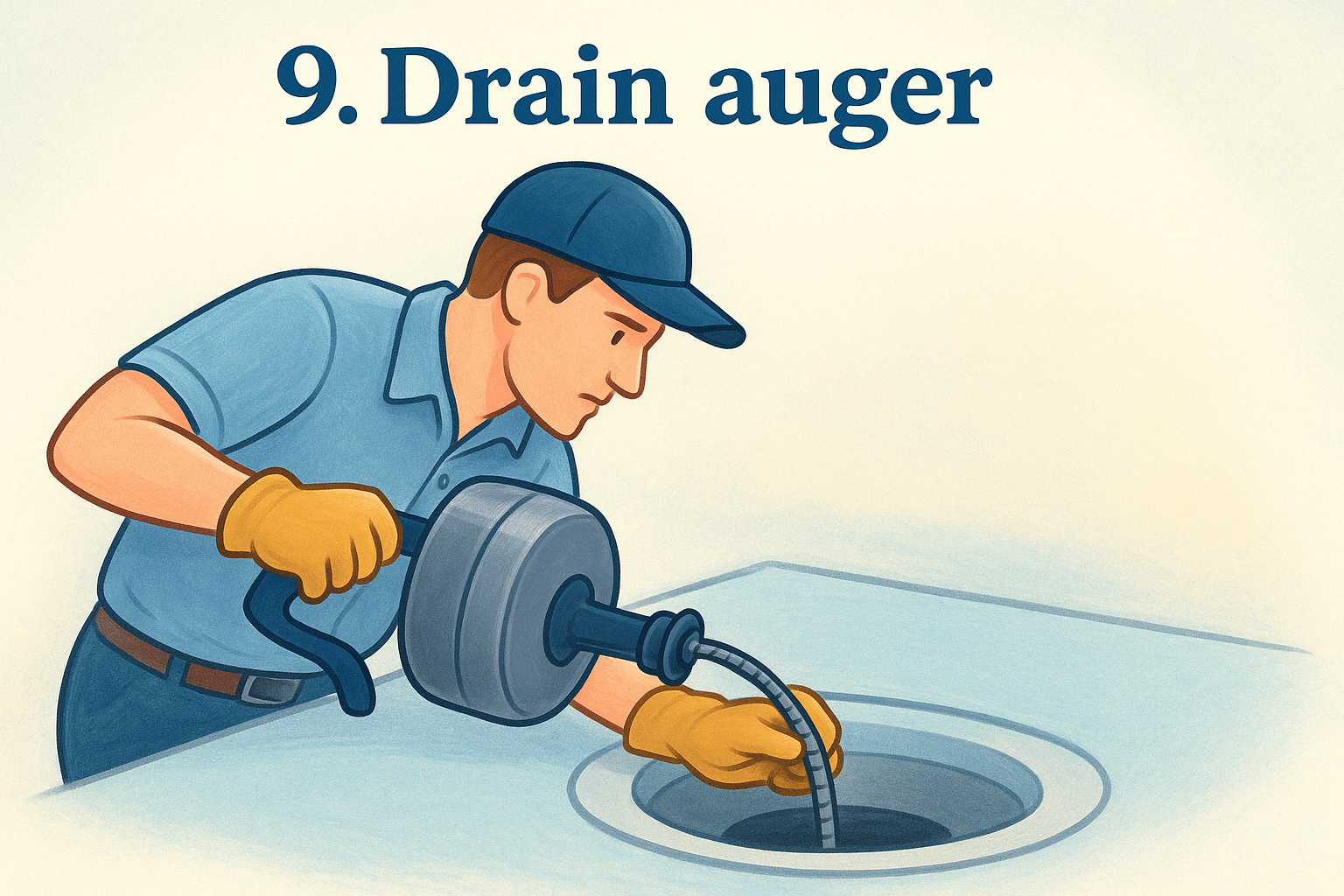
9. Drain auger
A drain auger, also called a plumbing snake, is the go-to tool for clearing blocked drains and clogged lines that a plunger cannot reach. Every complete plumbing tools list for professional work includes one because drain blockages are among the most common service calls in the trade.
What it does
A drain auger feeds a flexible steel cable into a drain line until the tip reaches and breaks apart the obstruction, whether that is grease buildup, a hair clog, or a solid mass sitting deep in the pipe. Handheld models handle smaller residential drains, while larger drum augers tackle main sewer lines with more reach and cable diameter.
When you’ll use it on the job
You will reach for a drain auger on service calls involving slow or completely blocked drains in kitchens, bathrooms, and floor drains. It clears obstructions that sit well beyond the trap where no other hand tool can reach.
A hand auger covers most sink and tub drains, but a drum-style machine with at least 50 feet of cable handles main line stoppages far more effectively.
What to look for when buying
Choose an auger with a cable length of at least 25 feet for general residential work. A pistol-grip handle with a rotating drum gives you better control when feeding cable through bends and offsets in the drain line.
Typical price range
A reliable hand auger costs between $20 and $60. A drum-style auger runs between $60 and $150 depending on cable length and build quality.
10. Safety gear
Safety gear rounds out every serious plumbing tools list because no job is worth finishing if you get hurt doing it. Employers notice when candidates show up with proper personal protective equipment, and skipping it sends the wrong message before you even touch a wrench.
What it does
Safety gear protects your eyes, hands, lungs, and knees from the physical demands of daily plumbing work. Cut-resistant gloves shield your hands when handling sharp pipe ends and copper fittings, while safety glasses keep debris and soldering flux out of your eyes during any cutting or torch work.
The Occupational Safety and Health Administration requires eye and hand protection on most active job sites, so wearing yours keeps you compliant and employed.
When you’ll use it on the job
You will reach for your safety gear at the start of every single job, not just the ones that look risky at first glance. Knee pads protect you during long stretches of work on concrete floors, and a respirator or dust mask becomes essential when cutting into walls or working near older pipe insulation.
What to look for when buying
Choose gear built for trade work rather than light home use. Your core kit should include:
- ANSI Z87.1-rated safety glasses for impact resistance
- Cut-resistant gloves rated at ANSI A4 or higher
- Foam knee pads with a hard plastic shell
Typical price range
A complete starter safety kit runs between $30 and $80 depending on the quality of each individual piece.
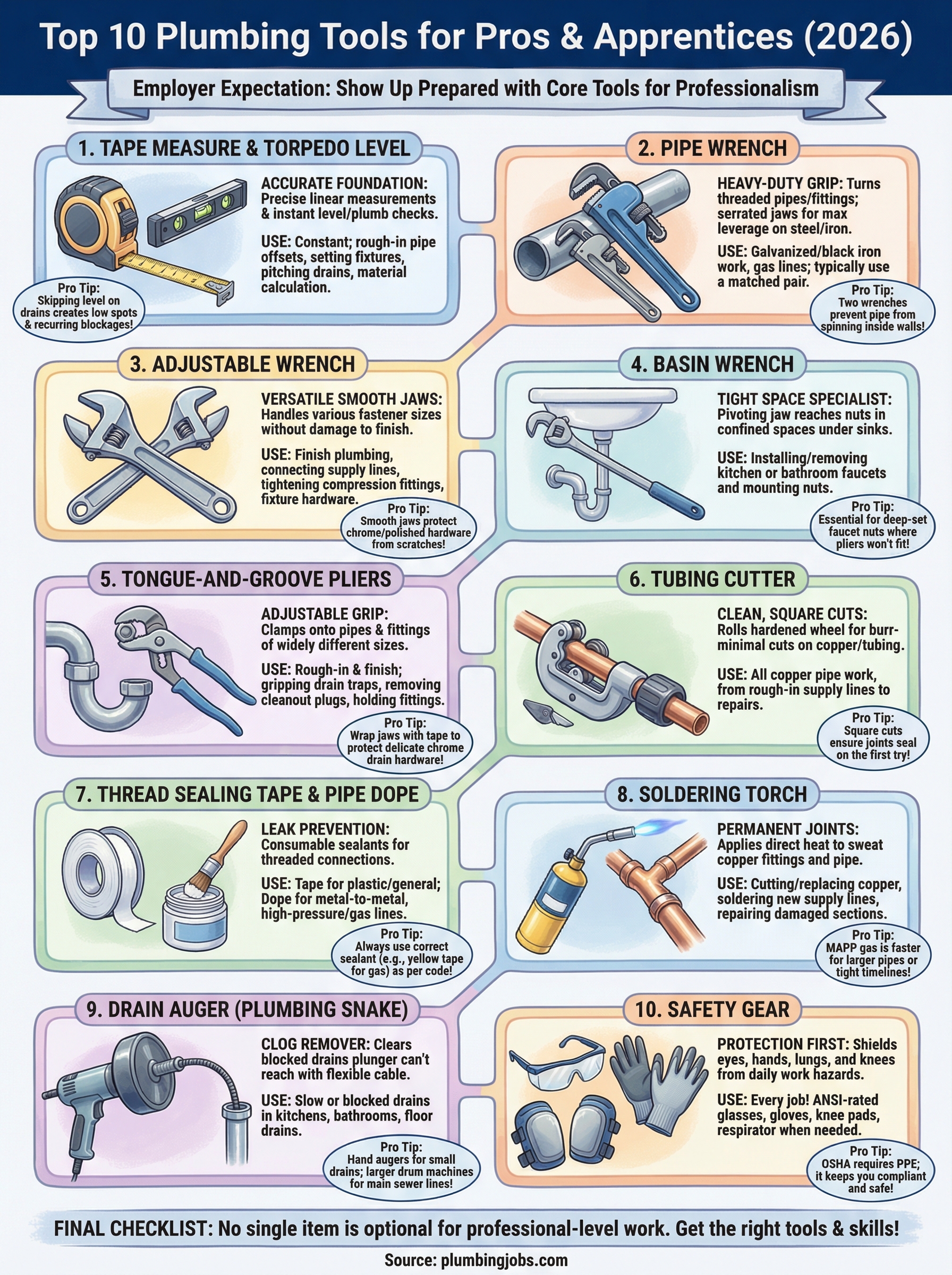
Final checklist
This plumbing tools list covers the ten items that show up on real job sites every single day. Whether you’re an apprentice putting together your first kit or a journeyman upgrading your setup before a new role, these tools give you a solid, professional foundation that employers notice immediately. No single item on this list is optional if you plan to work at a professional level.
Quick reference:
- Tape measure and torpedo level
- Pipe wrench
- Adjustable wrench
- Basin wrench
- Tongue-and-groove pliers
- Tubing cutter
- Thread sealing tape and pipe dope
- Soldering torch
- Drain auger
- Safety gear
Owning the right tools is only part of the equation. Finding an employer who recognizes your skills and preparation matters just as much. If you’re ready to take the next step in your plumbing career, browse plumbing jobs and industry resources at PlumbingJobs.com and connect with employers who are actively hiring across the United States right now.

2 thoughts on “Top 10 Plumbing Tools List for Pros And Apprentices In 2026”
Comments are closed.