
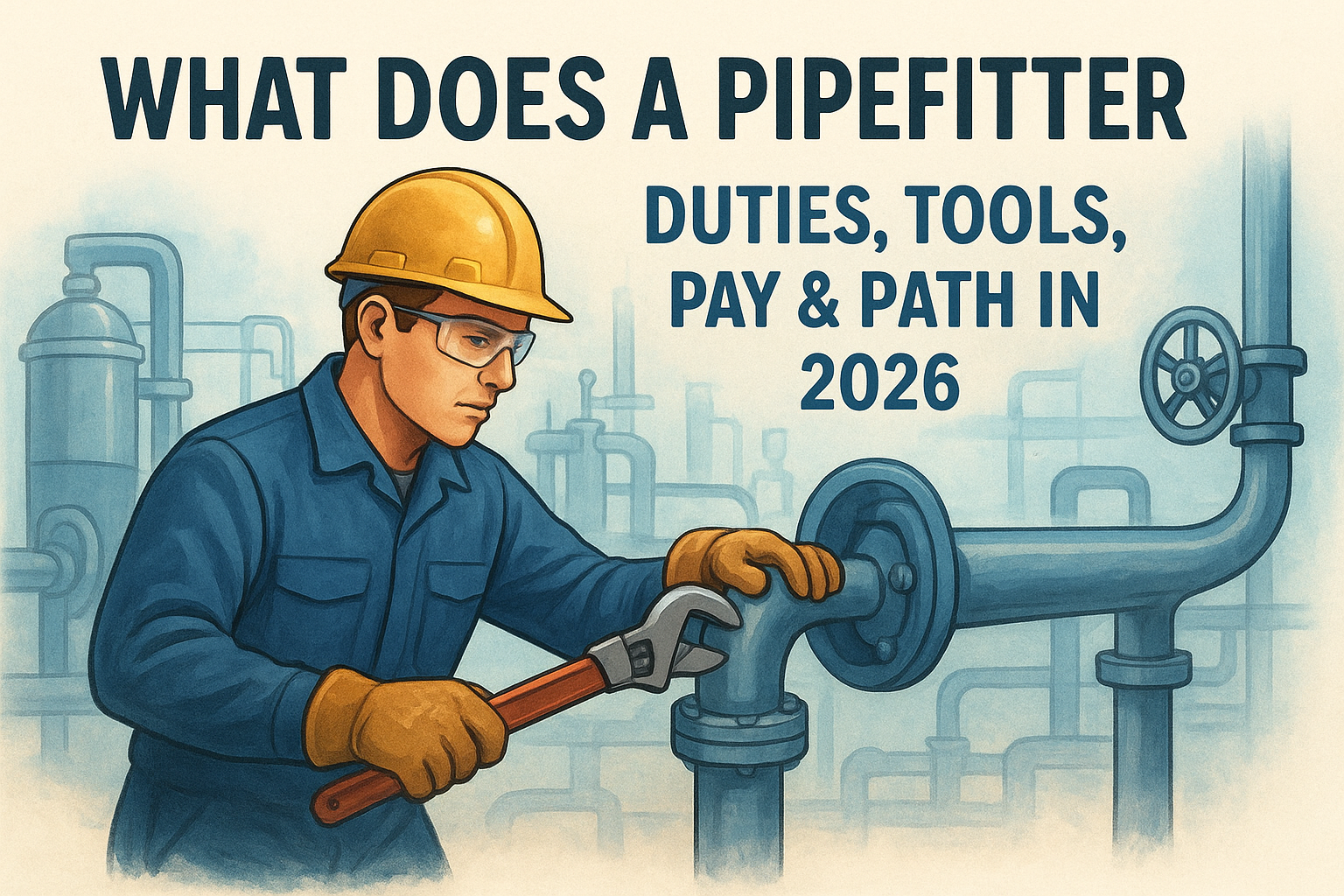
So, what does a pipefitter do, exactly? It’s one of the most common questions we see from people exploring careers in the trades, and the answer goes well beyond "connecting pipes." Pipefitters install, assemble, and maintain high-pressure piping systems that carry chemicals, gases, steam, and other substances in industrial settings like power plants, refineries, and manufacturing facilities. It’s precise, physically demanding work that requires real technical skill.
At plumbingjobs.com, we list pipefitter positions alongside plumbing roles because the two trades overlap more than most people realize, and employers actively recruit for both on our platform. Whether you’re a plumbing professional considering a lateral move or someone researching the trade from scratch, understanding what pipefitters actually do day-to-day matters before you commit time and money to training.
This article breaks down the core duties, tools, pay ranges, and career path for pipefitters in 2026. We’ll also cover how the role compares to plumbing and welding, two trades it’s frequently confused with, so you can figure out where you fit in the industry.
Why pipefitters matter in modern construction
Modern infrastructure runs on pipe. Power plants, chemical facilities, oil refineries, and pharmaceutical manufacturing sites all depend on complex piping systems to move steam, fuel, gases, and industrial liquids safely from one point to another. When those systems fail or leak, production stops and serious safety hazards can follow fast. Pipefitters are the professionals who design, assemble, install, and maintain those systems so facilities stay operational. Without them, some of the most critical industrial sites in the country would not function at a basic level.
The work pipefitters do directly affects the safety and productivity of entire industrial facilities, not just a single machine or component.
The industries that depend on pipefitters
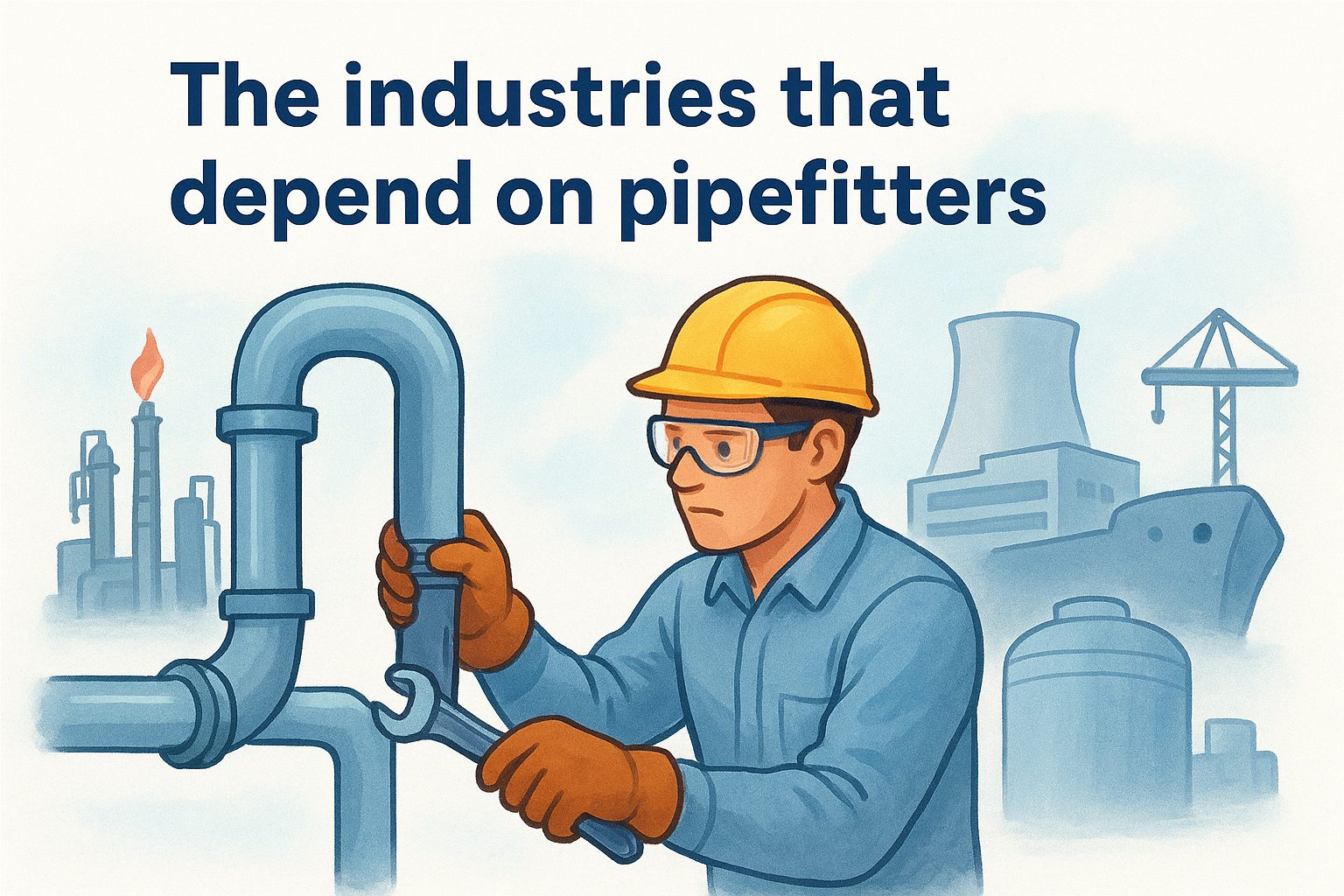
If you want to understand what does a pipefitter do in practice, look at where they work. Oil and gas processing, commercial HVAC, nuclear power, shipbuilding, and large-scale food production all hire pipefitters on a regular basis. These industries cannot function without high-pressure piping built to strict engineering tolerances, and pipefitters are the trade professionals trained to deliver exactly that.
The breadth of industries hiring pipefitters matters for your job search. Unlike some specialized trades tied to a single sector, pipefitter skills transfer across multiple industries, which gives you far more flexibility if one sector cools off. A pipefitter who spent five years in a refinery can often move into commercial HVAC or industrial manufacturing without starting over from the bottom.
Why this role is harder to replace than you think
Automation has changed many trades, but pipefitting has resisted full automation for a straightforward reason: no two industrial job sites are the same. Pipe runs have to be measured, cut, threaded, and bent to fit the exact conditions of a specific building or plant. Robots handle repetitive factory-line tasks well, but reading blueprints on a live construction site, adapting to unexpected physical obstacles, and making real-time judgment calls still requires a trained person on the ground.
There is also a regulatory dimension to this work. Industrial piping systems must meet safety codes enforced by bodies like OSHA and ASME, and inspectors verify those standards during and after installation. A pipefitter who understands those requirements is not just building a pipe run; they are building something that has to pass legal scrutiny. That combination of hands-on skill and code knowledge is genuinely difficult to replace, which explains why demand for qualified pipefitters holds steady even during broader construction slowdowns.
What a pipefitter does day to day
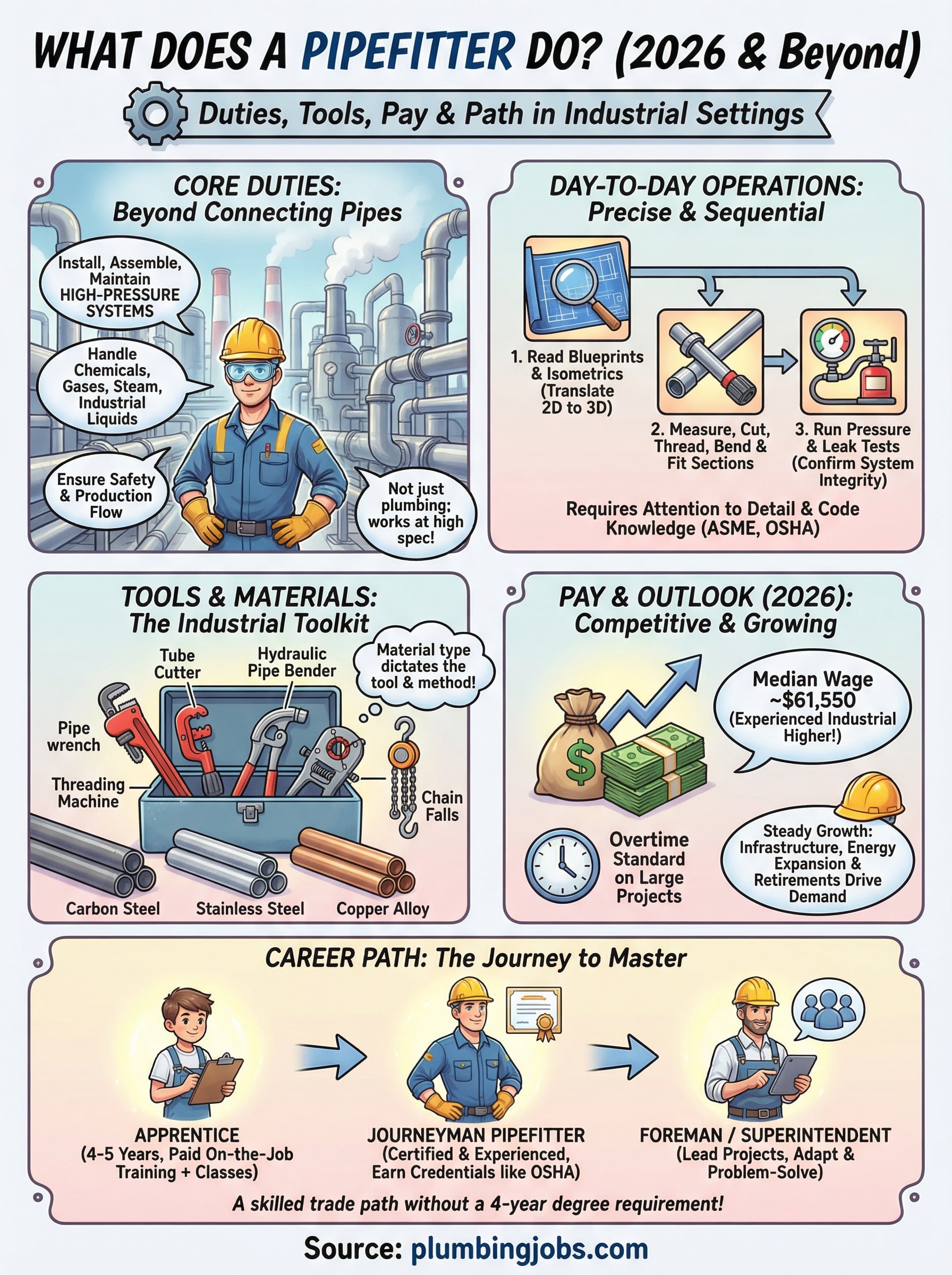
If you want to understand what does a pipefitter do on a typical shift, the answer starts before the first pipe gets touched. Pipefitters begin each day by reviewing blueprints and isometric drawings to understand the layout they are working with. From there, they measure and mark pipe routes, cut pipe to spec, and fit sections together using flanges, couplings, and welded joints. The work is sequential and precise from the first measurement to the final pressure test.
Reading plans and assembling systems
Blueprint reading is the foundation of the job. You need to translate two-dimensional drawings into three-dimensional pipe runs in a real space, which means accounting for obstructions, elevation changes, and clearance requirements that the drawing may not fully capture. A pipefitter who cannot read plans accurately wastes material and creates costly rework that slows the entire project down.
Once the layout is clear, cutting, threading, bending, and aligning pipe sections to match engineering specifications takes up the bulk of your working hours. You also install hangers and supports to keep pipe runs stable under the pressure and vibration of daily operation. On larger industrial sites, coordinating with welders, steamfitters, and project supervisors is a constant part of the day since pipe installation rarely happens in isolation from other trades.
Getting the fit right the first time matters because pressure-tested systems have zero tolerance for gaps, misalignment, or improper supports.
After installation, pipefitters often run pressure and leak tests to confirm that the system holds before it goes into service. These tests get documented and may be reviewed by inspectors, so attention to detail during final checks is just as important as the installation work itself.
Tools, materials, and core skills pipefitters use
Understanding what does a pipefitter do on a technical level means understanding what they carry to the job. Pipefitters work with a specific set of tools and materials that differ from residential plumbing in both scale and purpose. The equipment is built for industrial environments where pipe diameter, pressure rating, and material type all determine which tool you reach for.
Hand tools and power equipment
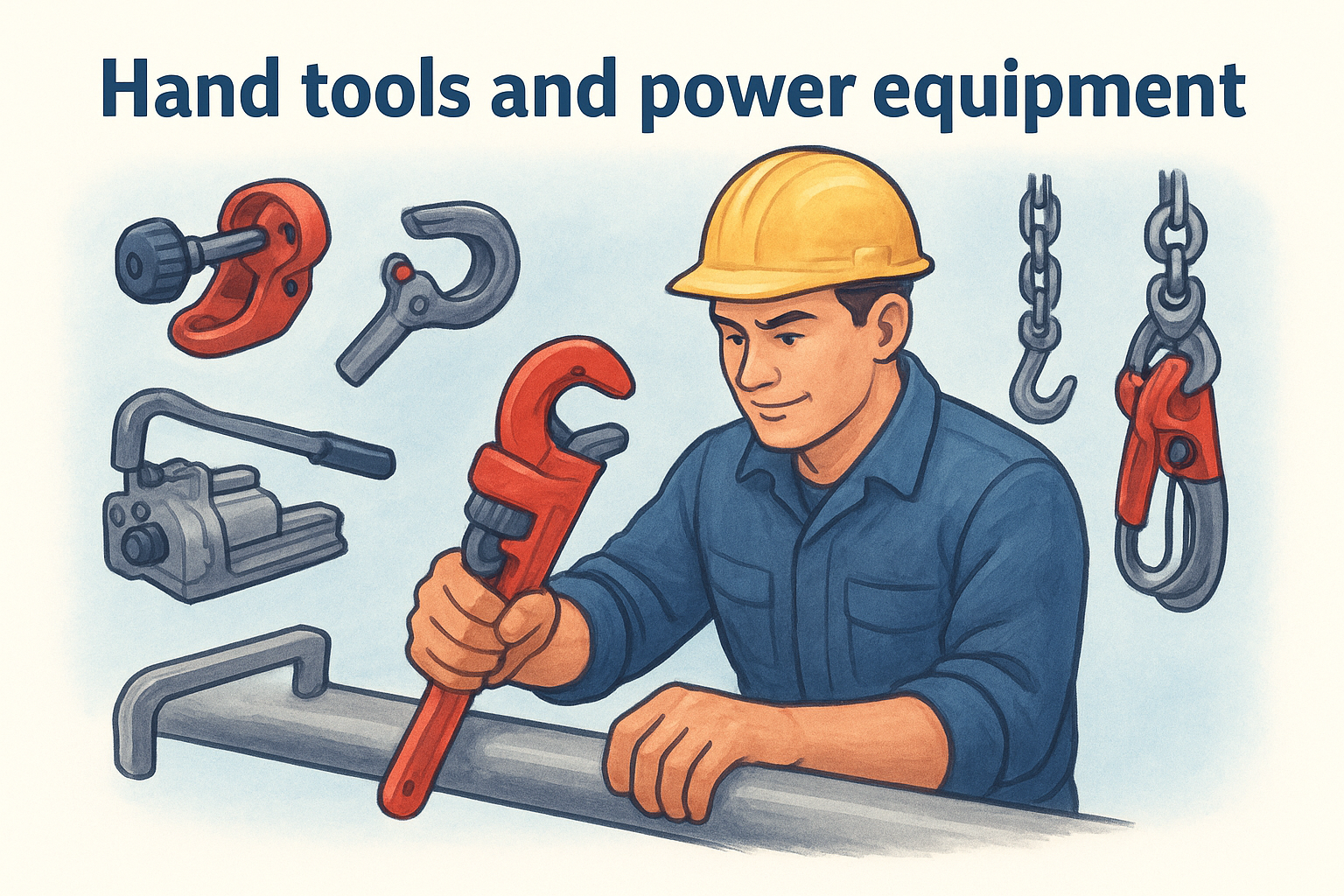
Your standard toolkit as a pipefitter includes pipe wrenches, tube cutters, threading machines, and hydraulic benders for shaping pipe to fit a designed layout. On larger jobs, you also operate equipment like chain falls, come-alongs, and lifting gear to position heavy pipe sections safely. Carbon steel, stainless steel, and copper alloy pipe are the most common materials you work with, though specialty sites may use chrome-moly or fiberglass-reinforced pipe depending on what the system carries.
The material you work with directly affects which cutting method, joint type, and pressure rating applies, so knowing your materials is not optional.
Technical and safety skills
Blueprint reading and isometric interpretation are the core intellectual skills the job demands. You need to translate engineering drawings into physical pipe runs accurately and consistently. Beyond layout skills, knowledge of ASME B31.3 process piping codes and OSHA 1910/1926 standards is something employers expect you to carry into every project. These codes govern how pipe is joined, supported, and tested.
Physical dexterity matters, but problem-solving under real site conditions separates a competent pipefitter from a great one. You will routinely encounter obstacles that blueprints did not anticipate, and knowing how to adapt without compromising system integrity is a skill you build through hands-on experience.
Pipefitter pay, overtime, and job outlook in 2026
When people ask what does a pipefitter do and immediately follow it with "how much does it pay," the answer is competitive by any trade standard. According to the U.S. Bureau of Labor Statistics, the median annual wage for pipefitters, plumbers, and steamfitters combined sits around $61,550, with experienced industrial pipefitters at the high end earning considerably more. Overtime is standard on large construction and industrial projects, and that extra time pushes many full-time pipefitters well above their base wage for the year.
Wage ranges and what drives them
Your location, union membership, and the industry you work in have the biggest impact on where your pay lands. Union pipefitters operating under agreements with the United Association of Plumbers and Pipefitters typically earn higher base wages plus benefits that include pension contributions and health coverage. Industrial sectors like oil refining and nuclear power pay more than general commercial construction because the work carries higher technical demands and stricter safety requirements.
| Experience Level | Approximate Annual Wage |
|---|---|
| Apprentice | $38,000 – $48,000 |
| Journeyman Pipefitter | $60,000 – $80,000 |
| Senior / Foreman | $85,000 – $110,000+ |
Job outlook through 2026 and beyond
The BLS projects steady growth in the plumber, pipefitter, and steamfitter category, driven by infrastructure investment, energy sector expansion, and a retirement wave among experienced workers. Those retirements create openings at multiple levels, not just the entry point. Industrial facilities across the country need qualified pipefitters to maintain existing systems as much as to build new ones, which keeps demand consistent even when new construction slows.
Maintenance demand alone sustains pipefitter hiring during economic slowdowns, which makes this a more stable trade than many people assume.
Geographic concentration also shapes your options. States with heavy refinery, chemical, or power generation activity such as Texas, Louisiana, and California consistently show higher pipefitter employment and pay rates.
How to become a pipefitter in the United States
If you want to work as a pipefitter, the path is structured and predictable. Most people enter through a formal apprenticeship program, which combines paid on-the-job training with classroom instruction in blueprint reading, pipe systems, and safety codes. Knowing what does a pipefitter do on a professional level starts here, because apprenticeships expose you to real industrial environments from day one.
Start with a registered apprenticeship
The United Association of Plumbers and Pipefitters (UA) runs the most widely recognized apprenticeship programs in the country. These programs typically run four to five years and cover everything from basic pipe fitting and welding fundamentals to advanced pressure system installation. You earn wages while you train, which makes this route far more practical than a degree program that requires you to front tuition costs without income.
Completing a UA apprenticeship gives you both the hands-on hours and the classroom credentials that union contractors and large industrial employers look for first.
Earn certifications and move up
After your apprenticeship, pursuing certifications sharpens your value in the job market. Relevant credentials include OSHA 10 or OSHA 30 for safety compliance and AWS welding certifications if your work involves pipe welding. Some states require a journeyman or master pipefitter license, so check your state’s licensing board requirements before you start applying for senior roles.
From journeyman status, you can advance into foreman, superintendent, or estimating roles as you build experience. Staying current with code updates from ASME and OSHA keeps your knowledge competitive and signals to employers that you take the profession seriously.
Next steps
You now have a clear picture of what does a pipefitter do, from reading isometric drawings on a live job site to pressure-testing industrial systems that have to meet strict safety codes. Pipefitting is a skilled trade that pays well, stays in demand across multiple industries, and offers a clear progression from apprentice to foreman without requiring a four-year degree. If the work sounds like a fit, the next move is straightforward: find an apprenticeship program through the UA or a local union hall and start applying.
For employers, finding qualified pipefitters who carry both the hands-on experience and the code knowledge your projects require is not always simple on a general job board. PlumbingJobs.com gives you direct access to trade professionals actively looking for industrial and commercial opportunities. Post your pipefitter job listing today and connect with candidates who already understand the work.
