
Entry Level Plumbing Apprentice Jobs: How To Get Hired Fast
Breaking into the plumbing trade doesn’t require years of experience or expensive certifications upfront. Entry level plumbing apprentice jobs offer a direct path into a skilled trade where you earn while you learn, and demand for apprentices remains strong across the country.
If you’re searching for your first opportunity in plumbing, you’re starting at the right time. Whether you’re fresh out of high school, switching careers, or ready to work with your hands, apprenticeships provide structured on-the-job training and steady income without taking on student debt.
This guide breaks down exactly how to find and land entry-level plumbing apprentice positions fast. You’ll learn what employers actually look for, how to stand out with no prior experience, and where to apply today. At PlumbingJobs.com, we list apprentice openings from employers actively hiring across all 50 states, giving you a direct line to opportunities that match your goals.
What entry-level plumbing apprenticeships involve
Entry level plumbing apprentice jobs combine hands-on training with paid work hours under licensed professionals. You spend most of your time assisting experienced plumbers on residential or commercial job sites, learning practical skills that no classroom can replicate. Your days vary based on the type of plumbing company you join, whether it’s residential service, new construction, or commercial maintenance.
Daily tasks you’ll handle as an apprentice
Your typical workday includes physical labor and skill-building assignments that directly support licensed plumbers. You won’t start running solo service calls, but you’ll gain essential experience through repetitive practice and observation.
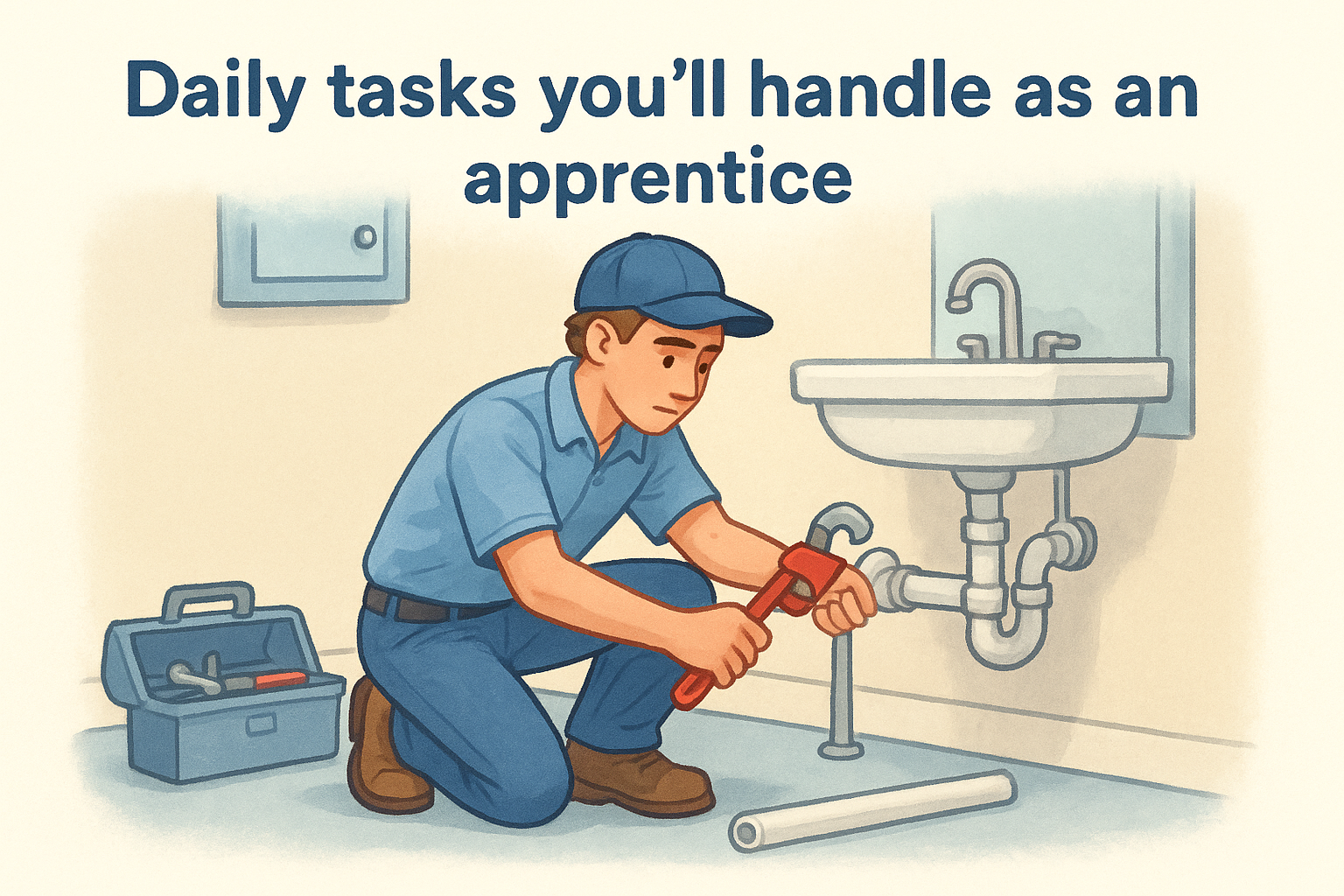
Common responsibilities include:
- Loading and unloading tools, pipes, and equipment from service vehicles
- Digging trenches for underground pipe installations
- Cutting, measuring, and fitting pipes under supervision
- Cleaning work areas and disposing of old fixtures or debris
- Assisting with drain clearing, fixture installations, and water heater replacements
- Running for parts and supplies during active jobs
“Apprentices who show up on time, stay off their phones, and ask good questions move up faster than those with prior experience but poor work habits.”
What you’ll earn and when you advance
Most apprenticeships start between $15 and $20 per hour depending on your location and the employer’s pay scale. You receive automatic raises as you complete training milestones and logged work hours, typically every six months to one year. Many companies also provide health insurance, tool allowances, and paid certification exam fees once you qualify for journeyman testing. Your earning potential grows substantially as you progress through the program, with journeymen often making $25 to $40 per hour in most markets.
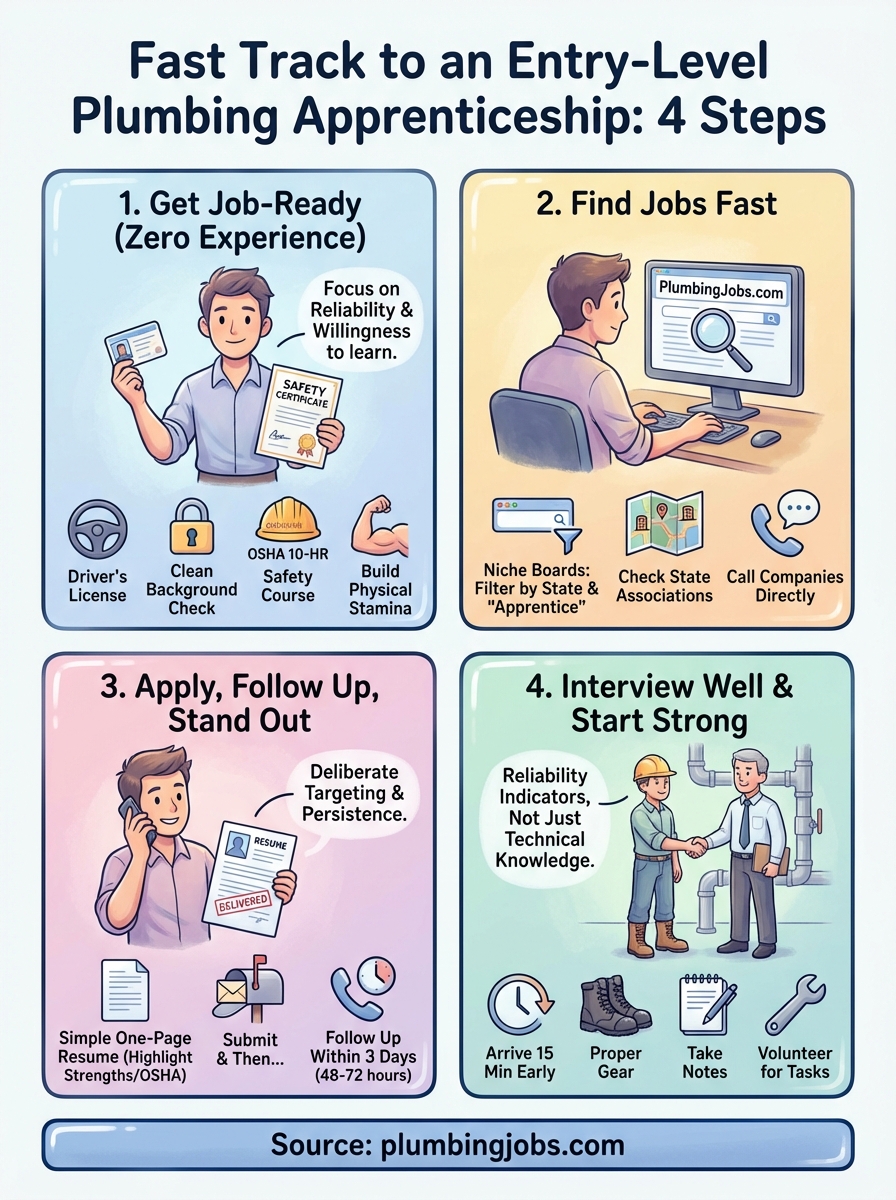
Step 1. Get job-ready with zero experience
You don’t need plumbing experience to land entry level plumbing apprentice jobs, but you do need to show basic readiness and reliability. Employers hiring apprentices care more about your work ethic and willingness to learn than your technical background. They expect to train you from scratch.
Build credibility before you apply
Get your driver’s license if you don’t have one already. Most plumbing companies require apprentices to drive between job sites and supply houses throughout the day. Obtain a clean background check by requesting your own criminal record report from your local police department, since many employers screen candidates before extending offers.
Complete an OSHA 10-hour safety course online through authorized training providers. This certification costs around $50 and takes one weekend to finish. Having this credential shows employers you understand job site hazards and take safety seriously before stepping onto your first work site.
“Showing up with an OSHA card and a valid license puts you ahead of half the people applying with zero preparation.”
Build basic physical stamina through regular manual labor or exercise. Plumbing demands long hours of lifting, bending, kneeling, and standing in tight spaces. Employers notice quickly when applicants can’t handle the physical workload that comes standard with the trade.
Step 2. Find entry level plumbing apprentice jobs fast
You can locate entry level plumbing apprentice jobs faster by targeting specialized platforms and direct employer channels instead of relying solely on general job boards. Most apprentice openings never appear on mainstream sites because plumbing companies prefer industry-specific recruiting and local networks that attract serious candidates already interested in the trade.
Search niche plumbing job boards first
Start your search on PlumbingJobs.com, where employers post apprentice positions specifically for the plumbing industry. Filter results by your state and “Apprentice” in the job title to see only relevant openings. Check listings daily since new positions appear frequently and companies often fill roles within one to two weeks of posting.
Browse state plumbing association websites that maintain job boards for local contractors and union halls. Many associations list apprentice opportunities exclusively for their geographic area, connecting you directly with licensed employers actively building their teams.
“The best apprentice jobs get filled through direct applications before they hit national platforms.”
Contact plumbing companies directly
Call residential service companies and mechanical contractors in your area even if they haven’t posted openings online. Ask to speak with the owner or service manager about apprentice opportunities, then follow up by dropping off a printed resume in person during business hours.
Step 3. Apply, follow up, and stand out
Submitting applications for entry level plumbing apprentice jobs requires deliberate targeting and persistent follow-through rather than mass applying to every posting you see. Focus your energy on companies that match your location and schedule availability, then customize each application to show you’ve researched the business.
Write a simple one-page resume
Keep your resume to one page with clear sections that highlight relevant strengths over unrelated work history. Include your contact information at the top, then add sections for your OSHA certification, physical capabilities, and any manual labor experience like construction, landscaping, or warehouse work.
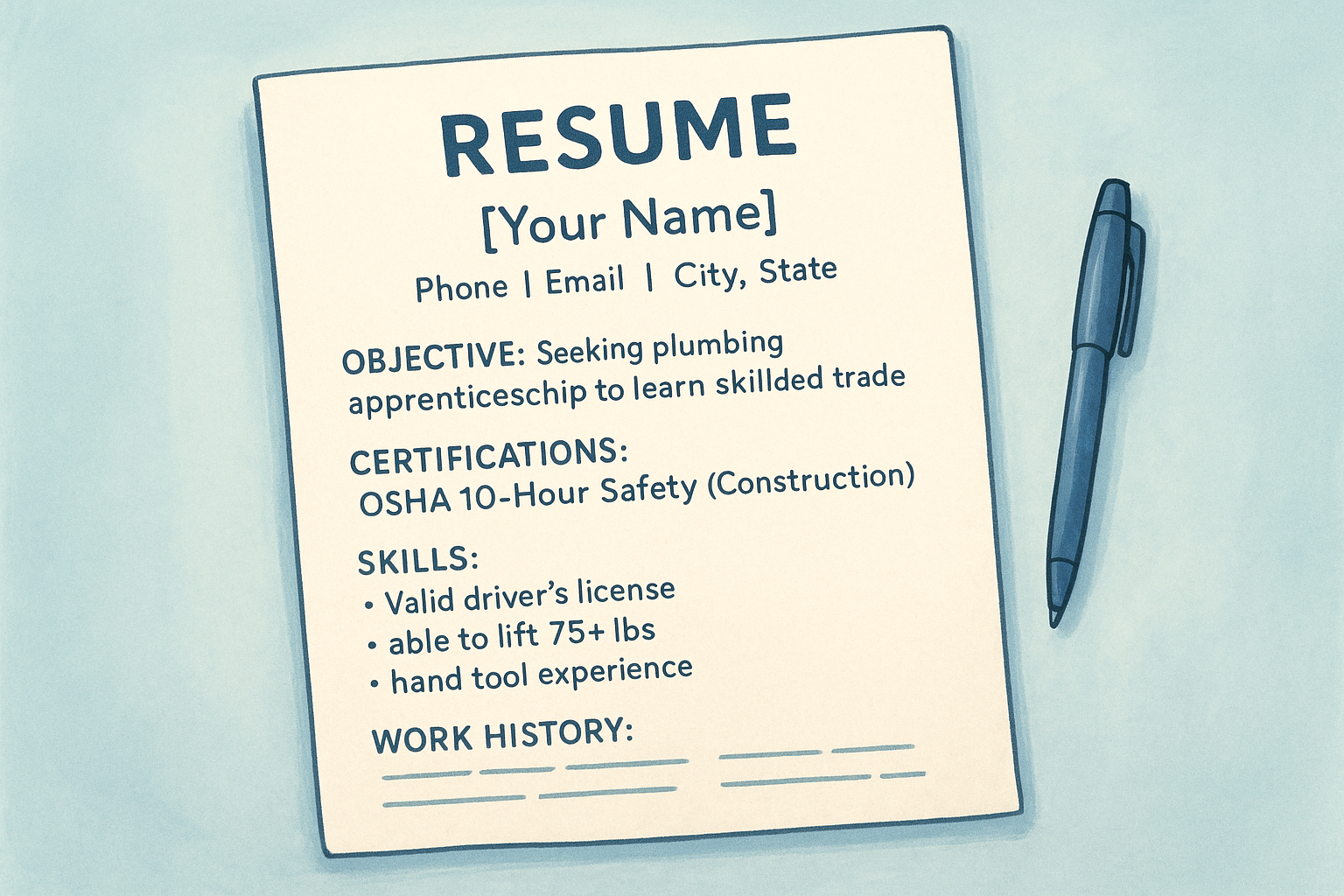
Use this basic template:
[Your Name]
[Phone] | [Email] | [City, State]

OBJECTIVE: Seeking plumbing apprenticeship to learn skilled trade

CERTIFICATIONS: OSHA 10-Hour Safety (Construction)

SKILLS: Valid driver's license, able to lift 75+ lbs, hand tool experience

WORK HISTORY: [Any labor jobs with dates and 2-3 bullet points each]
Follow up within three business days
Call the employer 48 to 72 hours after submitting your application to confirm receipt and express continued interest. Ask when they plan to schedule interviews, then note that date and check back if you haven’t heard by then.
“One phone call separates you from candidates who apply and disappear.”
Step 4. Interview well and start strong on day one
Plumbing apprentice interviews focus less on technical knowledge and more on reliability indicators that predict whether you’ll show up consistently and work safely. Prepare to answer questions about your availability, physical abilities, and reasons for choosing the trade. Bring a printed list of references from previous employers or teachers who can vouch for your work ethic.
Answer the three questions every interviewer asks
Expect questions about your schedule flexibility, transportation reliability, and long-term commitment to finishing the apprenticeship program. Answer honestly about whether you have dependents requiring specific pickup times or second jobs that might conflict with overtime demands.
Practice responses to:
- “Why plumbing instead of other trades?”
- “Can you work outdoors in all weather?”
- “How do you handle repetitive physical tasks?”
“Employers hire apprentices they believe will complete the program, not quit after three months.”
Show up ready to work on day one
Arrive 15 minutes early with steel-toe boots, work pants, and a notebook for taking notes. Ask your supervisor which tasks you should tackle first rather than waiting for constant direction. Entry level plumbing apprentice jobs reward initiative within your skill level, so volunteer for grunt work that experienced plumbers avoid like tool organization and vehicle cleanup.
Your next move
You now have a clear roadmap to find and secure entry level plumbing apprentice jobs without prior experience. Start by completing your OSHA 10-hour certification this week, then build your one-page resume highlighting physical capabilities and work reliability. Search PlumbingJobs.com daily for new apprentice postings in your state, and contact local plumbing companies directly even when they haven’t advertised openings.
Apply to five to ten positions within the next seven days, then follow up by phone within 72 hours of each submission. Prepare honest answers about your availability and commitment to finishing a multi-year apprenticeship program. The faster you act, the sooner you’ll land interviews with employers ready to train motivated beginners.
Looking for more guidance on building your plumbing career? Browse our plumbing industry blog for salary benchmarks, licensing requirements by state, and insider tips from experienced professionals already working in the trade.
Want plumbing jobs delivered to your inbox?
Want plumbing jobs delivered to your inbox?
Partner Site

