
Apply For Plumbing Apprenticeship: Steps, Licensing & Tips
Breaking into the plumbing trade starts with one critical step: learning how to apply for plumbing apprenticeship programs that fit your career goals. Whether you’re fresh out of high school or switching careers, an apprenticeship offers paid, hands-on training while you build skills that last a lifetime.
The application process looks different depending on your chosen path. Union programs, non-union contractors, and technical colleges each have their own requirements. You’ll need to understand state licensing rules, gather the right documents, and figure out where to submit your application for the best shot at acceptance.
This guide breaks down each step, from finding open programs to completing your application successfully. At PlumbingJobs.com, we connect aspiring plumbers with employers across all 50 states and provide resources on state-specific licensing requirements to help you navigate your career. Here’s everything you need to get started.
What you need before you apply
Most apprenticeship programs set baseline requirements that you must meet before submitting your application. Understanding these upfront saves you time and helps you prepare a complete package that gets reviewed quickly. Some credentials take weeks to obtain, so start early.
Basic eligibility requirements
You’ll need to meet age and education standards across almost all programs. Most require you to be at least 18 years old and hold a high school diploma or GED equivalent. Union programs often add a basic math requirement, testing your ability to work with fractions, decimals, and measurements during the interview process.
Physical capability matters in this trade. You must be able to lift heavy materials, work in tight spaces, and stand for extended periods. Programs may ask for a physician’s statement confirming you can handle the physical demands of plumbing work safely.
Getting your documents organized before you apply for plumbing apprenticeship programs puts you ahead of candidates who scramble at the last minute.
Documents to gather
Start building your application folder with these essential items:
- Valid driver’s license or government-issued photo ID
- High school diploma or GED certificate (official copy)
- Birth certificate or proof of legal work authorization
- Social Security card or number verification
- Transcripts showing completed coursework, especially math and shop classes
- Drug screening results if required by your state or program
- Background check authorization forms
Union programs may also request letters of recommendation from teachers, employers, or community leaders who can speak to your work ethic and reliability. Keep digital copies of everything so you can email documents quickly when programs request them during the application process.
Step 1. Choose your apprenticeship path
You have three primary routes to consider when you apply for plumbing apprenticeship positions. Each path offers different advantages depending on your location, career goals, and learning style. Union programs provide structured training with strong wage guarantees, while non-union contractors offer more flexibility. Technical colleges combine classroom education with employer partnerships, giving you a credential before you start working.
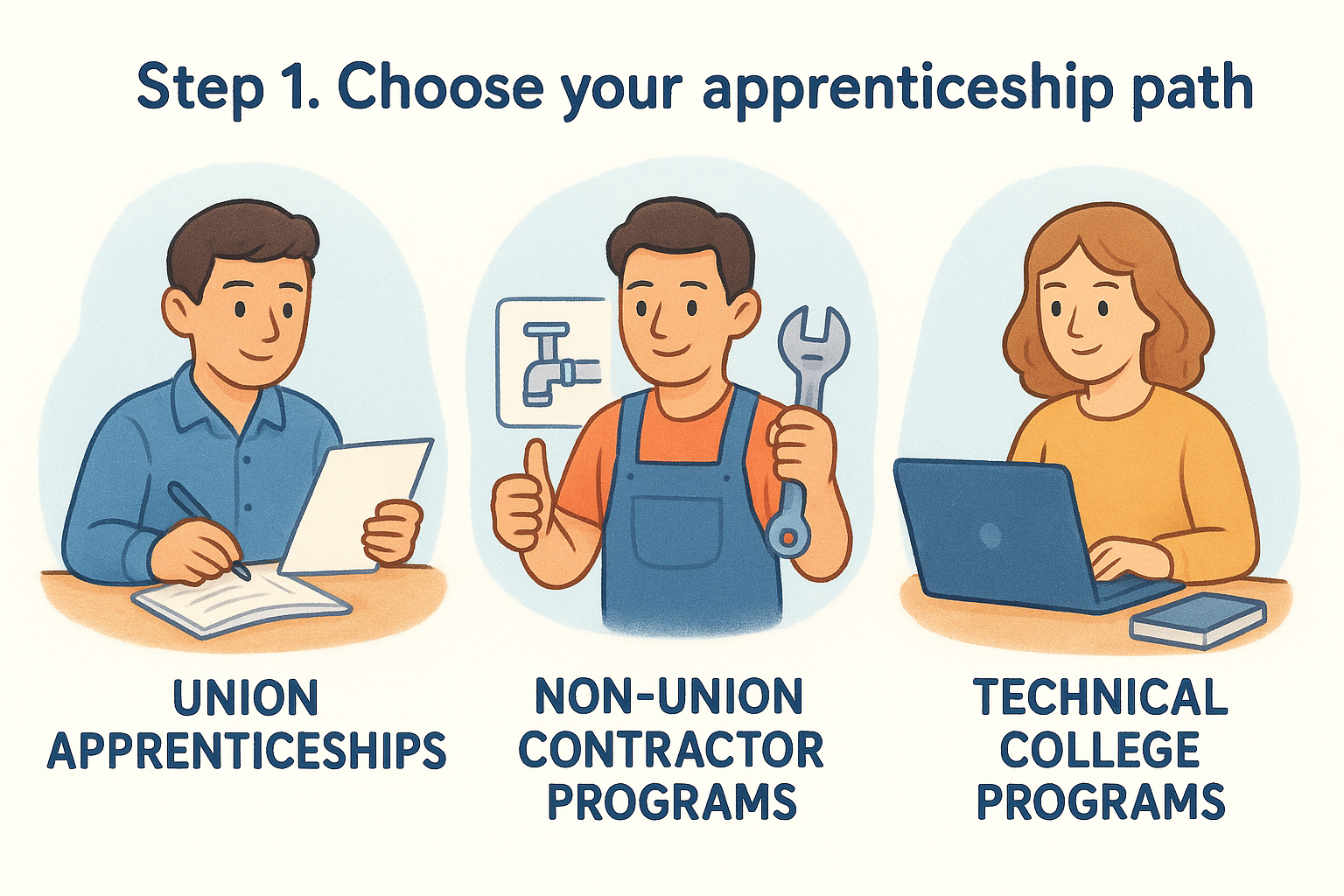
Union apprenticeships
Union programs through organizations like the United Association (UA) operate on fixed schedules with standardized pay increases. You attend classroom instruction one or two evenings per week while working full-time for a union contractor. These programs typically last four to five years and require passing periodic exams. Apply through your local union hall, which maintains a waiting list based on test scores and interview performance.
Non-union contractor programs
Independent contractors sponsor apprentices directly, offering more immediate placement but less standardized training. You work under a licensed plumber who reports your hours to the state. Pay progression depends on your employer’s discretion rather than union contracts. Find these opportunities by contacting plumbing companies directly or checking state workforce development boards.
Non-union paths often provide faster entry into the field, but union programs typically offer higher wages and comprehensive health benefits.
Technical college programs
Community colleges and trade schools offer hybrid programs that combine coursework with job placement assistance. You complete foundational classes first, then transition to an apprenticeship with partner employers. This route works well if you need financial aid or prefer concentrated learning before entering the workforce.
Step 2. Handle state registration and licensing
Before you can apply for plumbing apprenticeship positions in most states, you need to register with your state licensing board or workforce commission. Requirements vary significantly by location, so check your state-specific rules early in the process. Some states require registration before you start working, while others let you register within 30 days of employment.
Check your state’s registration process
Visit your state’s plumbing board website to find exact requirements. Most states ask you to submit a registration application along with proof of employment or sponsorship from a licensed plumber. You’ll pay a registration fee ranging from $25 to $150 depending on your location. States like Texas and California maintain online portals where you complete the entire process digitally.
Registering before you start work prevents gaps in your recorded apprenticeship hours that could delay your licensing timeline later.
Document your sponsoring plumber
Your application typically requires the license number and contact information of the master plumber who will supervise your training. This person signs off on your work hours and progress. If you’re joining a union program, the union provides this information. For non-union paths, your employer must hold a valid contractor’s license in your state to sponsor apprentices legally.
Step 3. Prepare your application package
Your application package makes your first impression on program directors, so organize it carefully before you apply for plumbing apprenticeship positions. Programs reject incomplete submissions immediately, and missing documents can push your start date back by months. Create a clean folder with labeled sections for each required item to avoid errors.
Build your document checklist
Use this checklist to verify you have everything ready:
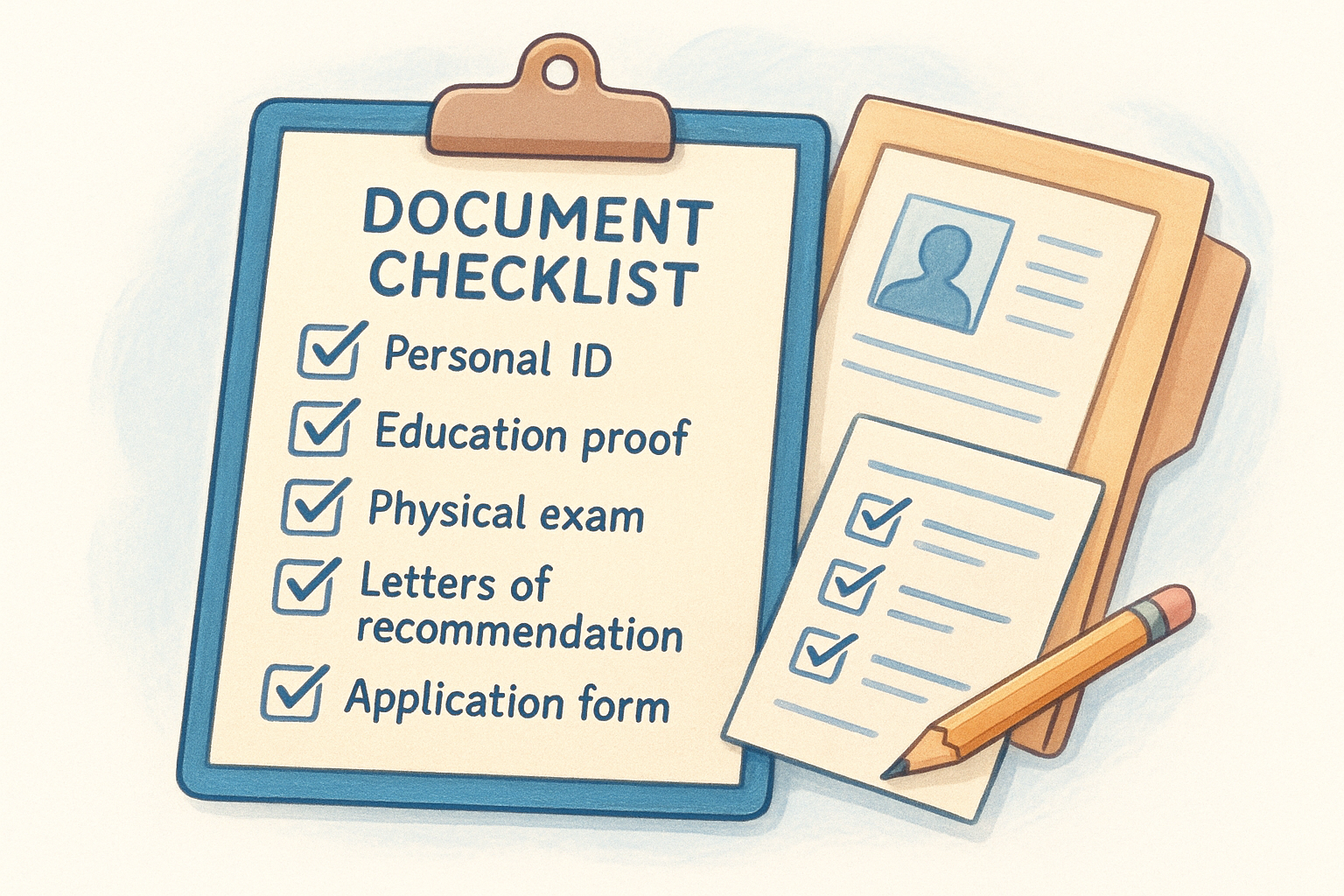
- Personal identification (driver’s license, Social Security card)
- Education proof (diploma, transcripts with grades)
- Physical exam results and drug screening if required
- Letters of recommendation from employers or teachers
- Completed application form with all fields filled accurately
- Fees (check or money order for application processing)
Double-check that your contact information matches across all documents. Programs discard applications with inconsistent names or addresses because they can’t verify your identity properly.
Draft your statement of interest
Many programs require a written statement explaining why you want to enter the trade. Keep it to one page and focus on specific reasons like family background in plumbing, hands-on skills you’ve developed, or long-term career goals. Avoid generic phrases and mention the program name directly to show you researched their specific requirements.
A focused statement that demonstrates genuine interest in plumbing work stands out more than lengthy explanations of financial need alone.
Step 4. Apply and follow through
After you prepare your documents, you need to submit your application through the correct channel and maintain communication with the program. Union halls typically accept applications during specific enrollment periods, while contractor-sponsored programs may accept rolling submissions. Missing deadlines or failing to follow up can leave your application stuck in a pile with no progress.
Submit through the right channel
Most union programs require in-person submission at the local hall during posted hours. Bring your complete package in a folder and ask the receptionist to confirm they received everything. Non-union contractors may accept email applications or require you to apply through their company website. Technical colleges use their standard admissions portal where you upload scanned documents. Save confirmation emails or receipts as proof you submitted on time.
Programs receive hundreds of applications, so following their exact submission method ensures yours gets processed rather than rejected for procedural errors.
Track your application status
Contact the program two weeks after submission to verify they received your materials. Ask when you can expect to hear about interview scheduling or testing dates. Union programs typically send letters with exam information, while contractors may call directly. Keep your phone accessible and return calls within 24 hours to show reliability when you apply for plumbing apprenticeship positions that start quickly.
Next steps
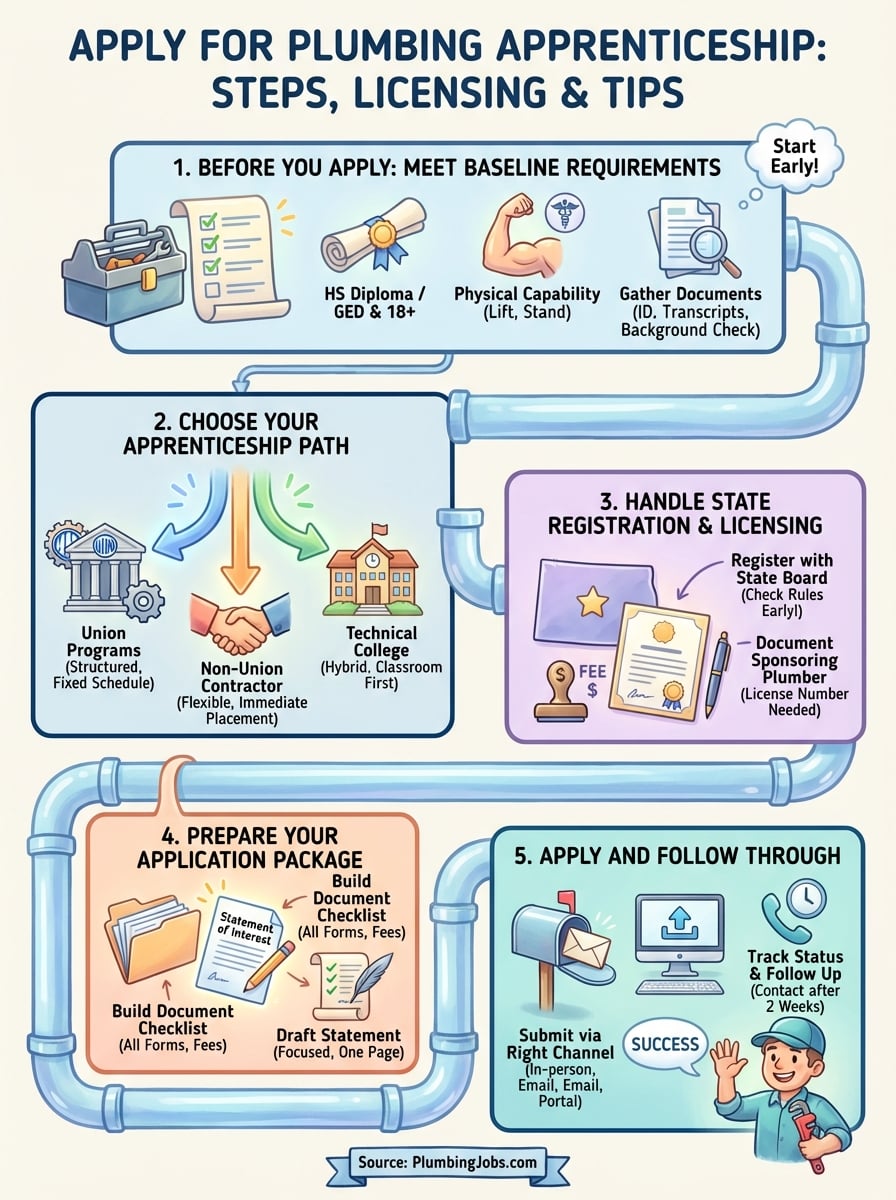
You now have a complete roadmap to apply for plumbing apprenticeship programs successfully. Start by verifying your state’s registration requirements and gathering your documents at least one month before application deadlines. Programs fill spots quickly, especially union positions with strong benefits and structured pay scales. Contact programs directly to confirm their current enrollment windows and ask about upcoming information sessions.
Once you submit your application, prepare for the interview process by reviewing basic math concepts and researching the specific program’s training approach. Many candidates fail interviews because they can’t explain why they chose plumbing specifically or what they know about the trade’s physical and technical demands. Practice answering questions about your work history and reliability.
PlumbingJobs.com connects you with employers actively hiring apprentices across all 50 states. Browse our plumbing career resources and industry updates to stay informed about licensing changes, salary trends, and opportunities in your area.
Want plumbing jobs delivered to your inbox?
Want plumbing jobs delivered to your inbox?
Partner Site

