
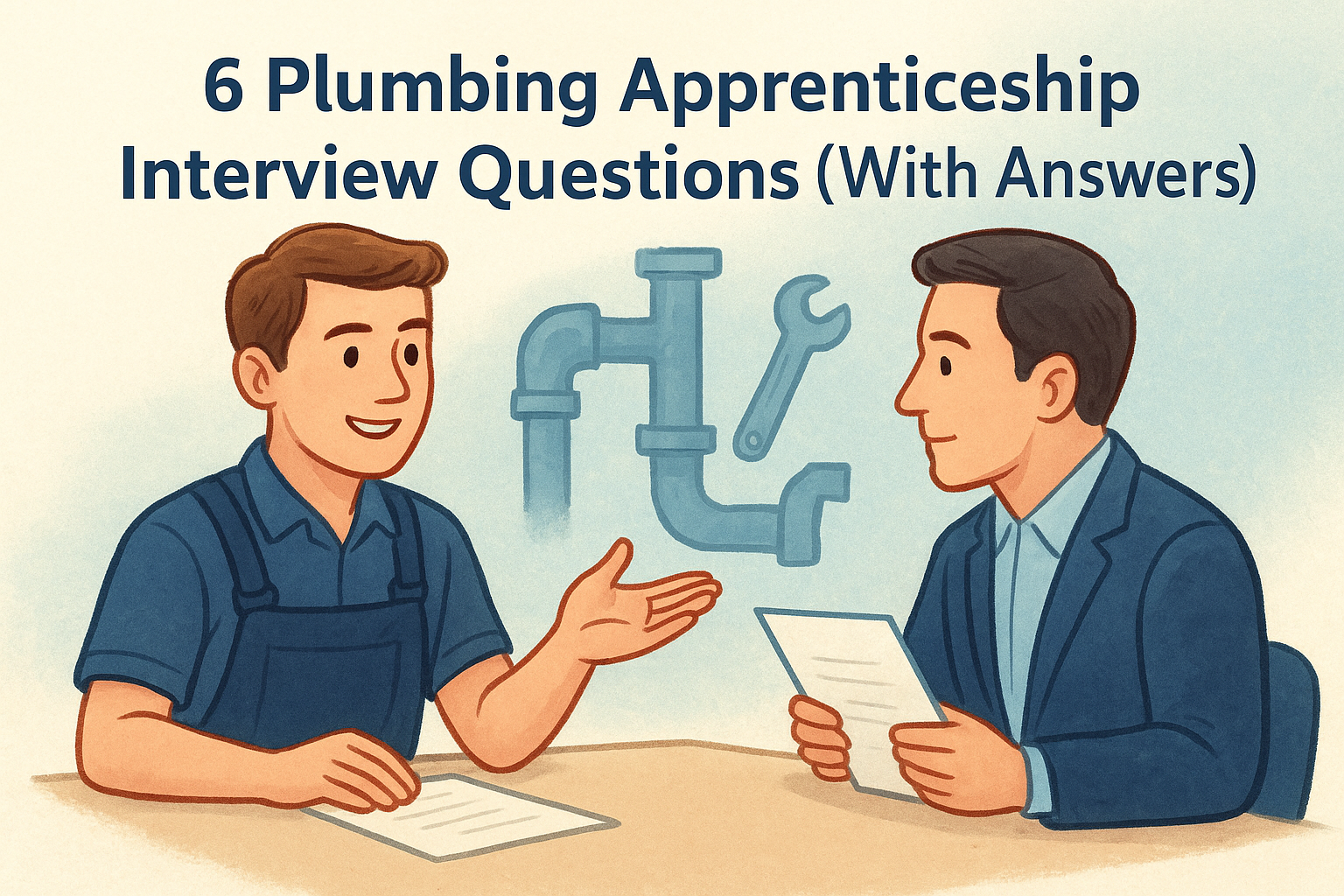
6 Plumbing Apprenticeship Interview Questions (With Answers)
Landing your first plumbing apprenticeship can feel like a major milestone, and the interview is often the final hurdle. Whether you’re a candidate preparing to meet a potential employer or a hiring manager screening new talent, knowing the right plumbing apprenticeship interview questions makes all the difference in how that conversation goes.
At PlumbingJobs.com, we connect thousands of plumbing professionals with employers across the United States every day. We’ve seen what works in these interviews, and what trips people up. This guide covers six common questions you’ll likely encounter, complete with sample answers to help you walk in prepared or evaluate candidates with confidence.
1. How did you find this apprenticeship on PlumbingJobs.com?
This opener might sound casual, but it serves a strategic purpose for employers. By asking how you discovered their listing on PlumbingJobs.com, they’re gauging your job search approach and whether you have genuine interest in their specific company or if you’re mass-applying. Your response sets the tone for the rest of the conversation, so you want to demonstrate intentionality and research.
What the interviewer wants to learn
Employers ask this to see if you’re actively seeking opportunities in the plumbing trade or if you stumbled onto their listing by chance. They want to know whether you used PlumbingJobs.com’s state filters, searched for specific roles like “Apprentice Plumber,” or followed a direct recommendation. A thoughtful answer shows you’re serious about starting your career in plumbing and that you value industry-specific resources over generic job boards.
How to structure your answer
Start by mentioning PlumbingJobs.com directly and explain what drew you to use a specialized platform. Then pivot to why their specific listing caught your attention, whether it was the company name, location, or role description. Finish by tying your answer back to your career goals, showing that this isn’t a random application.
Sample answer you can adapt
“I’ve been using PlumbingJobs.com to search for apprenticeships in my area because it focuses on licensed trades and has clear filters by state and certification level. When I saw your posting for an apprentice position, the emphasis on hands-on training and your reputation in residential service stood out. I researched your company further and liked what I found about your approach to mentorship, so I knew this was the right fit to apply.”
A specific answer that references details from the job listing signals you’re not just applying everywhere.
Common mistakes to avoid
Don’t give a vague response like “I just saw it online.” Avoid saying you applied to dozens of companies without mentioning why this one matters. Never imply you’re using PlumbingJobs.com passively or that you didn’t review the job description before clicking submit. These missteps suggest you’re not invested in the opportunity.
Follow-up questions to expect
Interviewers may ask what other companies you’ve applied to, or why you chose a niche job board over broader platforms. They might probe into what you learned about their business during your research or whether you’ve explored their service area. Be ready to discuss your understanding of the local plumbing market and licensing requirements.
2. Tell me about yourself and why plumbing?
This question appears in nearly every plumbing apprenticeship interview questions list because it reveals your motivation and personality in one response. Employers want to see if you’re entering the trade with realistic expectations or if you’re treating it as a temporary gig. Your answer should balance personal background with career intent, showing you understand what plumbing work involves.
What the interviewer wants to learn
Interviewers use this to assess your commitment level and whether you’ll stick with the apprenticeship through challenging days. They’re checking if you have relevant experience like construction work, hands-on hobbies, or mechanical aptitude that translates to plumbing. Your answer tells them if you understand the physical demands and problem-solving nature of the trade.
How to structure your answer
Keep your response under two minutes by opening with a brief personal introduction, then explaining what sparked your interest in plumbing. Connect any prior work or skills to the trade, and close by stating what you hope to achieve as an apprentice. Avoid rambling through your entire life story.
Sample answer you can adapt
“I’m a recent high school graduate who’s always enjoyed working with my hands. Last summer, I helped my uncle renovate his kitchen and watched the plumber replace old supply lines. The precision and problem-solving involved fascinated me, so I researched the trade and learned about strong earning potential and licensing paths. I want to build a stable career where I’m constantly learning and helping people with real problems.”
Frame your interest around skills and outcomes, not just the paycheck.
Common mistakes to avoid
Don’t focus solely on salary or benefits without mentioning the work itself. Avoid vague statements like “I’m a hard worker” without examples. Never suggest plumbing is a backup plan or that you’re unsure about the commitment required.
Follow-up questions to expect
Be ready to explain any gaps in your resume or why you chose plumbing over other trades. Interviewers may ask about your physical fitness or if you’ve researched state licensing requirements for apprentices.
3. What do you know about our company and this role?
This question appears on almost every plumbing apprenticeship interview questions list because it separates candidates who did their homework from those who didn’t. Employers want to see that you’ve invested time researching their business, service offerings, and what you’ll actually be doing day to day. Your answer demonstrates genuine interest and shows whether you understand how apprenticeships work in their specific operation.
What the interviewer wants to learn
Hiring managers use this to test your preparation level and see if you understand their business model. They want to know if you’ve looked at their website, read reviews, or noticed what types of projects they handle, whether that’s residential service calls, new construction, or commercial installations. Your response reveals if you can articulate what apprentices do versus licensed plumbers.
How to structure your answer
Start with one or two facts about the company you discovered through research, such as their service area, years in business, or specialization. Then explain what you understand about the apprentice responsibilities from the job posting. Close by connecting what you learned to why you’re excited about this specific opportunity.
Sample answer you can adapt
“I visited your website and noticed you’ve been serving the tri-county area for over 15 years, primarily focusing on residential repairs and remodels. From the PlumbingJobs.com listing, I understand this apprenticeship involves assisting journeymen with pipe installation and troubleshooting, learning to use diagnostic tools, and working directly with customers. That hands-on exposure to real service situations is exactly what I’m looking for.”
Research before your interview shows employers you’re serious about joining their team, not just filling any open position.
Common mistakes to avoid
Don’t say you know nothing about the company or give generic answers that could apply anywhere. Avoid reciting only what’s on their homepage without adding insight. Never confuse their services with another company or misstate their specialization, like saying commercial when they’re residential focused.
Follow-up questions to expect
Interviewers may ask what impressed you most about their business or how you think their approach differs from competitors. They might probe whether you’ve spoken to any current employees or if you understand their training timeline for apprentices.
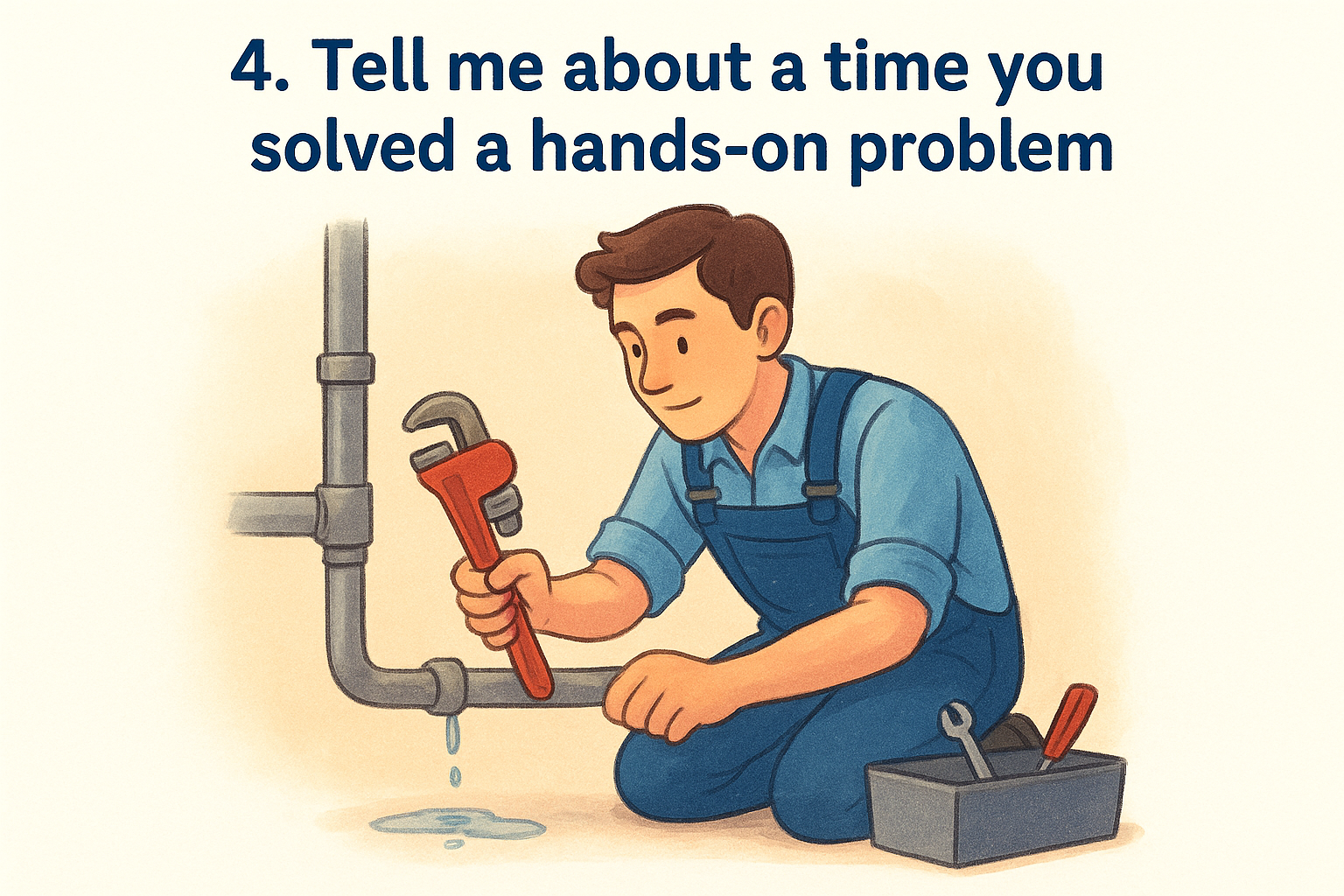
4. Tell me about a time you solved a hands-on problem
Behavioral questions like this appear frequently in plumbing apprenticeship interview questions because they reveal how you approach challenges when things don’t go as planned. Interviewers want concrete evidence of your problem-solving ability and mechanical thinking, not theoretical answers. This question tests whether you can recall specific situations where you diagnosed an issue and figured out a solution using tools or physical work.
What the interviewer wants to learn
Employers ask this to see if you possess natural troubleshooting instincts before formal training begins. They’re evaluating whether you can break down a problem into steps, identify root causes, and adapt when your first attempt fails. Your answer shows if you have hands-on experience from prior jobs, personal projects, or even home repairs that translates to plumbing work.
How to structure your answer
Use the STAR method by describing the Situation, Task, Action, and Result in sequence. Keep your example under 90 seconds, focusing more on your actions and thought process than the background details. Choose a story that demonstrates mechanical aptitude, resourcefulness, or persistence rather than one where someone else solved the problem for you.
Sample answer you can adapt
“During a summer landscaping job, our team’s irrigation sprayer stopped working mid-project. I noticed water pooling around the connection point, so I shut off the supply and inspected each fitting. The rubber gasket had worn out and needed replacement. I found a spare in our truck, replaced it, and tested the system to confirm we had proper water pressure again. We finished the job on schedule.”
Specific details about what you observed and how you fixed it prove your hands-on capabilities.
Common mistakes to avoid
Don’t describe a problem where you gave up or needed constant help from others. Avoid examples that have nothing to do with physical work, like resolving a scheduling conflict. Never claim you’ve never faced a hands-on challenge, as that suggests limited practical experience.
Follow-up questions to expect
Interviewers may ask what tools you used or if you’d approach the same problem differently now. They might probe into whether you’ve worked with plumbing-specific equipment or if you understand basic concepts like water pressure and pipe fittings.
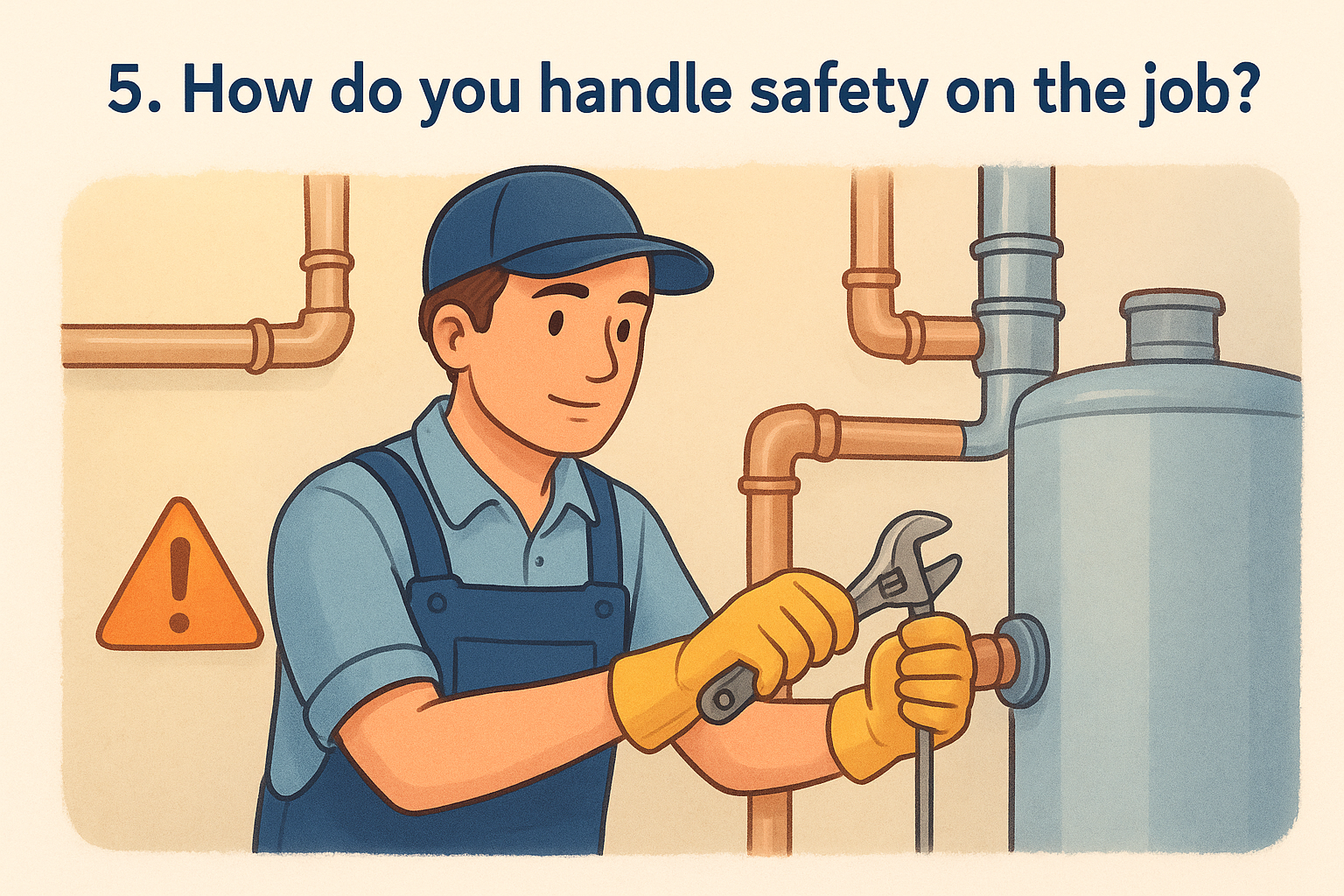
5. How do you handle safety on the job?
Safety questions rank among the most critical plumbing apprenticeship interview questions because they reveal whether you understand the physical risks involved in the trade. Employers need to know that you’ll follow protocols to protect yourself, your coworkers, and customers’ property. Your answer demonstrates situational awareness and whether you take personal responsibility for preventing accidents before they happen.
What the interviewer wants to learn
Interviewers ask this to assess your safety mindset and whether you’ll create liability issues down the road. They want to know if you understand basic hazards like confined spaces, electrical exposure near water, or handling pressurized systems. Your response shows whether you’ll speak up about unsafe conditions or cut corners to finish faster.
How to structure your answer
Reference specific safety practices you’ve used in past work or learned through research. Mention checking surroundings, using proper protective equipment, and communicating with team members. Connect your answer to how you’d apply these habits during an apprenticeship.
Sample answer you can adapt
“Safety starts with preparation. Before any task, I’d assess the work area for hazards like wet floors or overhead risks, confirm I have the right protective gear, and make sure someone knows where I’m working. If I’m unsure about a procedure, I’d ask my journeyman rather than guess. I’ve seen how one mistake can lead to injuries or property damage, so I take every precaution seriously.”
Employers value apprentices who view safety as non-negotiable, not an inconvenience.
Common mistakes to avoid
Don’t claim you’ve never been in an unsafe situation. Avoid vague statements like “I’m always careful” without examples. Never suggest speed takes priority over following safety steps.
Follow-up questions to expect
Interviewers may ask about specific PPE you’d use for different tasks or how you’d respond if a coworker ignored safety rules.
6. How would you deal with an unhappy customer or conflict?
Customer service questions appear in nearly all plumbing apprenticeship interview questions because you’ll interact with homeowners and property managers regularly, even as an apprentice. Employers know that one negative interaction can damage their reputation and cost them repeat business. Your answer reveals whether you can stay professional under pressure and turn tense situations into positive outcomes.
What the interviewer wants to learn
Hiring managers ask this to gauge your emotional maturity and communication skills when faced with criticism or frustration. They want to know if you’ll stay calm when a customer complains about mess, project delays, or unexpected costs. Your response shows whether you understand that upset customers usually feel stressed about their situation, not personally angry at you.
How to structure your answer
Start by acknowledging the customer’s concern and explaining how you’d listen without interrupting or getting defensive. Describe steps you’d take to address their issue, such as involving your journeyman or supervisor if needed. Close by emphasizing your commitment to finding solutions rather than placing blame.
Sample answer you can adapt
“If a customer expressed frustration, I’d first listen carefully to understand their specific concern without making excuses. I’d apologize for any inconvenience and explain what steps we’re taking to resolve the issue. Since I’m learning, I’d involve my supervising plumber immediately to ensure we address their problem correctly. My goal would be leaving them confident we care about their satisfaction.”
Acknowledging concerns without becoming defensive shows employers you can protect their business relationships.
Common mistakes to avoid
Don’t suggest you’d argue with customers or try to prove them wrong. Avoid claiming you’ve never dealt with conflict, as that sounds unrealistic and inexperienced. Never imply you’d handle major complaints independently without consulting licensed staff.
Follow-up questions to expect
Interviewers may ask how you’d respond if a customer accused you of poor work or demanded to speak with your supervisor. They might probe whether you understand when to escalate issues versus handle them yourself.
Wrap-up
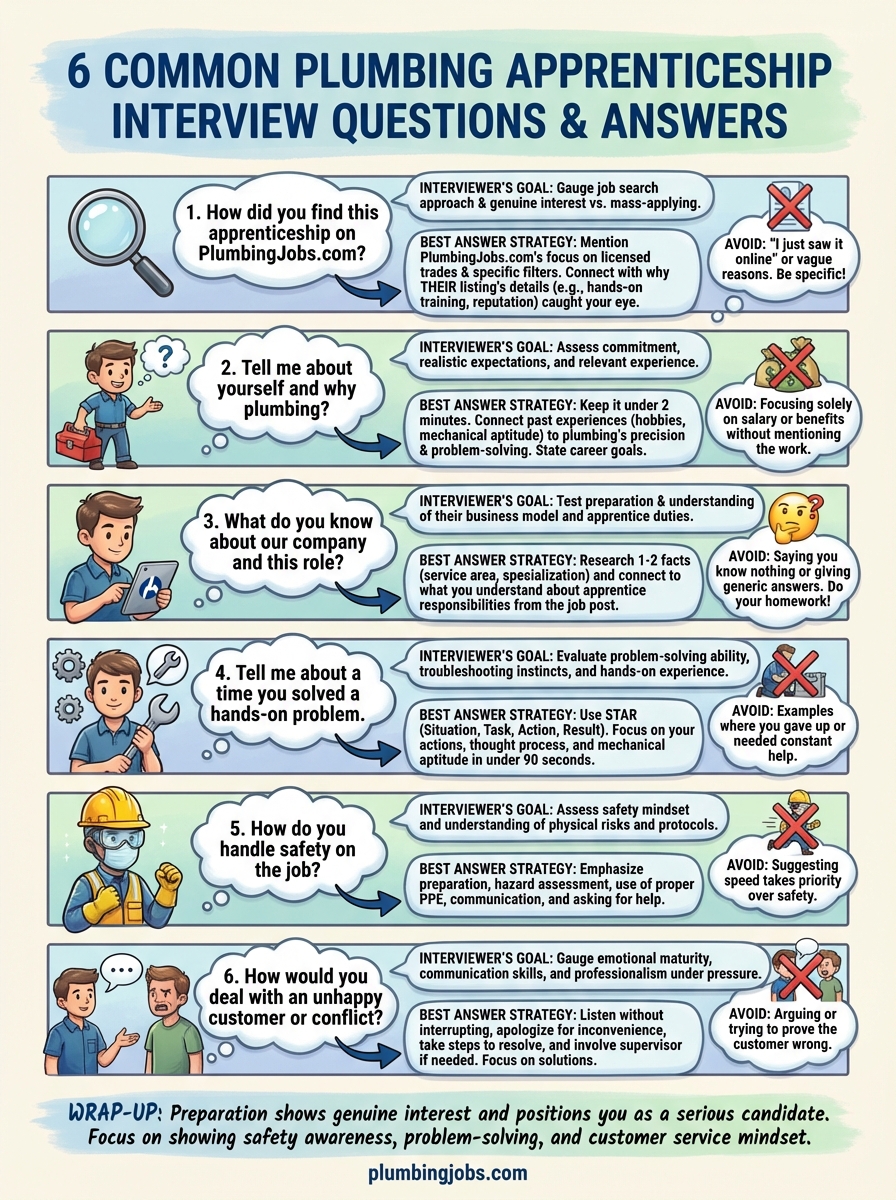
Walking into a plumbing apprenticeship interview prepared makes all the difference between landing the position and watching it go to someone else. These six common plumbing apprenticeship interview questions give you a framework to practice your responses and present yourself as a serious candidate ready to commit to the trade. Employers value apprentices who demonstrate research skills, safety awareness, problem-solving ability, and customer service mindset from day one.
Your answers should reflect genuine interest in the plumbing profession, not just a desire for any job. Hiring managers spot candidates who view apprenticeships as stepping stones to real careers versus those treating them as temporary positions. When you reference specific details about the company and show understanding of physical demands and licensing pathways, you position yourself as someone worth the investment.
Whether you’re preparing for your first interview or screening potential apprentices, PlumbingJobs.com connects you with the right opportunities. Explore our plumbing industry blog for hiring insights and career resources.
Want plumbing jobs delivered to your inbox?
Want plumbing jobs delivered to your inbox?
Partner Site

