
Getting hired as a plumber starts with having the right credentials, and choosing the right plumbing certification programs can make or break your early career. Whether you’re brand new to the trade or you’re a working plumber ready to level up, a solid certification tells employers you have verified skills and training they can count on.
The problem? There are dozens of programs out there, and not all of them carry the same weight with hiring managers. Some offer hands-on shop time, others are fully online, and a few combine both. Picking the wrong one means wasted time and money. Picking the right one means faster job offers and a stronger foundation for licensing down the road.
Here at plumbingjobs, we connect plumbers with employers across all 50 states, so we see firsthand what certifications hiring companies actually value. We put together this list of five programs worth your attention, covering both online and in-person options, to help you invest in training that leads to real job opportunities.
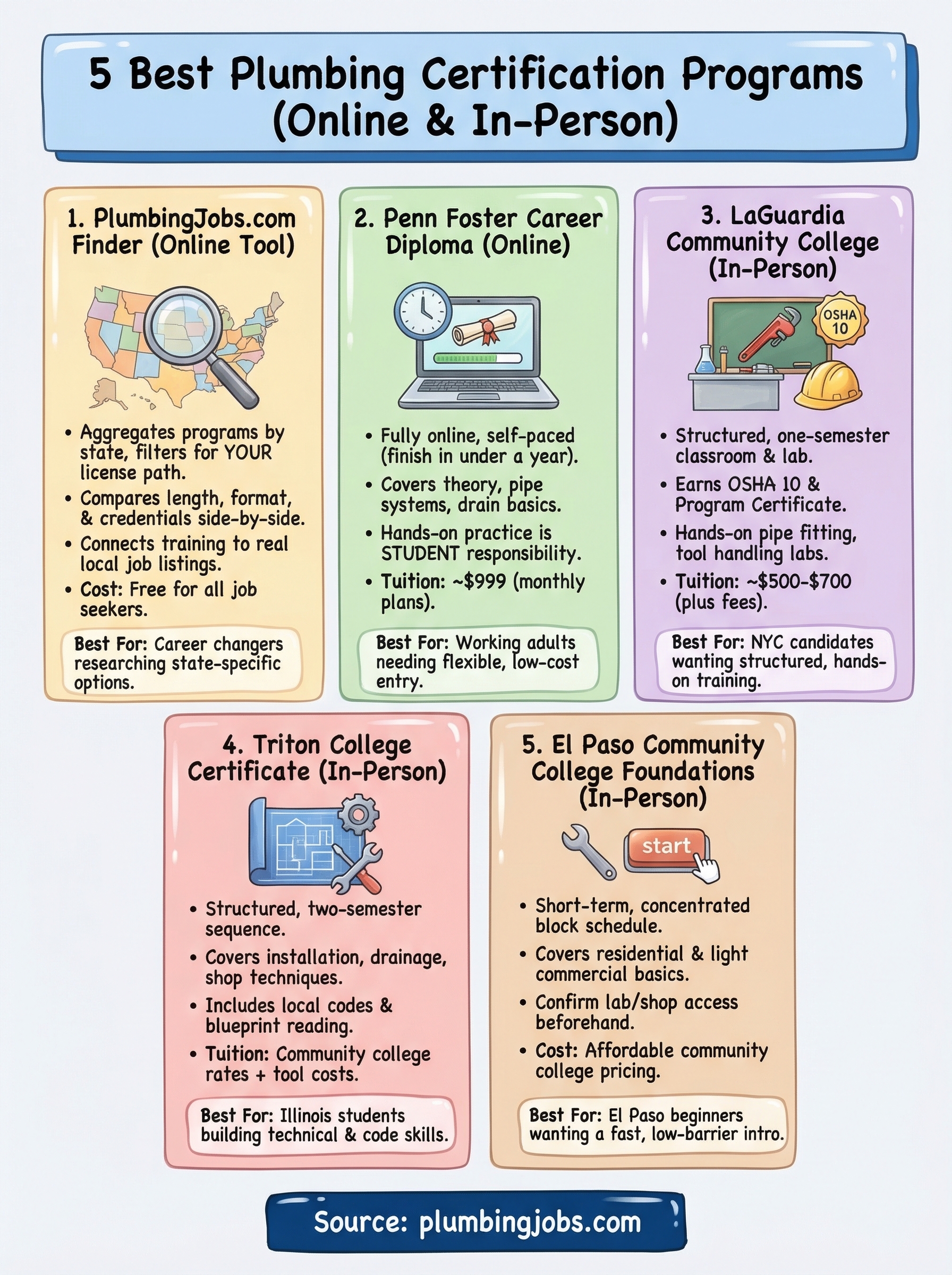
1. PlumbingJobs.com Plumbing Schools and Certification Finder
PlumbingJobs.com offers a schools and certification finder that cuts through the clutter of searching for plumbing certification programs state by state. Instead of bouncing between school websites and state licensing boards, you get organized information in one place.
What it is and how it helps you pick a program
The finder aggregates plumbing schools and training programs across the U.S. and organizes them by state. You can quickly see which programs operate in your area and what credential each one leads to.
Key details you can access for each program include:
- Program type (online, in-person, hybrid)
- State coverage and location
- Credential or certification earned
How to match training to your state license path
Licensing requirements vary significantly by state, and a program that satisfies requirements in Texas may not count toward a license in New York. Use the finder to filter programs against your specific state’s licensing track, so every dollar you spend on training moves you closer to your actual license.
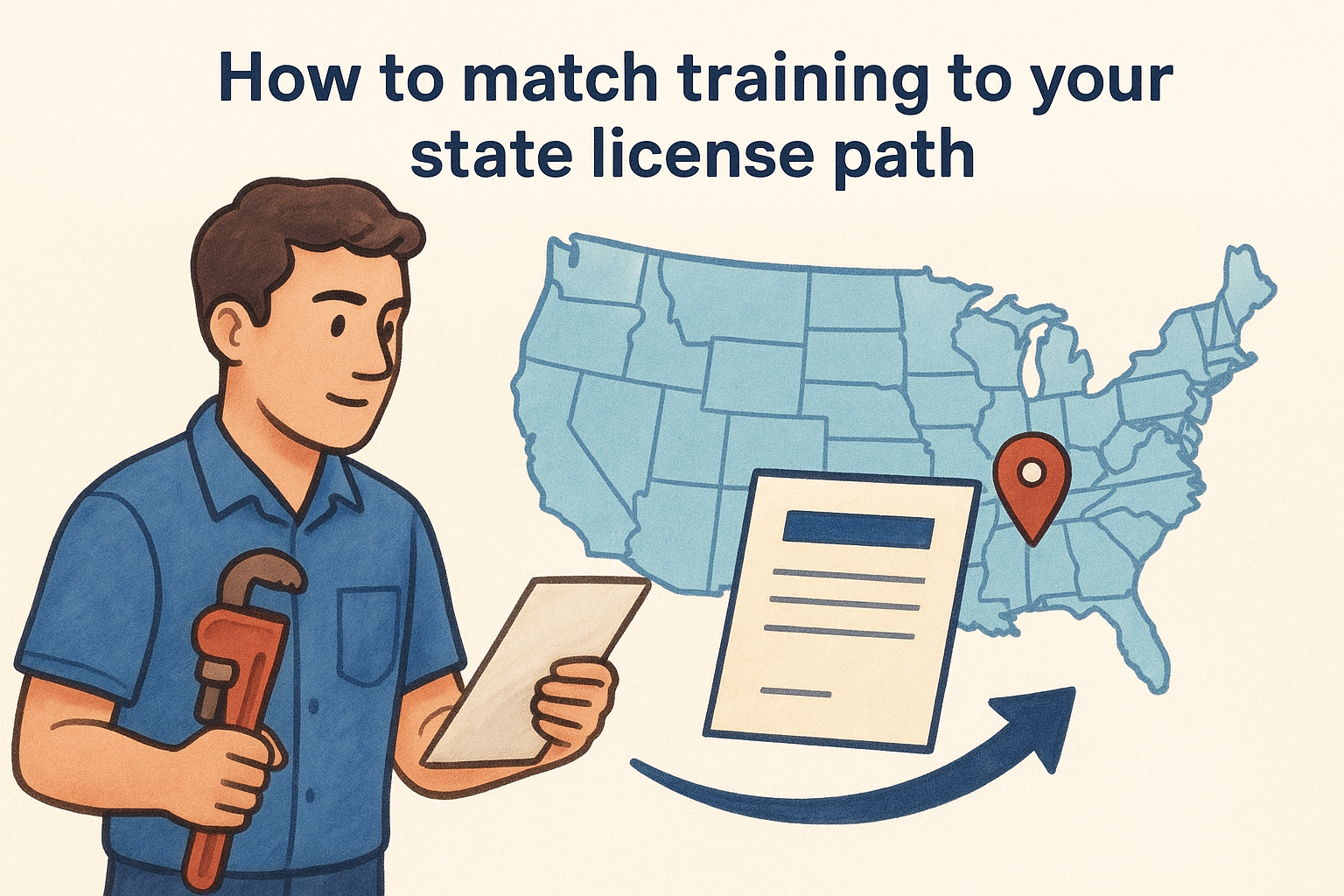
Picking a program before confirming your state’s requirements is one of the most common and costly mistakes new plumbers make.
How to compare programs fast without missing red flags
You can review program length, format, and credentials side by side without clicking through multiple websites. This makes it straightforward to catch issues like programs that lack hands-on components or fail to clearly state what certification you earn at the end.
How to connect training choices to real plumbing jobs
Once you finish a program, PlumbingJobs.com lets you browse active job listings that match your new credential. Seeing which certifications local employers request helps you confirm your training choice is worth the investment before you even enroll.
Cost to use
Free for all job seekers. You pay nothing to search schools, browse listings, or set up job alerts.
Best for
Career changers and new trade entrants who need to research state-specific training options and want to connect those choices directly to real local hiring opportunities without paying for a separate research tool.
2. Penn Foster Plumber Career Diploma
Penn Foster offers a fully online plumber career diploma that works well for people who need schedule flexibility. You study at your own pace while still working toward a recognized credential in the plumbing trade.
Program format and weekly time commitment
Penn Foster runs on a self-paced online format, so you control when and where you study. Most students finish the program in under a year with consistent weekly effort.
What you learn and what credential you earn
You cover plumbing theory, pipe systems, and drain installation basics, earning a Penn Foster Career Diploma upon completion. This credential signals foundational knowledge to entry-level employers.
Hands-on requirements and how students complete them
Penn Foster’s program is primarily online, so hands-on practice is your responsibility. The school recommends supplementing coursework with local apprenticeship or shop hours to build practical skills.
Without real hands-on time, a diploma alone rarely satisfies state licensing boards for plumbing certification programs.
Enrollment requirements and who this works for
No prior plumbing experience is required to enroll. You only need a high school diploma or GED to get started.
Tuition, fees, and payment options to expect
Tuition runs approximately $999, with monthly payment plans available to reduce upfront costs.
Best for
Working adults who need a flexible, low-cost introduction to plumbing coursework before pursuing a formal apprenticeship or trade school program.
3. LaGuardia Community College Plumbing 1 Training Program
LaGuardia Community College in New York City offers a Plumbing 1 training program built for students who want a structured, instructor-led entry into the trade.
Program format, schedule, and typical length
The program runs in a classroom and lab format on a set schedule. Most students complete it in one semester, keeping your time commitment manageable.
Certifications included and what they mean for hiring
Completers earn an OSHA 10 certification alongside a program certificate. These credentials show employers you have verified safety knowledge and a working grasp of plumbing fundamentals.
OSHA 10 is one of the most requested credentials by commercial plumbing employers at the hiring stage.
Skills covered and how much hands-on time you get
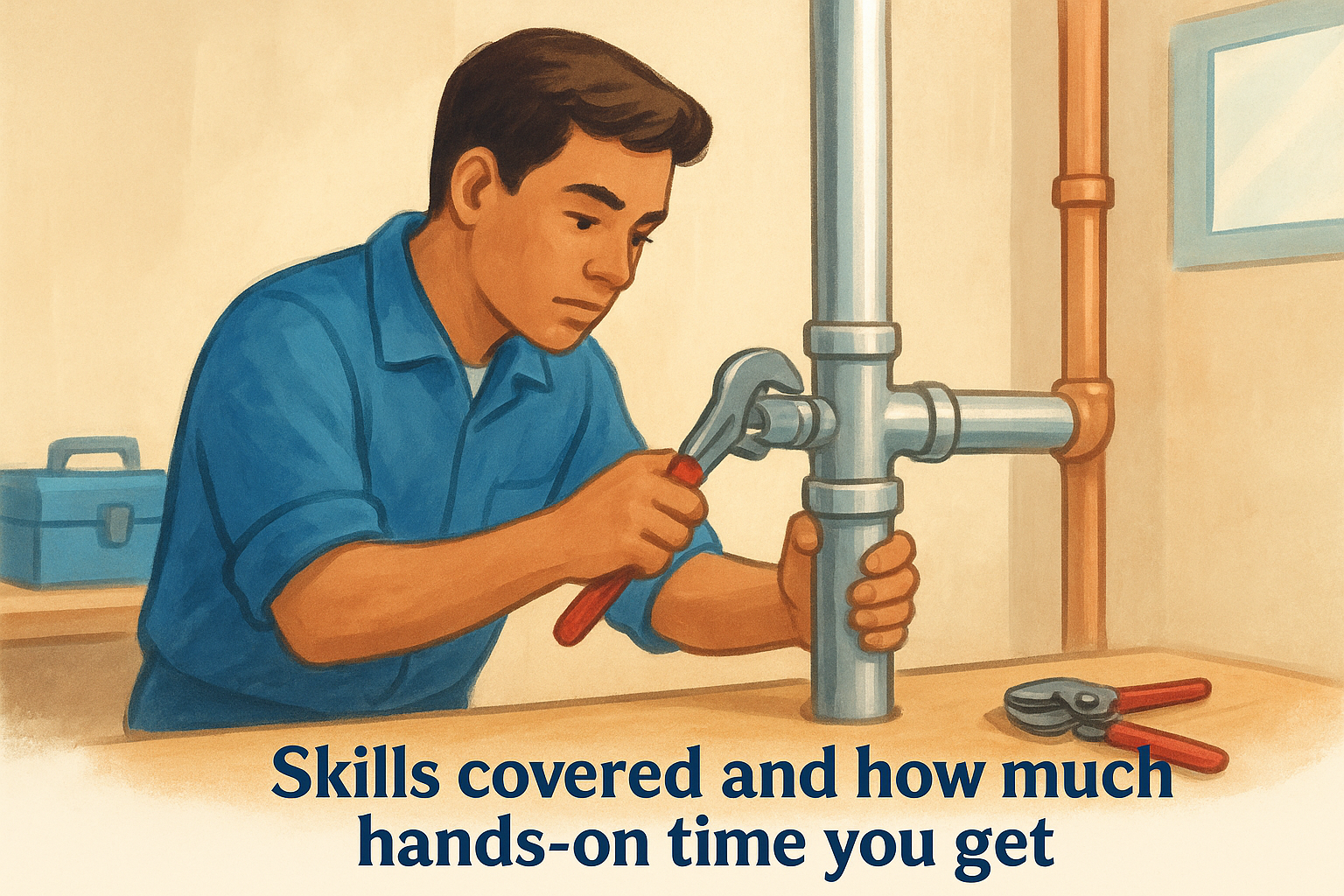
Lab sessions cover pipe fitting, basic drain systems, and tool handling, so you build real hands-on experience. That built-in practical time is what separates this from online-only plumbing certification programs.
Eligibility requirements and application notes
You need a high school diploma or GED to enroll. Registration runs through LaGuardia’s continuing education office, so verify current session dates before you apply.
Tuition, fees, and other costs to plan for
Expect to pay roughly $500 to $700 in tuition, with possible additional material and tool fees billed separately.
Best for
New York City-area candidates who want structured, hands-on classroom instruction with safety credentials included from day one.
4. Triton College Plumbing Certificate
Triton College in River Grove, Illinois offers a plumbing certificate designed to give students a structured path into the trade through a sequence of hands-on courses.
Program format, course sequence, and completion time
The program runs in-person with a required course sequence. Most students complete it in two semesters by following that order without skipping prerequisites.
Core competencies you build for entry-level roles
You develop skills that prepare you for entry-level work, including:
- Pipe installation and drainage systems
- Fixture connections and water supply lines
- Practical shop techniques from day one
These are among the most requested skills in plumbing certification programs across the country.
How the program covers codes, plans, and safety
Coursework includes local and national plumbing codes alongside blueprint reading and job-site safety. Knowing codes before your first job saves you from costly errors early in your career.
Employers regularly screen entry-level candidates on code awareness during interviews.
Admissions requirements and placement expectations
You need a high school diploma or GED to apply. Triton may require a math placement assessment before you enroll in technical coursework.
Tuition, fees, and tool costs to budget for
Tuition runs at Illinois community college rates, roughly $150 to $200 per credit hour for in-district students. Budget extra for tools and lab materials not covered in base tuition.
Best for
Illinois-area students who want a structured, in-person certificate that builds technical skills and code knowledge together.
5. El Paso Community College Foundations of Plumbing
El Paso Community College offers a Foundations of Plumbing course designed to give you an accessible entry point into the trade without requiring a long-term commitment upfront.
Program format and how it fits working adults
The program runs in a short-term, in-person format that works well if you’re balancing a job or family responsibilities. Sessions are typically scheduled in concentrated blocks, reducing the drag of a multi-semester commitment.
Topics covered from residential to commercial basics
You cover residential and light commercial plumbing fundamentals, including pipe systems, fixtures, and basic water supply concepts. This broad foundation prepares you for entry-level roles across different work environments.
Employers value candidates who understand both residential and commercial basics, since most companies handle both.
Labs, practical skills, and what to ask about shop time
Ask the admissions office directly about lab hours and hands-on shop access before you enroll. Confirm that practical skill sessions are included and not just theory-based lectures.
Prerequisites, enrollment steps, and local limitations
You need a high school diploma or GED to enroll. This program serves the El Paso, Texas region, so geographic access is limited to local students.
Typical costs and what may not be included
Expect affordable community college pricing, but budget separately for tools and safety gear not covered in base tuition.
Best for
El Paso-area beginners looking for a fast, low-barrier introduction to plumbing certification programs before committing to a full apprenticeship.
Next Steps
You now have five solid options to evaluate, from free online finders to in-person community college programs. The right choice depends on your state’s licensing path, your schedule, and how much hands-on training you need built into the program. Use that framework to narrow your list to one or two programs before you spend any money.
Once you finish your chosen program, the next move is finding employers who recognize your new credential. Plumbing certification programs carry real weight with hiring managers, but only if you put them in front of the right companies. Start applying before you even complete your training so you have interviews lined up when you finish.
Browse active listings and find plumbing jobs near you on PlumbingJobs.com to see exactly what local employers are hiring for right now. Knowing what the market wants helps you confirm your training was the right investment.
