
5 Best Plumbing Apprenticeship Programs Near Me (2026)
Starting a plumbing career without a college degree, and getting paid while you learn, sounds almost too good to be true. But that’s exactly what plumbing apprenticeship programs near me searches can lead you to: structured training that combines classroom instruction with hands-on work experience. The catch? Finding the right program takes some digging, since options vary widely by location, sponsorship type, and career track.
Whether you’re eyeing a union training center, a company-sponsored program, or a trade school with apprenticeship placement, the path you choose shapes your earning potential and licensing timeline. At PlumbingJobs.com, we connect plumbing professionals with employers across all 50 states, and we’ve seen firsthand how the right apprenticeship opens doors to long-term career opportunities.
This guide breaks down five types of apprenticeship programs worth considering in 2026, what each offers, and how to find legitimate options in your area.
1. PlumbingJobs.com apprentice job listings
PlumbingJobs.com hosts hundreds of active apprentice positions from employers who specifically need entry-level talent willing to learn. These aren’t theoretical training programs, they’re real job openings posted by plumbing companies, contractors, and facilities across the United States that want to hire and train you now.
What you get
You gain direct access to employer-sponsored apprenticeships that combine paid work with structured training. Many listings come from small to mid-sized plumbing businesses that prefer to train their own talent rather than compete for experienced plumbers. These positions typically include on-the-job mentorship from licensed journeymen or master plumbers, plus support for classroom hours required by your state licensing board.
“Company-sponsored apprenticeships often move faster than union or trade school waitlists, getting you into paid work within weeks instead of months.”
How to find openings near you fast
Start by visiting the job search page and filtering by your state and city. Type “apprentice” or “helper” in the keyword box to surface entry-level roles. Check the email alerts option to receive monthly notifications when new apprenticeship openings match your location, so you never miss opportunities as they post.
How to apply and stand out
Most listings include an application link or contact email that takes you directly to the employer. You’ll stand out by mentioning any trade school coursework, relevant certifications like OSHA 10, or hands-on experience (even DIY home projects count). Employers value enthusiasm and reliability over experience for apprentice roles, so emphasize your willingness to learn and commit to the full training timeline.
Pay, schedule, and what “apprentice” means in job posts
Pay for apprentice roles ranges from $15 to $22 per hour depending on region and employer size. Expect full-time schedules with occasional overtime, especially during peak service seasons. When you see “apprentice” in a job post, it signals a structured progression path with wage increases tied to skill milestones, not just a helper position with no clear advancement.
Watch-outs and tips before you accept an offer
Clarify whether the employer sponsors your state apprenticeship registration and covers or reimburses classroom training costs. Ask about the ratio of field work to classroom hours and whether the company has placed apprentices through licensing exams before. Red flags include vague training timelines, no mention of licensing support, or pay that doesn’t increase as you gain skills.
2. Apprenticeship.gov apprenticeship job finder
The U.S. Department of Labor operates Apprenticeship.gov, a national database that connects job seekers with federally registered apprenticeship programs across every state. Unlike job boards that list individual openings, this platform features formal training programs vetted by state apprenticeship agencies, giving you access to structured paths that meet national standards for hours, curriculum, and wage progression.
What you get
You access a searchable directory of registered apprenticeship programs that have passed federal and state review for quality and compliance. These programs guarantee you receive documented training hours that count toward your state plumbing license, plus wage scales that increase as you advance through competency levels. Registration with the Department of Labor also means your credentials transfer more easily if you relocate to another state.
How to search by location and occupation
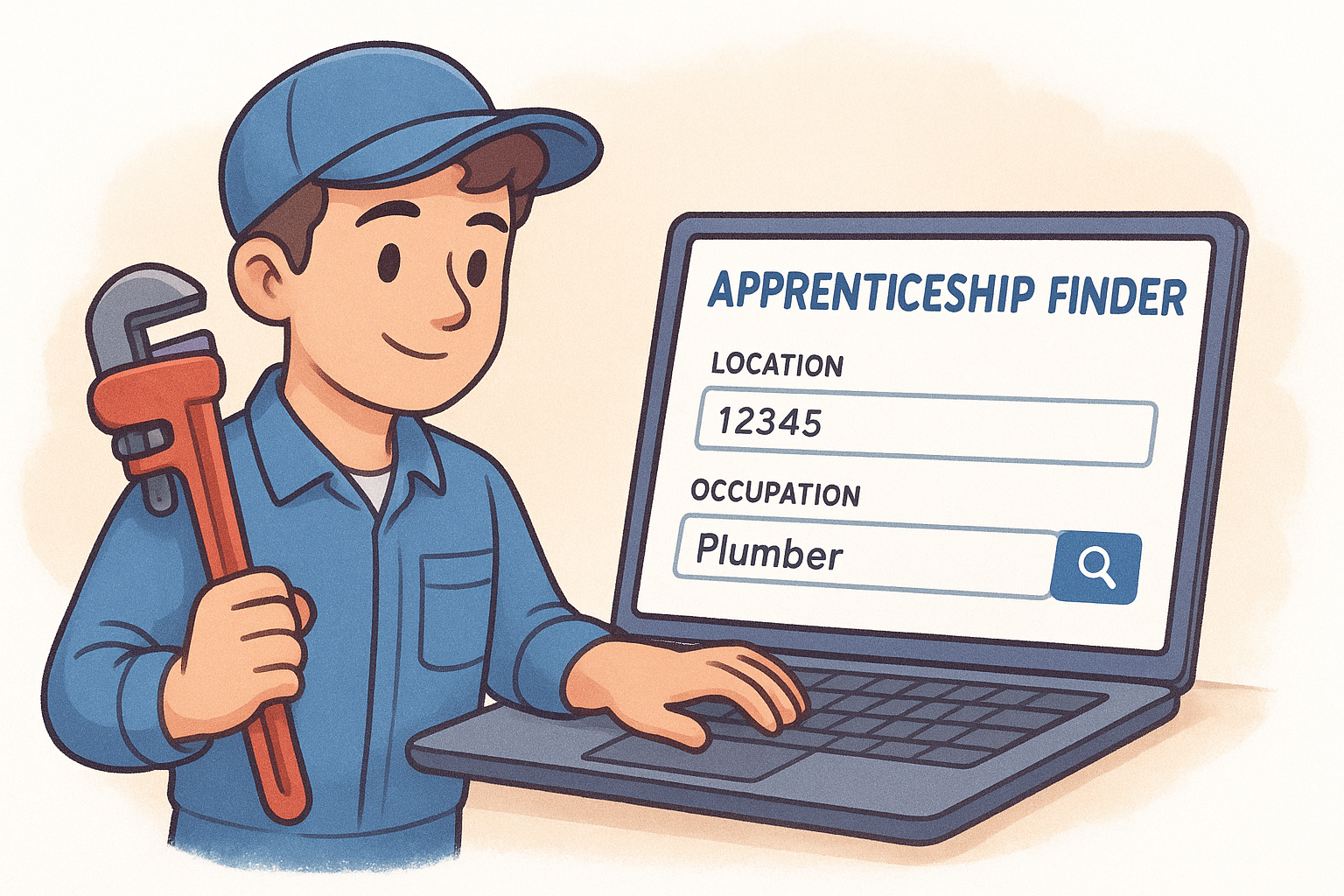
Navigate to the Apprenticeship Finder tool and enter your ZIP code or city name in the location field. Select “Plumber” or “Pipefitter” from the occupation dropdown to filter for plumbing apprenticeship programs near me. The results display sponsor names, contact information, and program size, letting you compare multiple options in your area at once.
How to verify a program is registered
Each listing shows a registration number and the sponsoring organization’s official contact details. You can cross-check this information by calling your state apprenticeship agency or searching the program sponsor’s name on your state licensing board website to confirm active status.
“Federally registered programs undergo regular audits, protecting you from unlicensed training mills that waste your time and money.”
What the application process usually looks like
Most programs require you to submit an application directly to the sponsoring employer, union, or training center listed on Apprenticeship.gov. Expect to provide a high school diploma or GED, pass a drug screening, and complete an interview or aptitude test. Some programs have rolling admissions, while others accept applications only during specific enrollment windows each year.
Common roadblocks and how to avoid them
Programs with high demand often maintain waiting lists that can stretch several months. You increase your chances by applying to multiple programs simultaneously and following up every few weeks to confirm your application remains active. Missing prerequisite coursework like algebra can delay acceptance, so check requirements early and complete any needed classes at your local community college before applying.
3. United Association union apprenticeship programs
The United Association of Journeymen and Apprentices operates the most extensive network of plumbing apprenticeship programs near me through local Joint Apprenticeship and Training Committees (JATCs) in major metro areas. These five-year programs combine paid fieldwork with certified classroom instruction, producing licensed journeymen who consistently earn top wages in the plumbing trades.
What you get
You receive 160 to 200 hours of classroom training annually alongside paid work with union contractors. The UA curriculum covers pipefitting, welding, blueprint reading, and code compliance, all taught by certified instructors at state-approved training facilities.
How to find your local JATC and openings
Visit the UA website to locate your nearest training center by state and city. Most locals post application periods once or twice yearly, typically in spring and fall, with specific deadlines you cannot miss.
Entry requirements and selection process
Expect to provide a high school diploma, pass an algebra aptitude test, and complete a physical assessment that includes lifting and climbing. The selection committee ranks applicants based on test scores and interview performance before issuing acceptance letters.
Pay progression, benefits, and work types
Starting wages range from $18 to $24 per hour, increasing to $40 to $55 by graduation. You gain health insurance, pension contributions, and exposure to commercial construction, industrial maintenance, and service plumbing projects through rotating contractor assignments.
“UA apprentices graduate with zero student debt and a pension account already funded from day one.”
What to ask at an info session or interview
Clarify the call-out system for job assignments, whether you can request specific contractors, and what percentage of recent graduates passed their licensing exam on the first attempt.
4. PHCC plumbing apprenticeship options
The Plumbing-Heating-Cooling Contractors Association connects aspiring plumbers with member companies that sponsor independent contractor apprenticeship programs, offering an alternative to union paths for those who prefer working with non-union employers. PHCC programs emphasize residential and light commercial service work, giving you exposure to direct customer interaction and small business operations that larger union contractors may not provide.
What you get
You receive employer-sponsored training through PHCC member contractors who commit to mentoring apprentices through state licensing requirements. These programs typically include referrals to approved trade schools for classroom hours plus guaranteed field work with the sponsoring contractor.
How to find member contractors and training near you
Visit your state PHCC chapter website to access a directory of member contractors who actively hire apprentices. Contact contractors directly to ask about current openings and training partnerships with local technical colleges.
Typical requirements and paperwork to expect
Most PHCC contractors require a high school diploma, valid driver’s license, and clean background check before hiring apprentices. You’ll need to register your apprenticeship with your state licensing board, which the employer should help coordinate within your first 30 days.
Training format, hours, and timeline
Expect four to five years of combined classroom instruction and fieldwork totaling 8,000 to 10,000 hours depending on your state. Classes typically meet two evenings per week during the academic year while you work full-time days.
How to compare PHCC routes to union and school programs
PHCC apprenticeships offer more flexibility in work schedules and faster hiring compared to union waiting lists, though starting wages may run $2 to $4 per hour lower initially. You gain stronger exposure to residential service and repair work versus the heavy commercial focus of union programs.
“PHCC paths work best if you plan to open your own service business eventually, since you’ll learn customer relations and small business practices firsthand.”
5. Company-sponsored paid plumbing apprenticeships
Thousands of independent plumbing contractors across the United States sponsor apprenticeship programs directly through their businesses, bypassing union halls and trade schools entirely. These programs give you immediate employment and training under one roof, often with smaller teams that provide more individualized mentorship than larger institutional programs.
What you get
You receive guaranteed work hours with a single employer who handles your state apprenticeship registration and coordinates required classroom training through partner technical colleges. Most company-sponsored programs pair you with a licensed journeyman mentor who trains you on residential service calls, new construction installs, or commercial maintenance depending on the business focus.
How to find local employers that train apprentices
Search PlumbingJobs.com for apprentice openings in your city or browse your state contractor licensing board website for businesses registered as apprenticeship sponsors. Local plumbing supply houses often know which contractors actively train apprentices, making them valuable networking contacts when you visit to ask questions.
What a good employer program includes
Quality programs provide written training plans that outline hourly wage increases tied to skill milestones and guarantee support through your licensing exam. The employer should cover or reimburse costs for required classroom instruction and supply basic hand tools during your first year.
Pay, tools, and training costs to clarify upfront
Starting pay ranges from $16 to $20 per hour for company programs, with annual increases of $2 to $4 as you progress. Ask whether the employer provides a tool allowance and who pays tuition for technical college classes required by your state board.
“The best company programs treat training costs as an investment in their future workforce, not an expense they pass to apprentices.”
Red flags that signal “helper job” not apprenticeship
Avoid positions with no clear wage progression schedule or employers who refuse to register your hours with the state licensing board. If the job description focuses solely on cleanup tasks with no mention of skills training or licensing support, you’re looking at a helper position that won’t advance your plumbing apprenticeship programs near me search.
Your next step
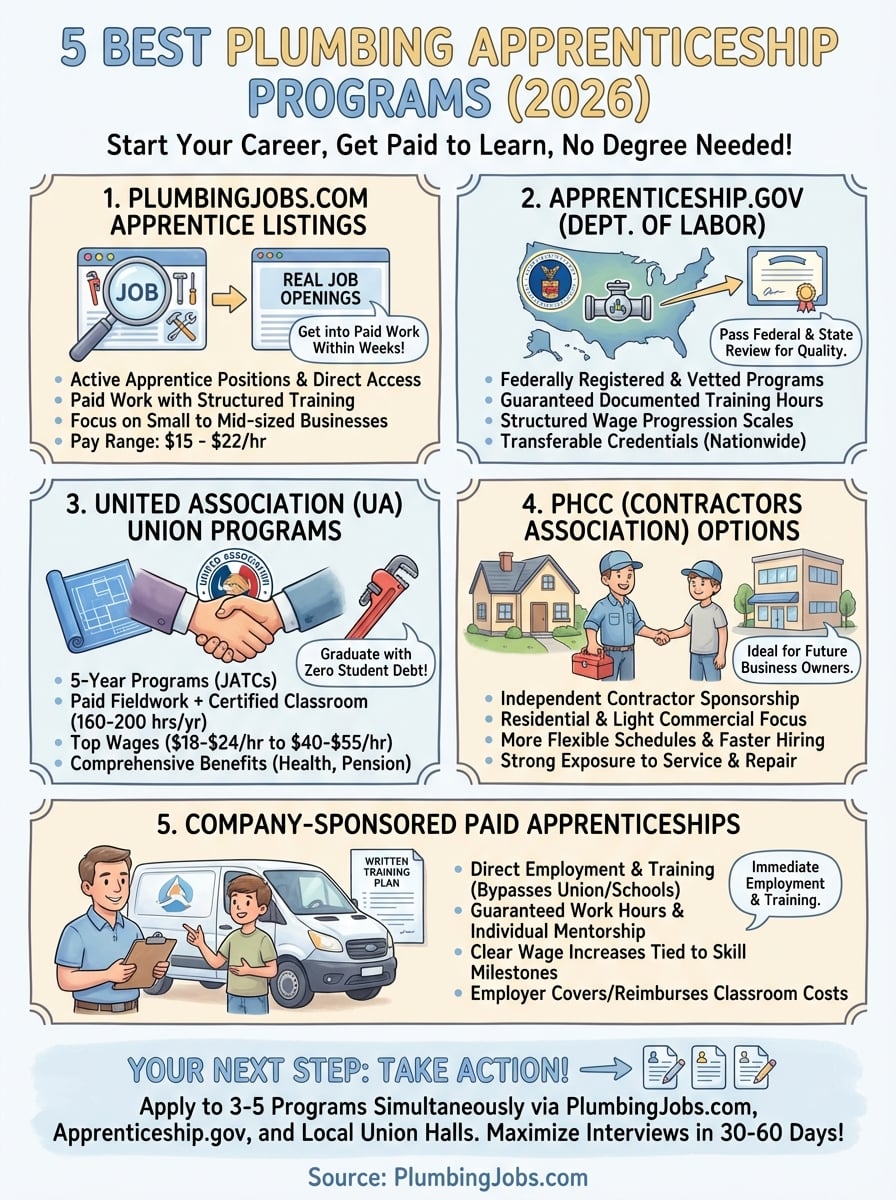
You now have five proven paths to launch your plumbing career through apprenticeship programs that pay you while you learn. Each route offers distinct advantages, from PlumbingJobs.com’s direct employer connections to union training centers with comprehensive benefits packages. The key is taking action this week rather than waiting for the perfect program to appear.
Start by applying to three to five programs simultaneously through PlumbingJobs.com listings, Apprenticeship.gov, and local union halls. This strategy maximizes your chances of landing interviews within 30 to 60 days while giving you options to compare training quality, pay scales, and work environments. Remember that your search for plumbing apprenticeship programs near me succeeds when you treat applications like a job itself, dedicating consistent hours each week to research, outreach, and follow-up calls.
Want more guidance on breaking into the plumbing trades? Explore our plumbing career resources and industry insights for apprentice success strategies, licensing timelines, and salary data by state.
Want plumbing jobs delivered to your inbox?
Want plumbing jobs delivered to your inbox?
Partner Site

