
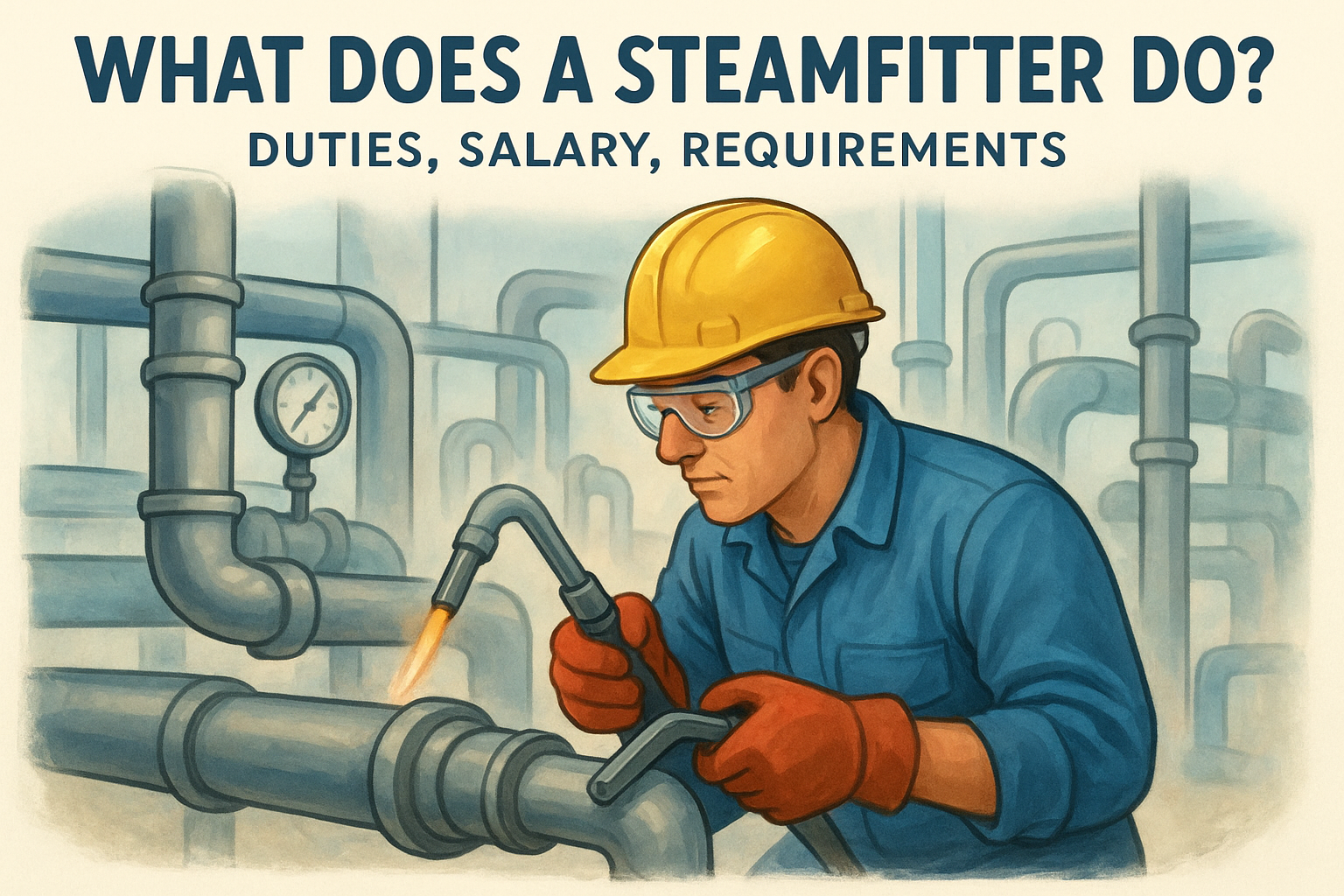
Steamfitters install, maintain, and repair high-pressure piping systems that carry steam, gases, chemicals, and other substances through industrial and commercial facilities. If you’ve been wondering what does a steamfitter do on a daily basis, the short answer is: they keep critical systems running in places like hospitals, power plants, and manufacturing facilities, environments where a single pipe failure can shut down operations or create serious safety hazards. It’s skilled, physically demanding work that pays well and stays in demand.
Whether you’re exploring the trade for the first time or you’re a plumber or pipefitter considering a career pivot, this guide breaks down steamfitter duties, salary expectations, licensing requirements, and how the role compares to similar trades. At PlumbingJobs.com, we connect skilled tradespeople with employers across the plumbing and piping industries, and steamfitter roles are among the most actively posted positions on our board.
What a steamfitter does day to day
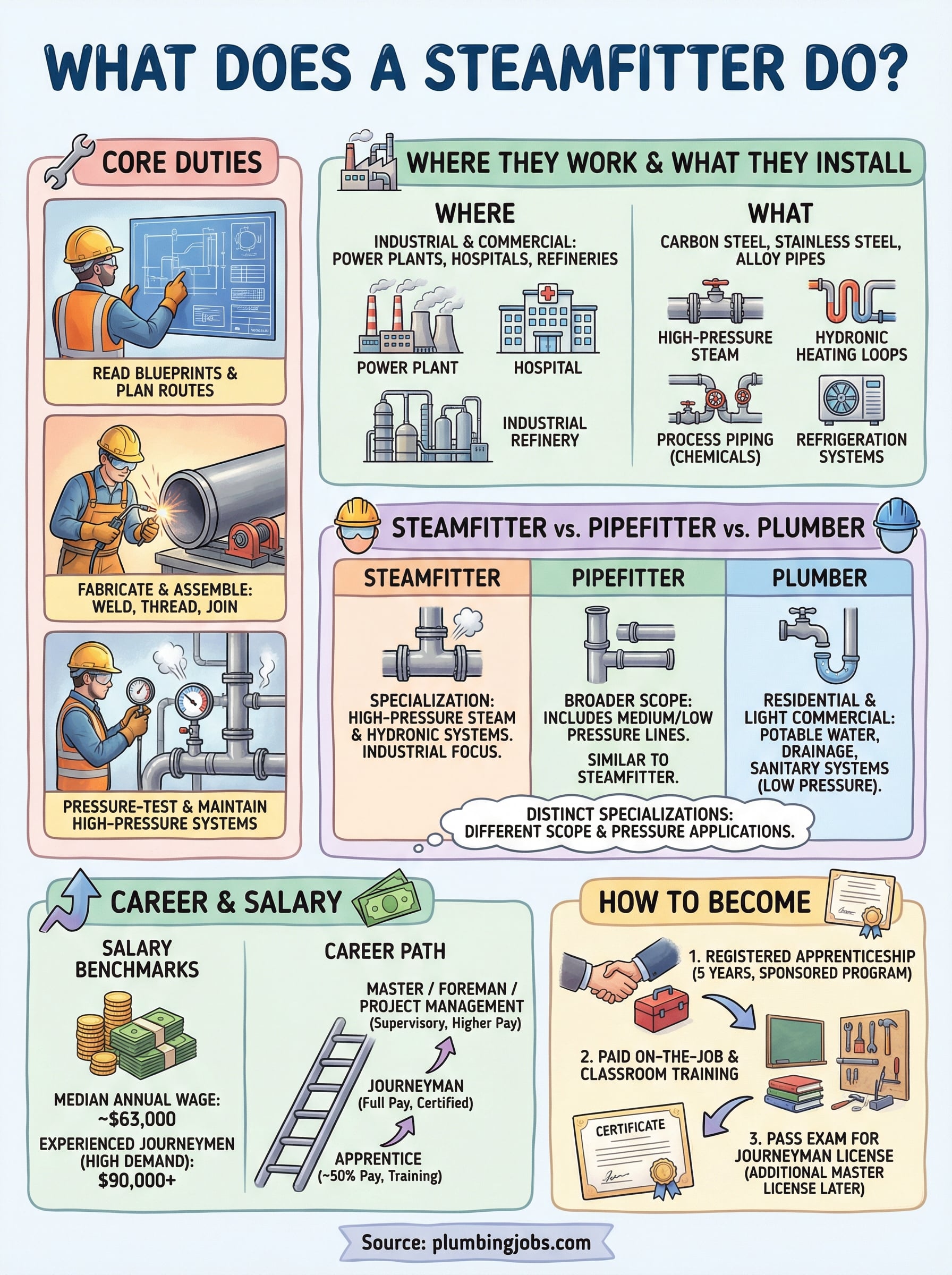
Steamfitters spend a significant portion of each day reading blueprints and technical specifications to plan how a piping system needs to be routed before they cut a single piece of pipe. On a typical shift, you’ll find them measuring and cutting pipe, welding or threading joints, and pressure-testing completed systems to confirm there are no leaks or flow restrictions. The work is physically demanding and highly precise, because these systems carry steam, gases, or chemicals at elevated pressure, where even a small error can create a serious safety hazard.
A single pressure failure in a steam system can cause equipment shutdowns, structural damage, or serious injury, which is why steamfitter work demands both technical skill and consistent attention to detail.
Installation and assembly
Steamfitters fabricate and install pipe sections directly on-site, cutting steel, copper, or stainless pipe to exact measurements and connecting sections using multiple joining methods. You’re also responsible for mounting hangers, supports, and anchoring hardware that hold the pipe in position along ceilings, walls, and structural beams. This part of the job requires a solid understanding of load tolerances and how materials expand or contract with temperature changes. Common joining methods include:
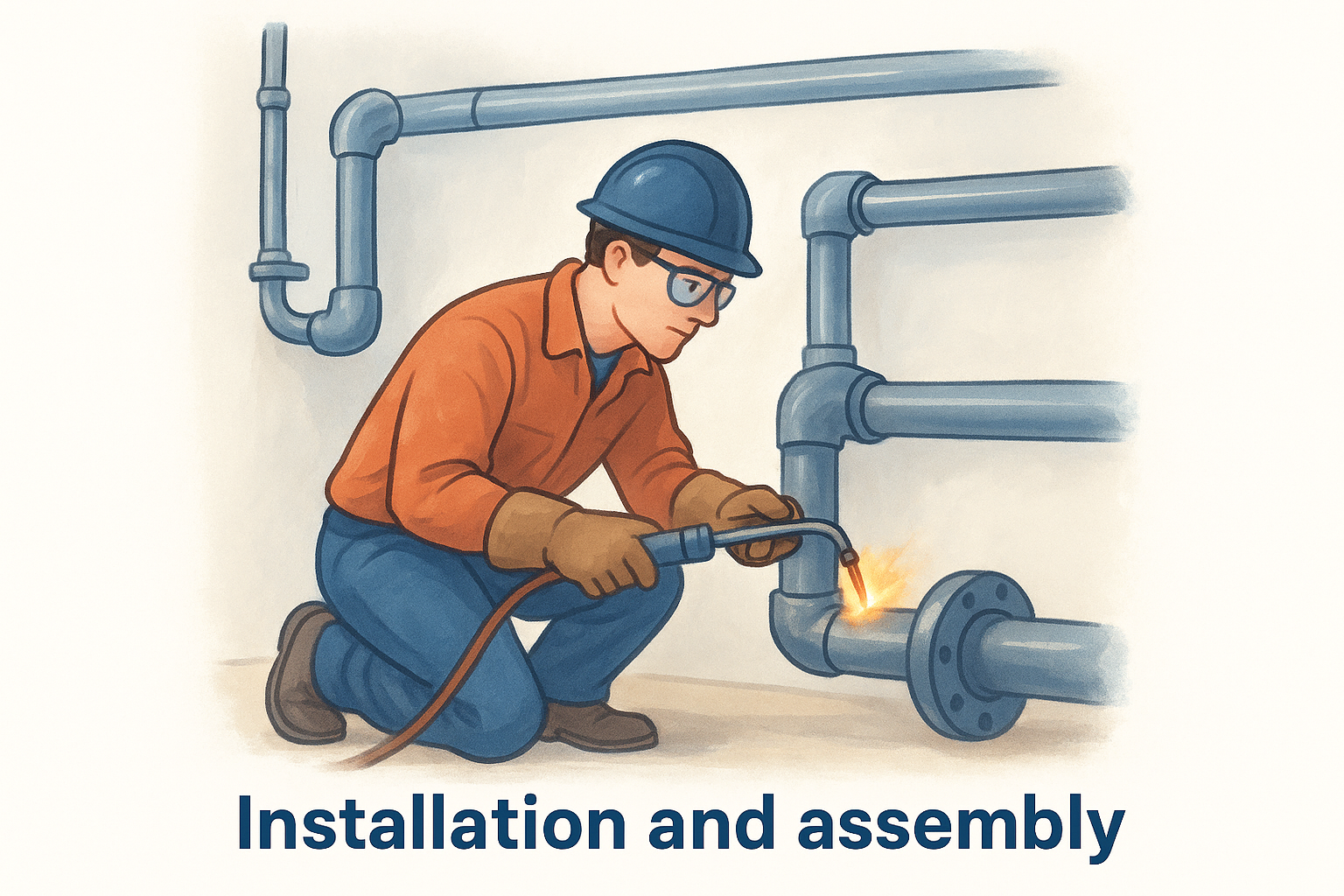
- Welding (standard for high-pressure steel lines)
- Brazing (used for copper systems)
- Threaded connections (for lower-pressure applications)
- Flanged fittings (for systems that need periodic disassembly)
Maintenance and repair
Beyond new installations, a large part of what a steamfitter does involves inspecting and maintaining existing piping systems to catch deterioration before it becomes a failure. You’ll look for worn gaskets, corroded joints, and malfunctioning control valves, then replace them before they cause unplanned downtime. Repair calls can be urgent, particularly in facilities like hospitals or power plants where any disruption to critical systems needs an immediate response, so you need to diagnose problems fast and work accurately under pressure.
Where steamfitters work and what they install
The answer to what does a steamfitter do is shaped in large part by where they work. Steamfitters operate primarily in industrial and commercial settings where high-pressure piping is critical to daily operations. You’ll find them at power generation plants, hospitals, chemical refineries, paper mills, and large commercial buildings where steam heats equipment or drives turbines. Residential work is rare because most home plumbing systems operate at low pressure.
The demand for steamfitters stays strongest in regions with heavy industrial activity, including the Gulf Coast, the Midwest, and the Northeast.
Systems and materials they install
Steamfitters install systems that go well beyond standard plumbing work. Your responsibilities center on high-pressure steam distribution lines, hydronic heating loops, compressed air networks, process piping for chemicals, and refrigeration systems. These applications require carbon steel, stainless steel, and chrome-moly alloy pipe that can tolerate extreme heat and pressure without degrading.
Common industries that employ steamfitters include:
- Power generation (coal, nuclear, and natural gas plants)
- Healthcare facilities with central steam boiler systems
- Chemical and petrochemical processing plants
- Food and beverage manufacturing
- Paper and pulp mills
Steamfitter vs pipefitter vs plumber
People often use these three titles interchangeably, but they describe distinct specializations with different scopes of work. Knowing the differences helps you target the right jobs and understand what employers expect when they post a listing.
How steamfitters differ from pipefitters
The line between steamfitters and pipefitters is narrow. Pipefitters work across a broader range of piping systems, including low-pressure lines, while steamfitters focus specifically on high-pressure steam and hydronic systems. In practice, many union agreements and job sites treat the titles as equivalent, and both trades share apprenticeship programs through the United Association.
- Steamfitters: high-pressure steam, refrigeration, and process piping
- Pipefitters: wider scope, including medium- and low-pressure systems
In many regions, steamfitter and pipefitter refer to the same role, but the high-pressure specialization is what defines steamfitter work.
How steamfitters differ from plumbers
When people ask what does a steamfitter do versus what a plumber does, the difference comes down to pressure and application. Plumbers primarily handle potable water supply, drainage, and sanitary systems in residential and light commercial buildings.
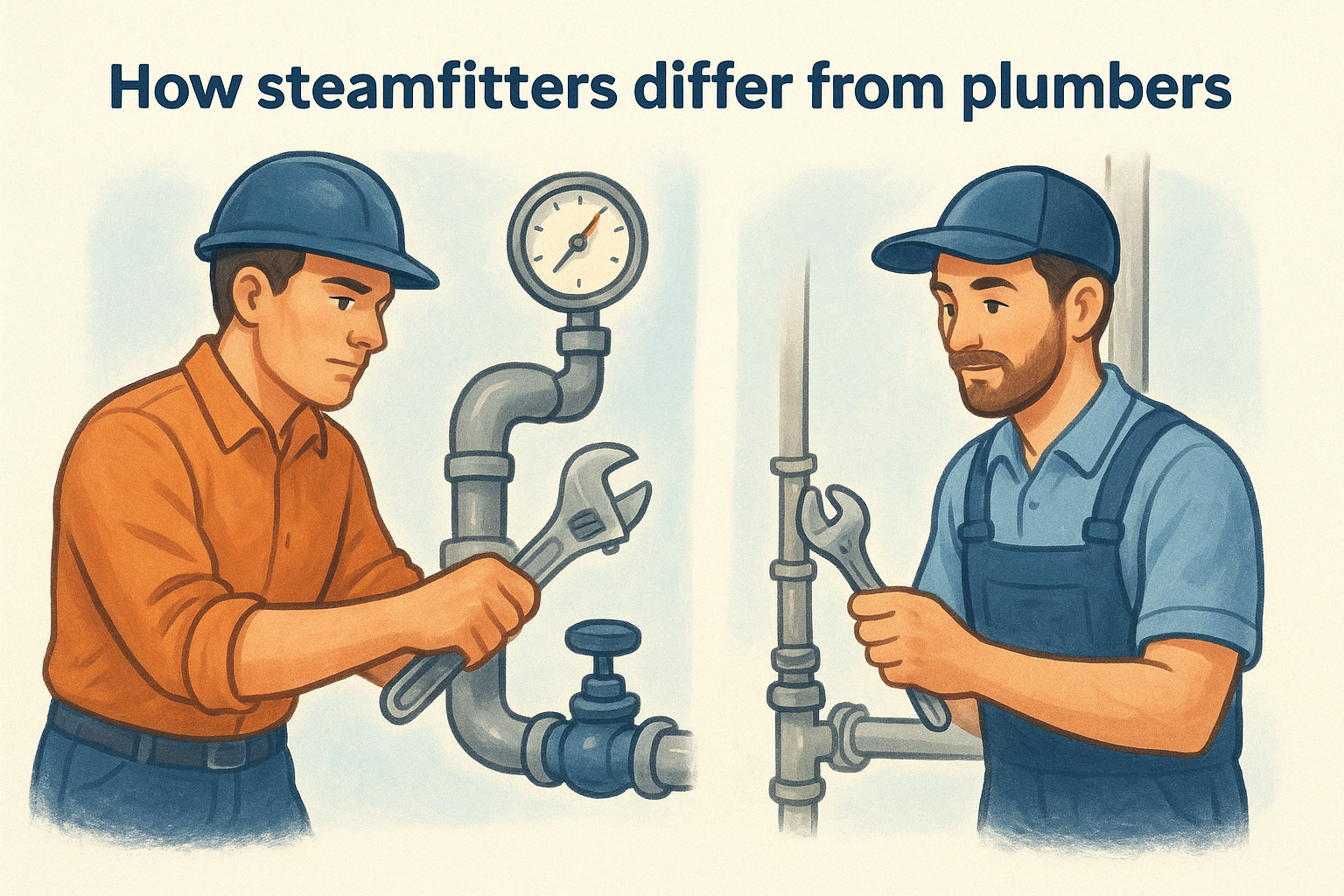
Steamfitters work on industrial-grade systems carrying steam, refrigerants, and process chemicals at pressures that standard plumbing codes don’t cover. The licensing, training, and tools for each trade reflect those very different demands.
Pay, job outlook, and career paths
Understanding what does a steamfitter do for your earning potential is essential before committing to the trade. Steamfitters earn strong wages relative to many skilled trades because the work demands specialized certifications and high-pressure system expertise that take years to develop.
Salary benchmarks
According to the U.S. Bureau of Labor Statistics, the median annual wage for steamfitters and pipefitters sits around $63,000, with experienced journeymen in high-demand industrial markets regularly clearing $90,000 or more. Your location, union status, and industry sector all move that number up or down considerably.
Union steamfitters typically earn higher wages and better benefits than their non-union counterparts, particularly in states with strong building trades councils.
Career advancement options
Your career follows a structured progression from apprentice to journeyman to master. Apprentice wages start at roughly 40 to 50 percent of journeyman rates and increase incrementally with each year of completed training. After five years, you reach journeyman status with full earning power and the flexibility to work across multiple industries.
From that point, you can pursue a master steamfitter license, move into foreman or superintendent positions, or transition into estimating and project management roles within mechanical contracting firms. These paths reduce physical demands while increasing pay.
How to become a steamfitter
If you’re researching what does a steamfitter do and want to enter the trade, the standard path runs through a five-year registered apprenticeship program sponsored by the United Association of Plumbers and Steamfitters. You combine paid on-the-job training with classroom instruction covering blueprint reading, welding techniques, and system safety, so you earn wages while you learn.
Apprenticeship and licensing steps
Getting into an apprenticeship starts with meeting a few basic eligibility requirements: you typically need to be at least 18 years old, hold a high school diploma or GED, and pass a mechanical aptitude test. Some programs also require a physical examination before you begin.
Completing your apprenticeship through the United Association gives you nationally recognized credentials that most industrial employers accept across state lines.
Once you finish your apprenticeship, many states require you to pass an exam to earn a journeyman steamfitter license. Requirements vary by state, so check your local licensing board for the specifics that apply to you. After several years as a journeyman, you can sit for a master steamfitter license, which opens doors to supervisory roles and independent contracting work.
Next steps
Now you have a clear picture of what does a steamfitter do, from reading blueprints and welding high-pressure steam lines to troubleshooting live systems in hospitals and power plants. The trade offers strong wages, stable demand, and a defined career ladder that rewards the years you invest in developing your skills. If the work sounds like a fit, your next move is to research United Association apprenticeship programs in your state and verify the specific licensing requirements for your area before you apply.
Employers actively post steamfitter and pipefitter openings on PlumbingJobs.com, so you can browse positions by location and start applying without wading through general job boards. If you run a mechanical contracting firm or manage hiring for an industrial facility, post a steamfitter job listing and connect with qualified candidates who are already searching for their next role. You can also explore the PlumbingJobs.com blog for more trade guides and industry updates.
