
If you’ve spent any time browsing plumbing job listings, you’ve probably noticed that "journeyman plumber" shows up more than almost any other title. But what is a journeyman plumber, exactly, and what separates this role from an apprentice or a master plumber?
A journeyman plumber sits at a critical midpoint in the trade, past the training phase, fully licensed to work independently, and often the backbone of a plumbing crew. It’s the stage where you stop learning under someone else’s license and start owning your work. For employers posting on PlumbingJobs.com and for professionals searching our board, understanding this role matters because it defines the qualifications, pay expectations, and career path tied to the majority of open positions.
This article breaks down the journeyman plumber role in full: what they do day to day, what it takes to become one, how licensing works state by state, and where the role fits within the broader plumbing career ladder.
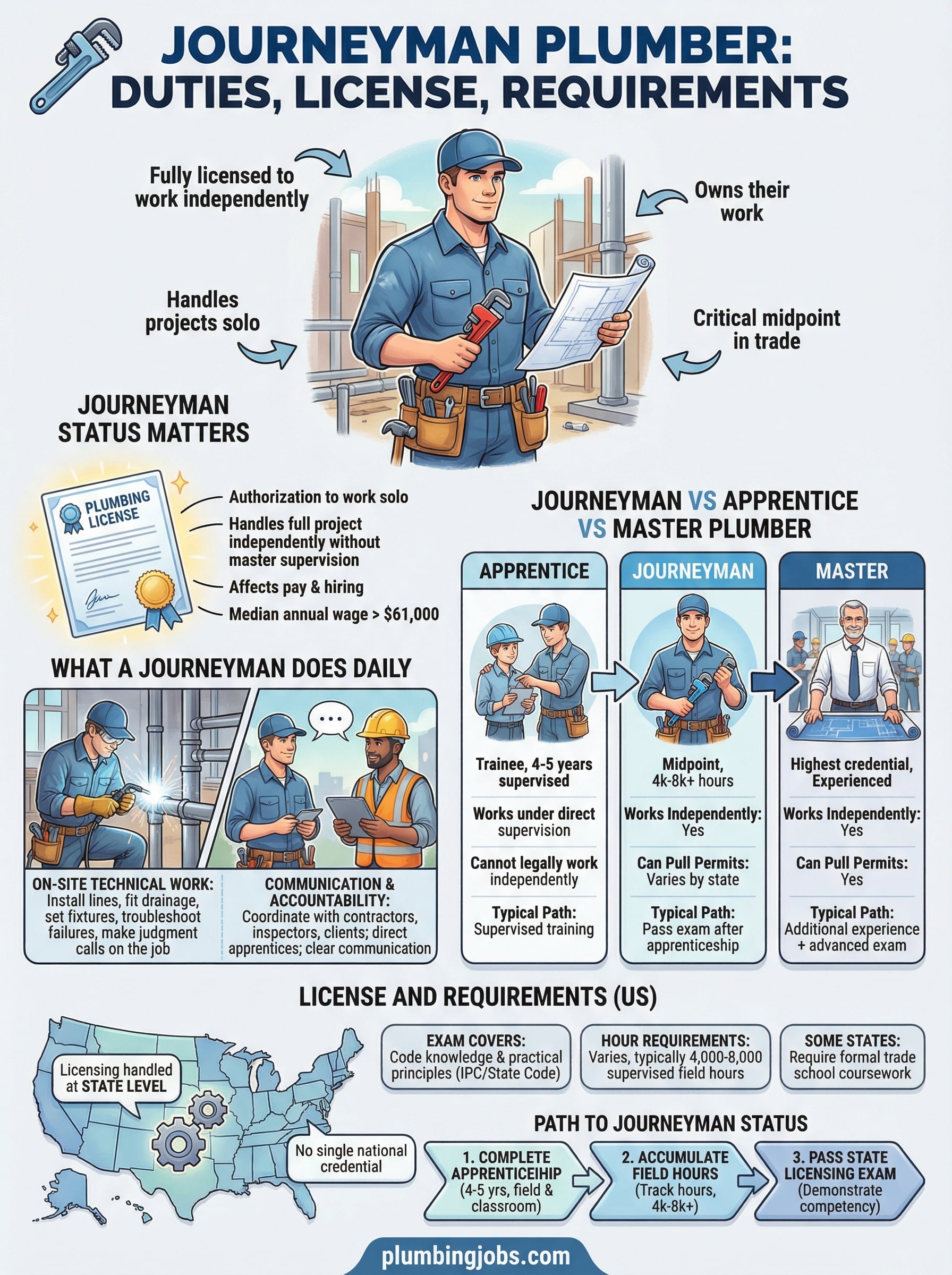
Why journeyman status matters
Reaching journeyman status is more than a milestone on paper. Journeyman licensing tells employers, inspectors, and clients that you can handle a full project independently, without a master plumber standing over your shoulder to sign off on every decision. That legal authorization to work solo is what separates a journeyman from everyone still in training.
Journeyman status is the first point in a plumbing career where you hold your own license and carry full responsibility for the work you complete.
The licensing layer
Understanding what is a journeyman plumber starts with the license itself. Every state in the US requires plumbers to hold a valid license before they can work independently on most job types, and the journeyman license is the standard credential that gets you there. Without it, you are legally limited to working under someone else’s license, which caps both your earning potential and your job options.
States issue journeyman licenses through their own licensing boards, but most follow a similar structure: complete your apprenticeship hours, pass a written exam, and demonstrate field competency. The specifics vary by state, but the credential carries real weight across the entire industry regardless of where you work.
What it means for pay and hiring
Journeyman status directly affects what employers will pay you and which positions you qualify for. Most plumbing job postings list journeyman licensure as a minimum requirement, not a preference, which means holding that credential opens up the majority of available roles. Employers hiring for service techs, commercial installers, and field leads almost always require it.
Your earning potential jumps considerably once you reach this level. According to the U.S. Bureau of Labor Statistics, the median annual wage for plumbers, pipefitters, and steamfitters sits above $61,000, and journeyman-level professionals typically land at or above that figure depending on specialty and location.
What a journeyman plumber does daily
One way to understand what is a journeyman plumber is to look at a typical workday. Journeymen handle the full range of technical plumbing tasks without supervision, from rough-in work and pipe installation to diagnosing system failures and completing repairs to code.
On-site technical work
On any given day, a journeyman plumber might install water supply lines, fit drainage systems, set fixtures, or troubleshoot a faulty water heater. You own the work from start to finish at this level. Journeymen read blueprints, select the right materials, and make judgment calls on the job that directly affect whether a project passes inspection on the first visit.
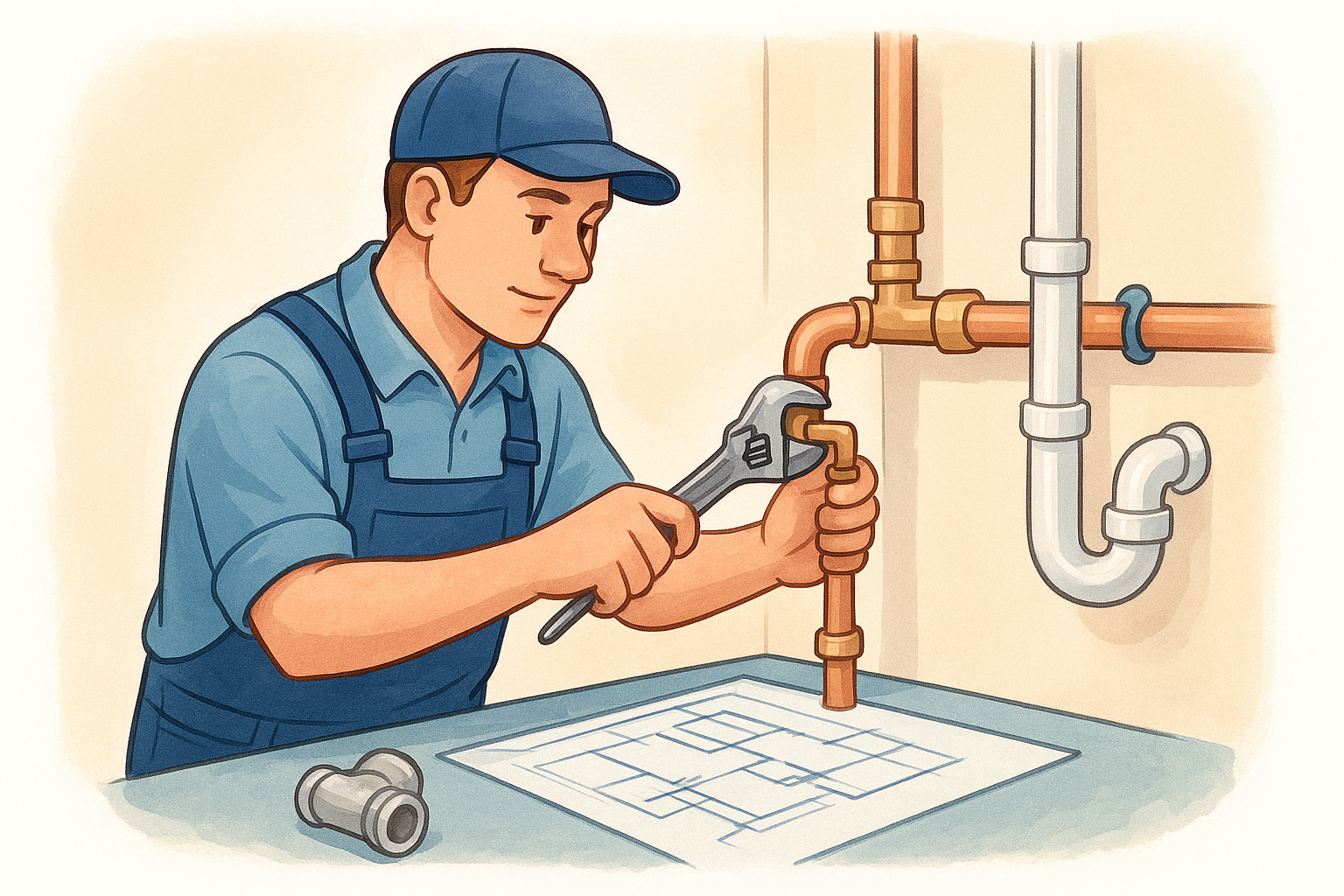
The ability to read and execute from blueprints independently is one of the core skills that separates a journeyman from a trainee.
Communication and accountability
Journeymen also carry accountability beyond the physical work. They coordinate with general contractors, building inspectors, and clients to keep projects on schedule and within scope. On larger crews, you may direct apprentices and walk them through correct techniques.
Clear communication and problem-solving matter just as much as pipe-fitting skills at this level. Holding a journeyman license means employers and clients trust your decisions directly, without requiring a master plumber to review every step.
Journeyman vs apprentice vs master plumber
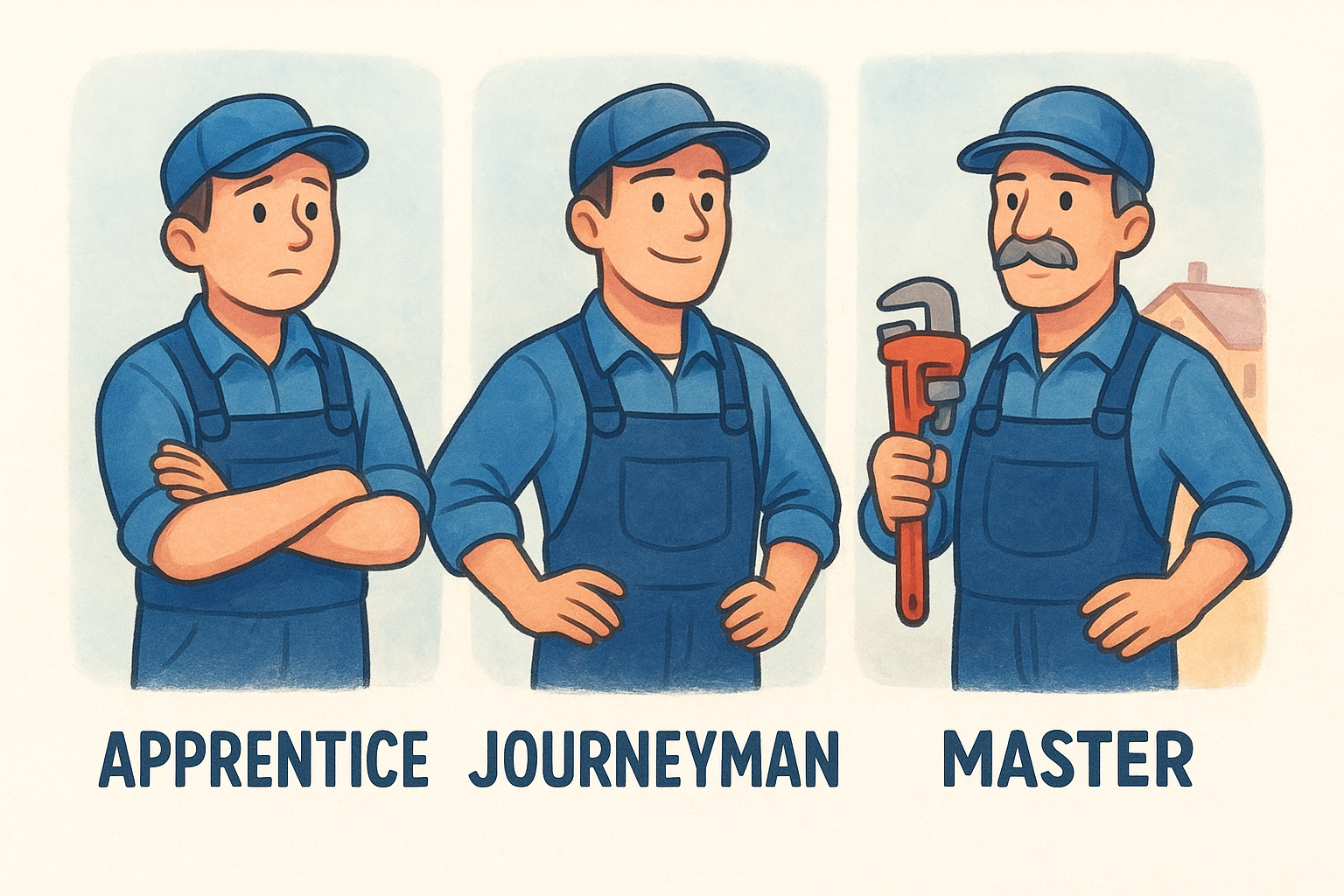
Understanding what is a journeyman plumber is easier when you compare all three tiers side by side. Each level carries different legal permissions and on-site responsibilities, and placing yourself correctly on this ladder shapes which jobs you can apply for and what credential you need to pursue next.
| Level | Works Independently | Can Pull Permits | Typical Path |
|---|---|---|---|
| Apprentice | No | No | 4-5 years of supervised training |
| Journeyman | Yes | Varies by state | Pass exam after apprenticeship |
| Master | Yes | Yes | Additional experience + advanced exam |
How the three tiers stack up in practice
An apprentice works under direct supervision at all times and cannot legally complete work without a licensed plumber on the job. Apprenticeships typically run four to five years, combining field hours with classroom training before you can sit for the journeyman exam.
Reaching journeyman status is the point where you carry your own license and take full legal responsibility for your work.
A master plumber holds the highest credential in the trade, requiring additional years of journeyman experience and a more advanced licensing exam. Masters can open their own business, pull permits in their name, and supervise entire crews, making it the clear next step if you plan to run your own operation.
License and requirements in the US
Part of understanding what is a journeyman plumber is knowing what licensing actually requires in practice. In the US, licensing is handled entirely at the state level, which means the specific hour counts, exam formats, and renewal schedules differ depending on where you work. There is no single national journeyman plumber credential.
Most states require between 4,000 and 8,000 documented field hours before you can sit for the journeyman exam.
What the exam covers
Your journeyman exam tests both code knowledge and practical plumbing principles. Most states base their exams on the International Plumbing Code or a state-adopted equivalent, covering pipe sizing, drainage systems, fixture installation, and safety standards.
Common exam topics include:
- Local and state plumbing codes
- Pipe materials and sizing
- Drainage, waste, and vent systems
- Water supply and pressure calculations
- Safety and inspection standards
Hour requirements by state
The hour requirements vary considerably across states. Some states set the bar at 4,000 supervised field hours, while others require closer to 8,000 hours before you qualify to test.
A few states also require you to complete formal trade school coursework alongside your field hours. Check your state’s licensing board website for the current breakdown of hour requirements and any additional prerequisites before you apply.
How to become a journeyman plumber
The path to journeyman status follows a clear, documented sequence. You build your field hours through an apprenticeship, complete any required coursework, and sit for your state’s licensing exam when you qualify.
Tracking your field hours accurately from day one saves significant time when you apply to sit for the journeyman exam.
Complete your apprenticeship
Most apprenticeships run four to five years and combine hands-on field work with classroom instruction. Programs through recognized trade unions or contractor associations are widely accepted by state licensing boards and give you a structured path to the hours you need.
You can locate apprenticeship programs through your local union hall or by contacting your state licensing board directly. Either route puts you on a tracked, documented path toward your exam eligibility.
Pass the licensing exam
Once you meet the hour requirement, you register with your state licensing board and schedule the exam. This is the step that answers what is a journeyman plumber in a legal sense: you carry your own credential and can work independently on any job it covers.
When you apply, have these items ready:
- Documented field hours
- Proof of apprenticeship completion
- Application fee
Wrap up and find your next role
Understanding what is a journeyman plumber means knowing where you stand in the trade, what your license allows you to do, and how your role differs from both apprentices and master plumbers. Journeyman status is the point where your skills are recognized legally, giving you the independence to work on your own and the credentials employers actively search for when filling open positions.
Your next step depends on where you are right now. If you already hold a journeyman license, the job market for qualified plumbers is strong and employers are hiring across the country. If you’re still working toward your credential, every documented field hour brings you closer to the exam and the opportunities that follow.
Either way, the right opportunity is out there and the market for licensed plumbers remains strong. Browse current journeyman plumber job listings to find a position that fits your skills, your location, and where you want to take your career.

1 thought on “What Is a Journeyman Plumber? Duties, License, Requirements”
Comments are closed.