

Plumbing Apprenticeship Requirements: Age, Skills, And More
Starting a career in plumbing begins with one critical step: becoming an apprentice. But before you can start learning the trade hands-on, you’ll need to meet specific plumbing apprenticeship requirements that vary by state and program type. Understanding these prerequisites upfront can save you months of frustration and help you prepare the right documentation before you apply.
This guide breaks down the age minimums, education standards, physical demands, and soft skills that apprenticeship programs actually look for. You’ll also learn about background checks, driver’s license requirements, and what separates a strong candidate from an average one. Whether you’re finishing high school or switching careers in your thirties, the path forward becomes clearer once you know exactly what’s expected.
At PlumbingJobs.com, we help plumbing professionals at every career stage find the right opportunities across all 50 states. For many users, that journey starts with an apprenticeship, and knowing the entry requirements is the first real step toward landing your first position in the trade.
What counts as a plumbing apprenticeship in the US
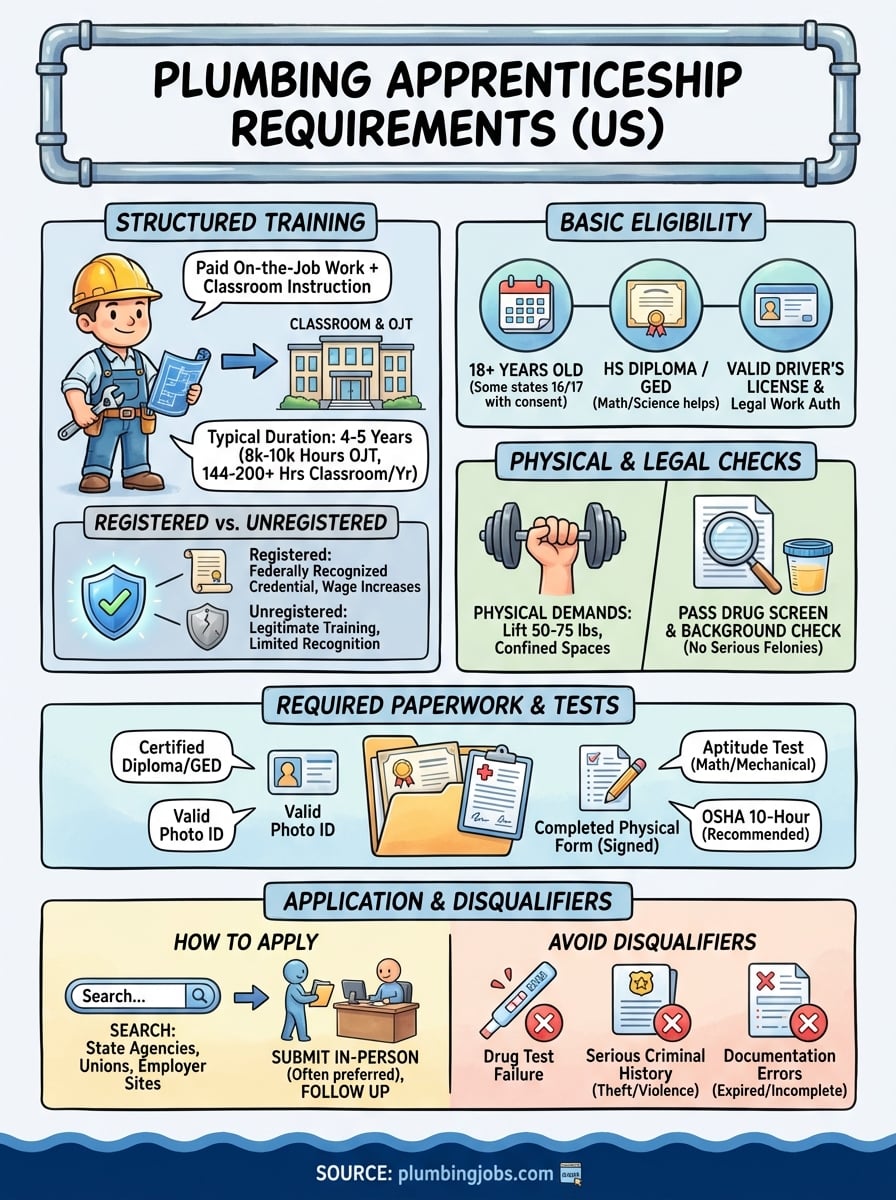
A plumbing apprenticeship is a structured training program that combines paid on-the-job work with classroom instruction, typically spanning four to five years. You earn a wage while learning directly from licensed journeymen and master plumbers, completing between 8,000 and 10,000 hours of practical experience depending on your state. The classroom component requires you to attend technical courses for 144 to 200 hours per year, covering topics like blueprint reading, local code compliance, and advanced pipe fitting techniques.
Registered vs unregistered programs
Registered apprenticeships follow standards set by the U.S. Department of Labor or state apprenticeship agencies, which means they meet federally recognized benchmarks for training quality and safety. When you complete a registered program, you receive a nationally recognized credential that transfers across state lines and carries more weight with employers. These programs also guarantee specific wage increases as you progress through each year of training.
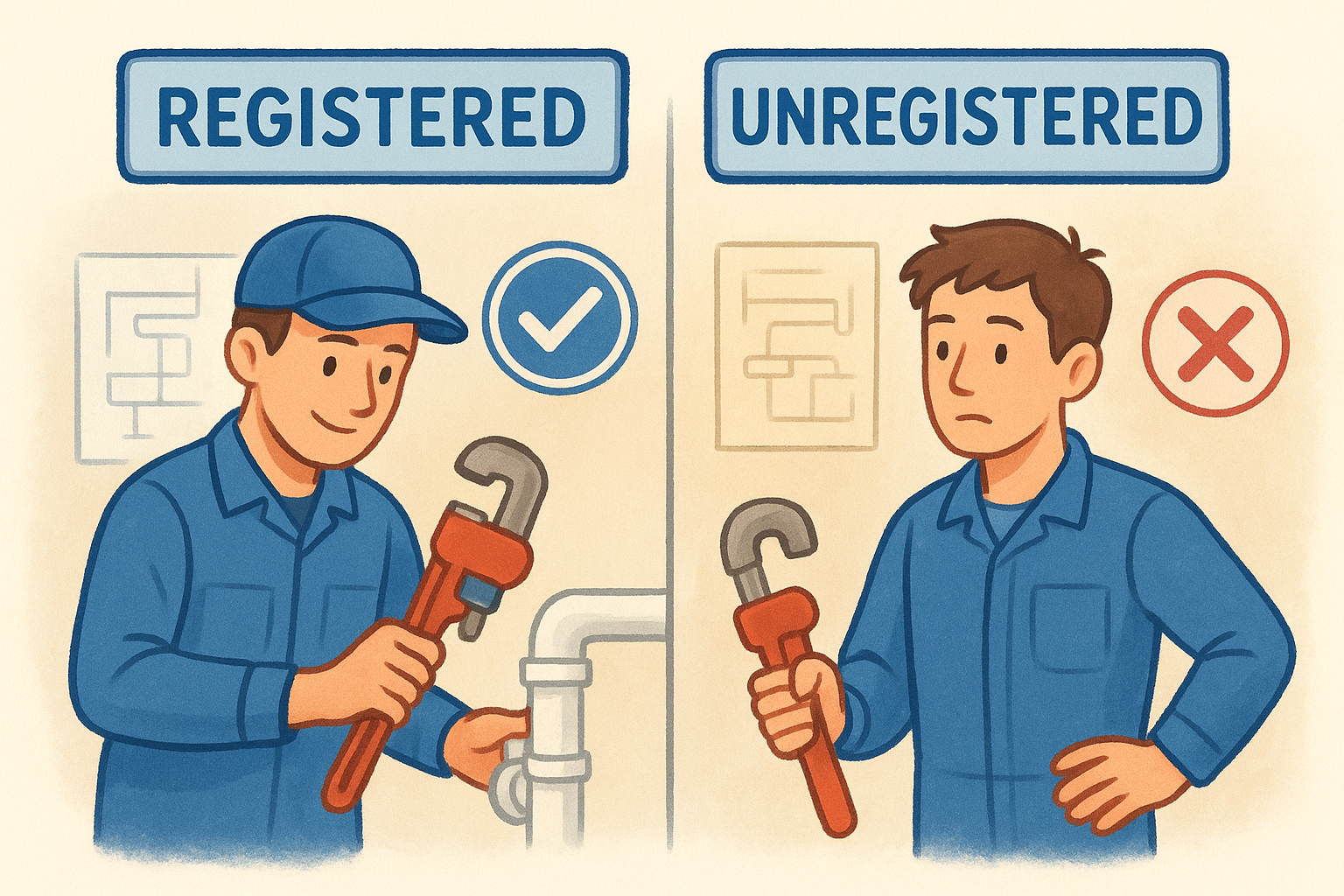
Unregistered apprenticeships operate outside this official framework but still provide legitimate training under a licensed plumber. You can gain the same hands-on skills, but your completion certificate won’t carry federal recognition, which may limit your job mobility or licensing options in certain states. Some small plumbing companies prefer informal apprenticeships to avoid regulatory paperwork, though this approach puts more responsibility on you to track your hours and document your training independently.
Registered programs offer stronger credential recognition and clearer pathways to licensure, making them the safer choice for long-term career advancement.
Program duration and structure
Most apprenticeships require you to work full-time hours (typically 40 hours per week) while attending evening or weekend classes. Your on-the-job training covers residential service calls, commercial installations, and repair work under direct supervision. The classroom instruction breaks down technical theory you need for licensing exams, including math, hydraulics, and mechanical systems.
Some states allow competency-based programs that let you complete your apprenticeship faster if you demonstrate mastery of required skills ahead of schedule. This approach still holds you to the same plumbing apprenticeship requirements for total hours, but you can test out of certain modules if you already possess relevant construction experience or vocational training.
Types of apprenticeship sponsors
Union apprenticeships run through organizations like the United Association (UA) and typically offer the most comprehensive benefits packages, including health insurance and pension contributions. You apply directly through union halls and compete for limited spots through interviews and aptitude tests.
Non-union programs operate through independent contractors, trade schools, or state workforce agencies. These sponsors provide more flexibility in scheduling and often accept apprentices year-round rather than in fixed enrollment periods. You’ll still meet the same technical standards, but your pay structure and benefits depend entirely on the individual employer who hires you.
Basic eligibility requirements you must meet
Most plumbing apprenticeship programs across the United States enforce a standard set of entry criteria that you must satisfy before submitting an application. These requirements ensure you can handle the physical demands of the trade and complete the necessary classroom coursework without significant barriers. Meeting these baseline qualifications doesn’t guarantee acceptance, but failing to meet even one typically disqualifies you from consideration entirely.
Age and education minimums
You must be at least 18 years old to enter most registered apprenticeship programs, though some states allow you to start at 16 or 17 with parental consent and proof of school enrollment. Your high school diploma or GED certificate serves as the standard educational floor, and programs verify this credential during the application review process. Specific coursework in algebra, geometry, or physics strengthens your application, especially for union-sponsored programs that administer math-heavy entrance exams.
Some apprenticeships require you to pass a basic skills assessment that tests your ability to perform calculations, read technical diagrams, and follow written instructions. Scores from these assessments determine your placement rank when programs select candidates from their applicant pool.
Completing algebra and basic physics courses before you apply gives you a measurable advantage during entrance exams and initial training modules.
Physical and legal qualifications
You need a valid driver’s license in nearly all programs because job sites require you to transport tools and materials between locations. Programs also mandate that you pass a drug screening and criminal background check, with certain felony convictions (especially theft or violent crimes) acting as automatic disqualifiers. Your physical capacity to lift 50 to 75 pounds repeatedly, work in confined spaces, and stand for extended periods becomes part of the evaluation process through employer interviews or practical assessments.
Documented legal authorization to work in the United States represents a non-negotiable plumbing apprenticeship requirement across all program types. You’ll submit Form I-9 verification during onboarding, and sponsors cannot proceed with your enrollment until they confirm your employment eligibility.
Required paperwork, tests, and certifications
Submitting a complete application package separates serious candidates from those who waste program administrators’ time. You need to gather official documents, pass standardized assessments, and potentially earn preliminary credentials before your apprenticeship can officially begin. Missing even one required item delays your start date or disqualifies you entirely, so verify your program’s specific checklist before you compile your materials.
Documents you need to submit
Your application file must include a certified copy of your high school diploma or GED certificate, which you can obtain from your school’s registrar office or state education department. You’ll also submit a valid government-issued photo ID (driver’s license or passport), proof of legal work authorization, and a completed physical examination form signed by a licensed physician. Some programs require you to provide an immunization record showing tetanus, hepatitis B, and other vaccinations relevant to construction site safety.
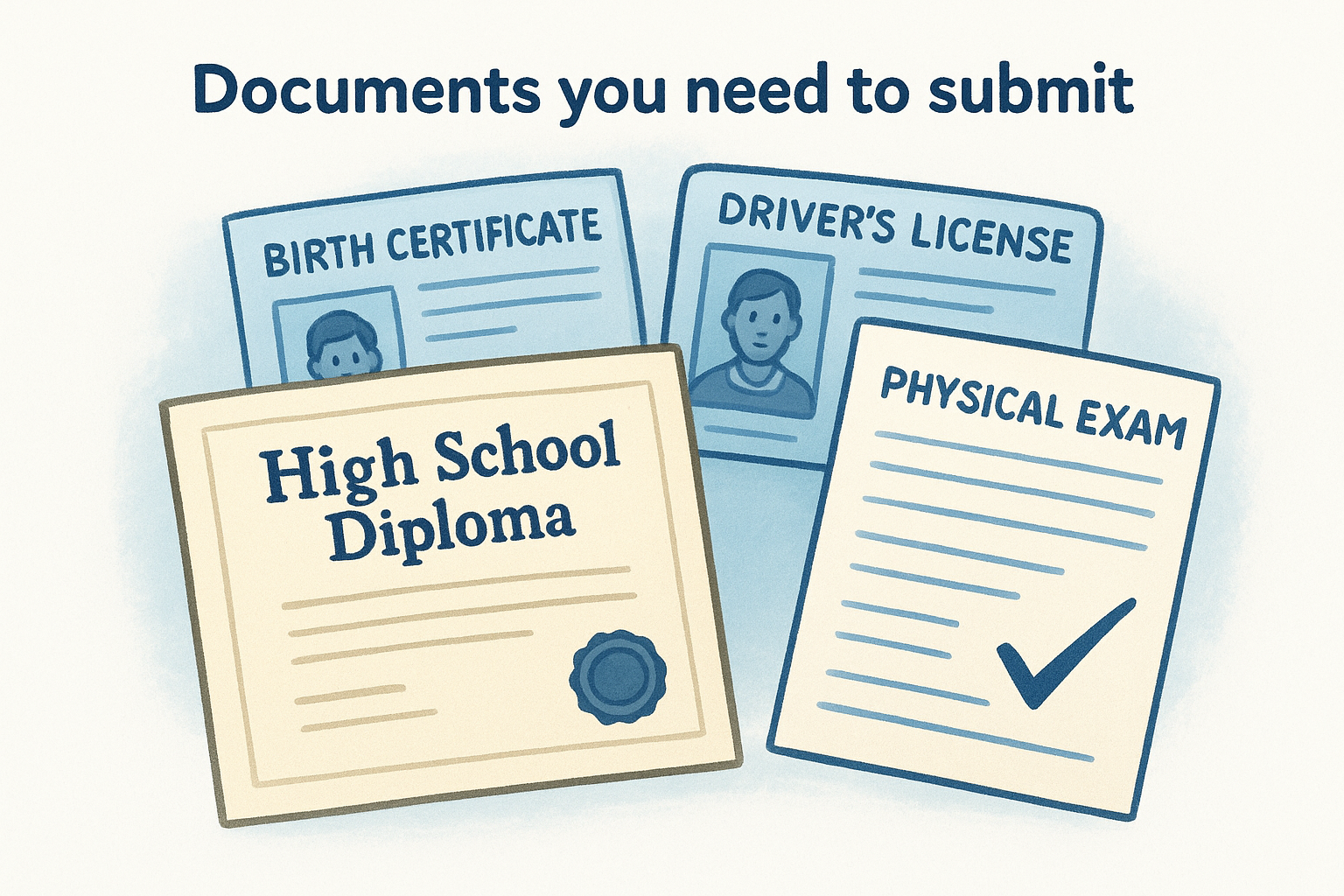
Prepare these documents in this order for your application packet:
- Completed apprenticeship application form
- Birth certificate or passport (original or certified copy)
- High school transcript and diploma
- Driver’s license (front and back photocopies)
- Physical exam results (dated within 6 months)
- Background check consent form
Requesting certified copies from your high school and scheduling your physical exam two months before application deadlines prevents last-minute delays.
Entrance exams and assessments
Most registered programs administer an aptitude test that measures your mechanical reasoning, spatial visualization, and mathematical skills at a high school algebra level. Union apprenticeships typically use standardized exams like the IBEW Aptitude Test or custom assessments developed by the United Association. You receive a numerical score that determines your ranking against other applicants, and programs fill available positions starting from the highest scores.
Pre-apprenticeship certifications
You don’t need plumbing-specific certifications to meet plumbing apprenticeship requirements, but earning an OSHA 10-hour safety card strengthens your application considerably. First aid and CPR certification from the American Red Cross also demonstrates job readiness, though programs typically provide this training during your first year.
How to find and apply to apprenticeship programs
Locating available apprenticeship openings requires you to search through multiple channels simultaneously because programs post positions on different platforms based on their sponsoring organization. You’ll find the highest concentration of opportunities through state workforce agencies, union halls, and direct employer websites, though each source operates on different timelines and application procedures. Starting your search three to six months before your desired start date gives you enough time to complete all plumbing apprenticeship requirements and gather necessary paperwork.
Where to search for open positions
State apprenticeship agencies maintain online databases that list all registered programs in your area, including contact information and application deadlines. Visit your state’s Department of Labor website and navigate to the apprenticeship section to access these directories. Union locals affiliated with the United Association post openings through their regional training centers, which you can locate by calling your nearest UA office directly.
Check these sources in this order for maximum coverage:
- Your state’s apprenticeship agency website
- Local union hall job boards (UA, PHCC)
- Individual plumbing contractor websites in your city
- Community college career centers offering trade programs
- PlumbingJobs.com for companies actively hiring apprentices
Application submission process
Submit your application packet in person whenever the program allows it, as face-to-face interaction creates a stronger impression than mailed documents. Bring two copies of all materials so you can keep one set for your records. Follow up with a phone call exactly one week after submission to confirm receipt and ask about the interview timeline.
Programs typically respond within two to four weeks if they want to move forward with your candidacy. Prepare for your interview by researching the sponsor’s reputation, practicing answers to questions about your physical capabilities, and dressing in clean work clothes rather than formal business attire.
Submitting applications to five different programs simultaneously increases your chances of acceptance and gives you negotiating leverage when multiple sponsors extend offers.
Common disqualifiers and how to avoid them
Understanding what eliminates candidates from consideration helps you address potential issues before they derail your application. Most disqualifications stem from background problems, failed health screenings, or documentation errors that you can prevent with proper preparation. Programs reject hundreds of applicants each year for reasons that could have been easily resolved months in advance.
Criminal history concerns
Felony convictions involving theft, fraud, or violent crimes create the biggest barriers to apprenticeship acceptance, especially if they occurred within the past seven years. Program sponsors worry about sending you into customers’ homes or jobsites with valuable materials, so they review your criminal record carefully during the background check process. You can request an official criminal history report from your state police department before applying to know exactly what appears on your record.
Disclose any past convictions upfront in your application rather than waiting for the background check to reveal them. Explain what you learned from the experience and provide evidence of rehabilitation through character references from employers, teachers, or community leaders.
Programs appreciate honesty about past mistakes and often work with candidates who demonstrate genuine rehabilitation efforts.
Health and substance screening failures
You automatically fail plumbing apprenticeship requirements if your drug test shows marijuana, opioids, or other controlled substances, even in states where recreational use is legal. Stop all drug use at least 30 days before your scheduled screening to ensure clean results. Physical exam failures typically involve unmanaged medical conditions like uncontrolled diabetes or untreated back injuries that prevent you from performing essential job functions.
Schedule a pre-screening physical with your doctor to identify and address any health issues that might appear during the official examination.
Documentation mistakes
Submitting expired identification, uncertified diploma copies, or incomplete application forms gets your packet rejected immediately. Double-check that every document includes official seals, signatures, and dates within the valid timeframe specified by the program.
Next steps
Meeting plumbing apprenticeship requirements represents only the first phase of your journey into this skilled trade. Once you submit applications and receive acceptance letters, you’ll need to choose the program that offers the best combination of training quality, geographic convenience, and earning potential. Compare wage scales between union and non-union sponsors, evaluate the reputation of training instructors, and consider how each program’s completion rate affects your likelihood of finishing successfully.
Start preparing your application materials today, even if your target programs won’t open enrollment for several months. You gain a competitive advantage by gathering documents early, addressing potential disqualifiers proactively, and scheduling entrance exams during periods when you can dedicate focused study time to preparation.
For more resources on building your plumbing career and finding apprenticeship-level positions near you, explore our comprehensive plumbing industry blog for expert guidance on licensing requirements, salary benchmarks, and career advancement strategies.
Want plumbing jobs delivered to your inbox?
Want plumbing jobs delivered to your inbox?
Partner Site

