
How To Become A Plumbing Apprentice: Steps, Pay & Programs
Starting a career in plumbing doesn’t require a four-year degree or mountains of student debt. Learning how to become a plumbing apprentice is the most direct path into a trade that offers job security, competitive wages, and real opportunities for advancement. Every master plumber started exactly where you are now, researching, planning, and taking that first step.
This guide breaks down everything you need to know: the basic requirements, how to find and apply to apprenticeship programs, what to expect in terms of pay, and the differences between union and non-union options. Whether you’re fresh out of high school, switching careers, or simply exploring your options, you’ll walk away with a clear action plan to launch your plumbing career. We’ll also cover state-specific licensing considerations that can affect which programs make the most sense for you.
At PlumbingJobs, we connect aspiring and experienced plumbers with employers across all 50 states. We see firsthand what companies look for when hiring apprentices, and we’ve built this resource to help you stand out from day one.
What a plumbing apprenticeship is and who it fits
A plumbing apprenticeship is a structured training program that combines paid on-the-job work with classroom instruction. You earn a paycheck while learning the trade under the supervision of licensed plumbers, typically over a three to five-year period. Most programs require you to complete between 144 to 246 hours of classroom education annually alongside 2,000 hours of hands-on work. This model allows you to build real-world skills without taking on student loan debt, and many apprentices advance into journeyman roles with zero educational expenses.
How the apprenticeship model works
You’ll spend most of your time on job sites performing tasks that grow in complexity as you gain experience. Early assignments might include cutting pipe, organizing materials, and assisting licensed plumbers with installations. Your employer pays you an hourly wage that increases as you progress through the program. Classroom sessions typically happen in the evenings or on weekends and cover topics like plumbing codes, blueprint reading, and the math you’ll use daily on the job.
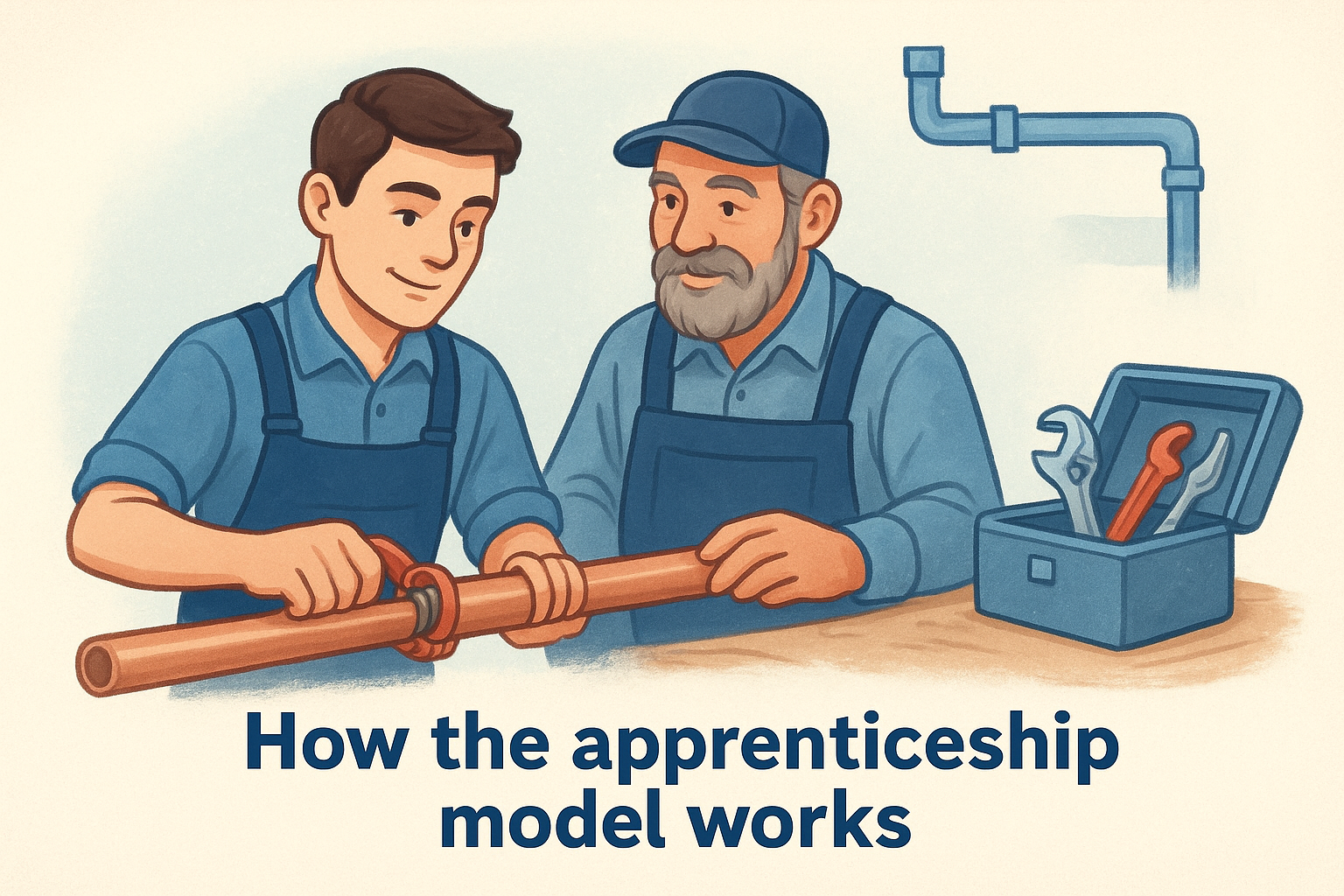
An apprenticeship gives you practical experience that no classroom alone can replicate, making you job-ready from day one as a journeyman.
Who makes a successful apprentice
This path fits people who prefer working with their hands over sitting at a desk. You don’t need prior construction experience, but you do need physical stamina, attention to detail, and a willingness to start at the bottom. Many successful apprentices come straight from high school, while others transition from unrelated careers in their 20s, 30s, or even later. If you’re comfortable with manual labor, enjoy problem-solving, and want a career where you see tangible results each day, understanding how to become a plumbing apprentice puts you on track for long-term success in a recession-resistant field.
Step 1. Choose your apprenticeship path and goals
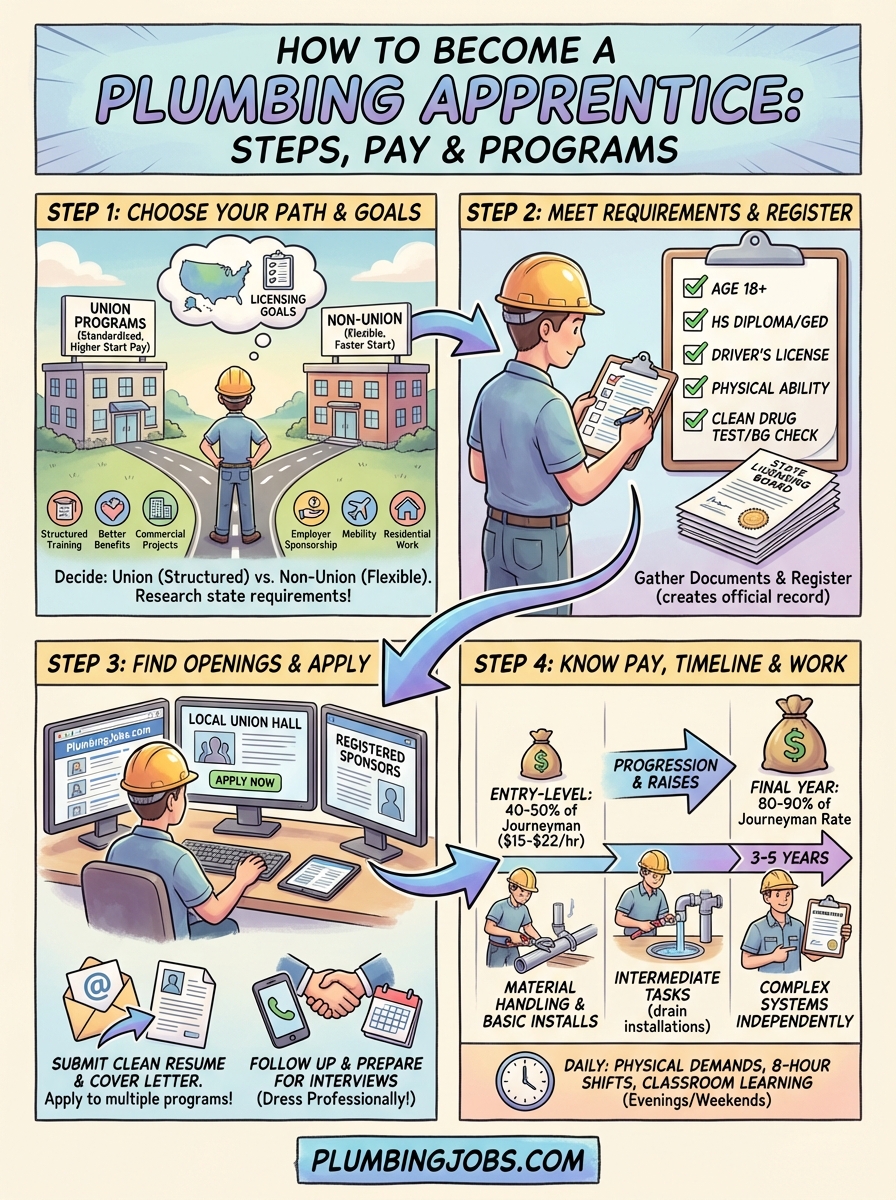
Your first decision shapes your entire apprenticeship experience. You need to choose between union-sponsored programs and non-union apprenticeships, each offering distinct advantages depending on your career goals. Union programs typically provide more structured training and higher starting wages, while non-union options offer greater flexibility in schedule and mobility.
Union vs. non-union programs
Union apprenticeships through organizations like the United Association follow standardized curriculums and often include better benefits packages. You’ll apply through the local union hall, take an aptitude test, and potentially wait on a list before starting. These programs guarantee consistent wage progression and access to larger commercial projects.
Non-union apprenticeships let you work for independent contractors or mechanical firms that sponsor their own training. You often start faster with less competition, and you maintain freedom to switch employers without union approval. Many plumbers prefer this route for residential work or starting their own business.
Your choice between union and non-union affects not just training quality but also your future career options and earning potential.
Setting your licensing goals
Research your state’s licensing requirements before committing to any program. Some states require specific apprenticeship hours for certain license levels, so understanding how to become a plumbing apprentice in your location helps you choose a program that aligns with your certification path and career focus.
Step 2. Meet the requirements and handle registration
Most apprenticeship programs require minimal prerequisites, making this step straightforward if you prepare correctly. You need to gather specific documents and understand your state’s registration process before applying. Every state maintains different licensing boards, so verifying local requirements prevents delays once you secure a position.
Basic eligibility criteria
The typical entry requirements for understanding how to become a plumbing apprentice include minimum age of 18 years, a high school diploma or GED, and a valid driver’s license. Some programs require a clean drug test and background check. You’ll need these documents ready when you apply:
- Government-issued photo ID
- High school transcript or GED certificate
- Valid driver’s license
- Social Security card
Physical ability matters because you’ll lift heavy materials and work in confined spaces daily. Union programs often require aptitude test scores demonstrating basic math and reading comprehension skills.
State registration protects both apprentices and employers by ensuring training meets legal standards and counts toward your licensing hours.
Completing state registration
Contact your state licensing board to register as an apprentice before your first day. This creates an official record of your training hours. Your employer typically files the paperwork, but you should verify registration within 30 days of starting. Keep copies of all registration documents because you’ll need them when applying for your journeyman license years later.
Step 3. Find openings and apply the right way
Finding the right apprenticeship requires knowing where to look and how to present yourself effectively. You’ll discover openings through multiple channels, and your application approach determines whether you stand out or get overlooked. Most employers receive dozens of applications for each position, so understanding how to become a plumbing apprentice means mastering the application process itself.
Where to search for programs
Start with your local union hall if you’re pursuing union training. The United Association website lists affiliated locals by state, and you can walk in to request application packets. For non-union positions, check PlumbingJobs.com for companies actively hiring apprentices across all states. Many mechanical contractors and plumbing firms post openings on their websites under careers sections. State licensing boards often maintain lists of registered apprenticeship sponsors you can contact directly.
Application best practices
Submit a clean resume highlighting any construction experience, relevant coursework, or technical skills. Include a brief cover letter explaining why you chose plumbing and your commitment to completing the program. Follow up within one week by calling the hiring manager to confirm receipt of your application.
Most successful apprentices apply to multiple programs simultaneously rather than waiting months for a single response.
Dress professionally for interviews, arrive early, and prepare questions about training structure and advancement opportunities.
Step 4. Know the pay, timeline, and daily work
Understanding compensation expectations and daily responsibilities helps you evaluate whether apprenticeship fits your financial situation. You’ll earn wages from day one, but your income grows significantly as you progress through the program. Most apprenticeships last three to five years, during which your hourly rate increases with each completed training level.
Pay progression and benefits
Entry-level apprentices typically earn 40 to 50 percent of a journeyman’s wage, which translates to $15 to $22 per hour depending on your location and program type. Union programs often start higher with guaranteed raises every six months. By your final year, you’ll earn 80 to 90 percent of journeyman rate. Many employers provide health insurance, retirement contributions, and tool allowances once you complete your probationary period.
Daily responsibilities
Your early tasks focus on material handling, site cleanup, and assisting journeymen with basic installations. You’ll learn to cut and fit pipe, operate power tools, and read blueprints under direct supervision. As you advance, you’ll tackle drain installations, water line repairs, and fixture mounting with less oversight.
Understanding how to become a plumbing apprentice means accepting that you’ll start with grunt work before handling complex systems independently.
Expect physical demands including lifting 50-pound materials, working in crawl spaces, and standing for extended periods throughout eight-hour shifts.
A simple plan to start this week
You now understand how to become a plumbing apprentice, so turn that knowledge into action. This week, contact your state licensing board to request apprentice registration forms and clarify local requirements. Spend one evening updating your resume to highlight any relevant skills, physical work experience, or technical coursework.
Dedicate two hours to researching programs in your area. Visit your local union hall if you’re considering that route, or browse active apprentice openings on job boards. Apply to at least three positions by Friday to increase your chances of securing interviews. Most employers respond within two weeks, so applying to multiple programs simultaneously keeps your timeline moving.
Finally, prepare for the physical demands ahead by improving your fitness level and gathering basic work gear like steel-toed boots and work pants. Stay current with industry developments and job opportunities by checking the PlumbingJobs blog regularly for tips, salary data, and apprentice resources that help you stand out during the application process.
Want plumbing jobs delivered to your inbox?
Want plumbing jobs delivered to your inbox?
Partner Site

