
How Long Does It Take To Become A Plumber? (2026)
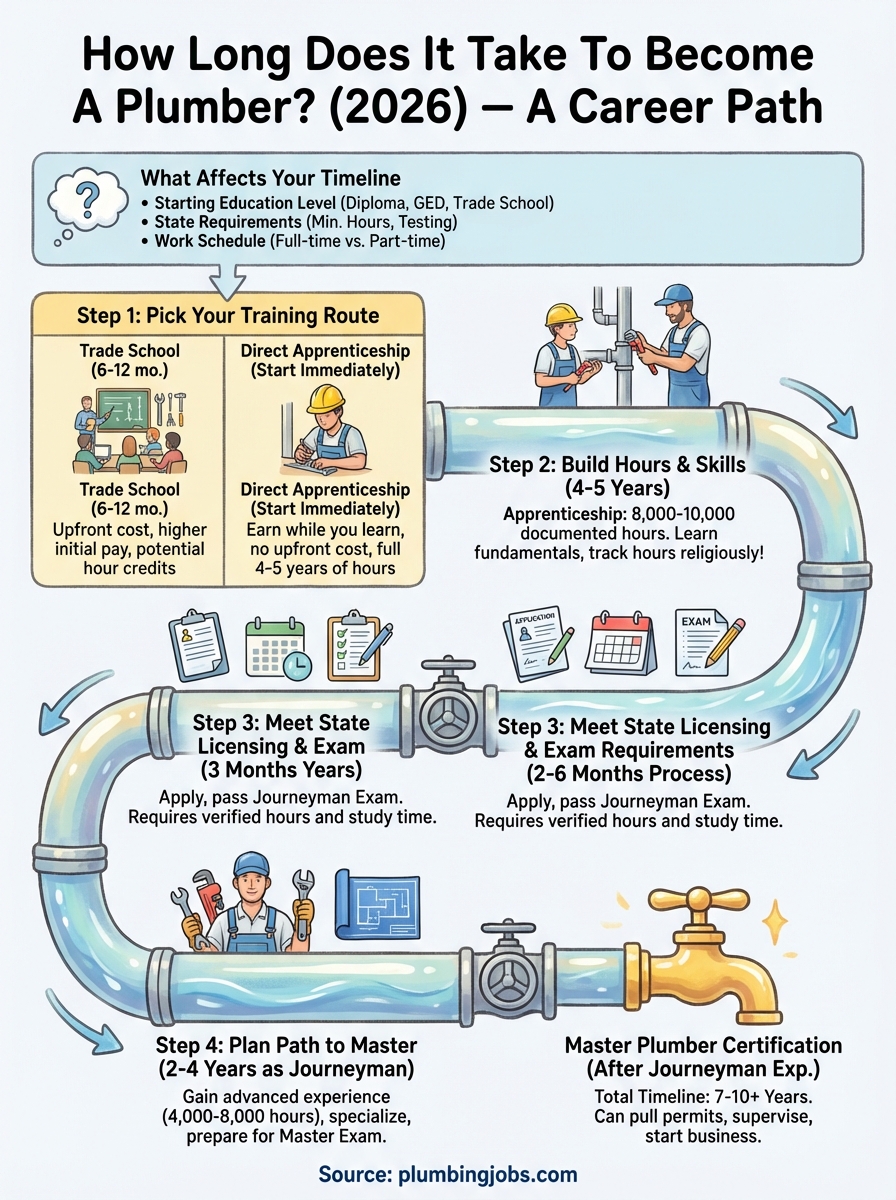
So you’re thinking about becoming a plumber. Smart move. The trade offers solid pay, job security, and real career progression. But how long does it take to become a plumber? The short answer: 4-5 years to reach journeyman status, with master plumber certification requiring additional time depending on your state.
The path isn’t one-size-fits-all. Some people start with trade school programs lasting 6-12 months, while others jump straight into a paid apprenticeship. Each route has different timelines, costs, and benefits. Your state’s licensing requirements also play a major role in how quickly you can advance through the ranks.
At PlumbingJobs.com, we connect plumbing professionals at every career stage with employers across the United States, from entry-level apprenticeships to master plumber positions. Whether you’re researching your options or ready to take the next step, understanding the full timeline helps you plan your career strategically. Here’s what to expect at each milestone.
What affects how long it takes to become a plumber
Several factors determine your timeline to licensure, and understanding them upfront helps you set realistic expectations. Your starting education level, state requirements, and work schedule all play into how long the process takes. Some aspiring plumbers complete their journey in 3-4 years, while others need 6-7 years depending on their circumstances.
Your starting education level
Your educational background shapes which entry point works best for you. If you have a high school diploma or GED, you can start an apprenticeship immediately through unions or contractors. Those who complete trade school first (6-12 months) often enter apprenticeships with better pay rates because they arrive with foundational knowledge. However, trade school adds time to your total timeline even if it accelerates your on-the-job learning.
Starting with trade school education can shorten your apprenticeship hours in some states, but you need to verify this credit with your state licensing board before enrolling.
Your state’s requirements
Each state sets its own minimum work hours and testing standards for licensure. California requires 8,000 apprenticeship hours (roughly 4 years full-time), while Texas mandates 8,000-12,000 hours depending on your license type. Some states like Pennsylvania allow you to test for journeyman status after just 2 years of documented experience. Research your specific state board rules early because this single factor affects your timeline more than any other.
Full-time vs part-time schedule
Your work schedule directly impacts how long it takes to become a plumber. Full-time apprentices working 40 hours per week complete their required hours in 4-5 years. Part-time apprentices splitting time between another job or school might need 7-10 years to accumulate the same hours. Most registered apprenticeships require full-time commitment, but informal arrangements with smaller contractors sometimes allow flexible schedules that extend your timeline.
Step 1. Pick your training route
Your first decision shapes everything that follows in how long does it take to become a plumber. You have two primary training paths: attending a trade school first or jumping directly into an apprenticeship. Both routes lead to the same destination, but they differ in upfront costs, time commitment, and initial earnings. Most successful plumbers choose based on their financial situation and learning preferences rather than which path is “better.”
Trade school programs
Trade schools offer 6-12 month certificate programs that teach plumbing fundamentals before you start working. You’ll learn pipe installation, local codes, blueprint reading, and basic troubleshooting in a classroom setting. Programs typically cost $5,000-$15,000 and don’t pay you during training. However, graduates often command higher apprentice starting wages ($16-$20/hour vs $13-$16/hour) because they require less initial supervision. Check if your state offers hour credits for completed coursework, which can reduce your required apprenticeship time by 500-1,000 hours.
Direct apprenticeship route
Apprenticeships through union halls or private contractors let you earn while you learn from day one. You’ll work full-time under licensed plumbers while attending evening classes once or twice weekly. This path costs nothing upfront, and you start earning $15-$18/hour immediately in most markets. The drawback: you’ll need the full 4-5 years of on-the-job hours without any educational credits. Contact your local union JATC (Joint Apprenticeship Training Committee) or search contractor listings to find openings.
Direct apprenticeships cost nothing and pay you from day one, making them the most accessible entry point if you can’t afford trade school tuition.
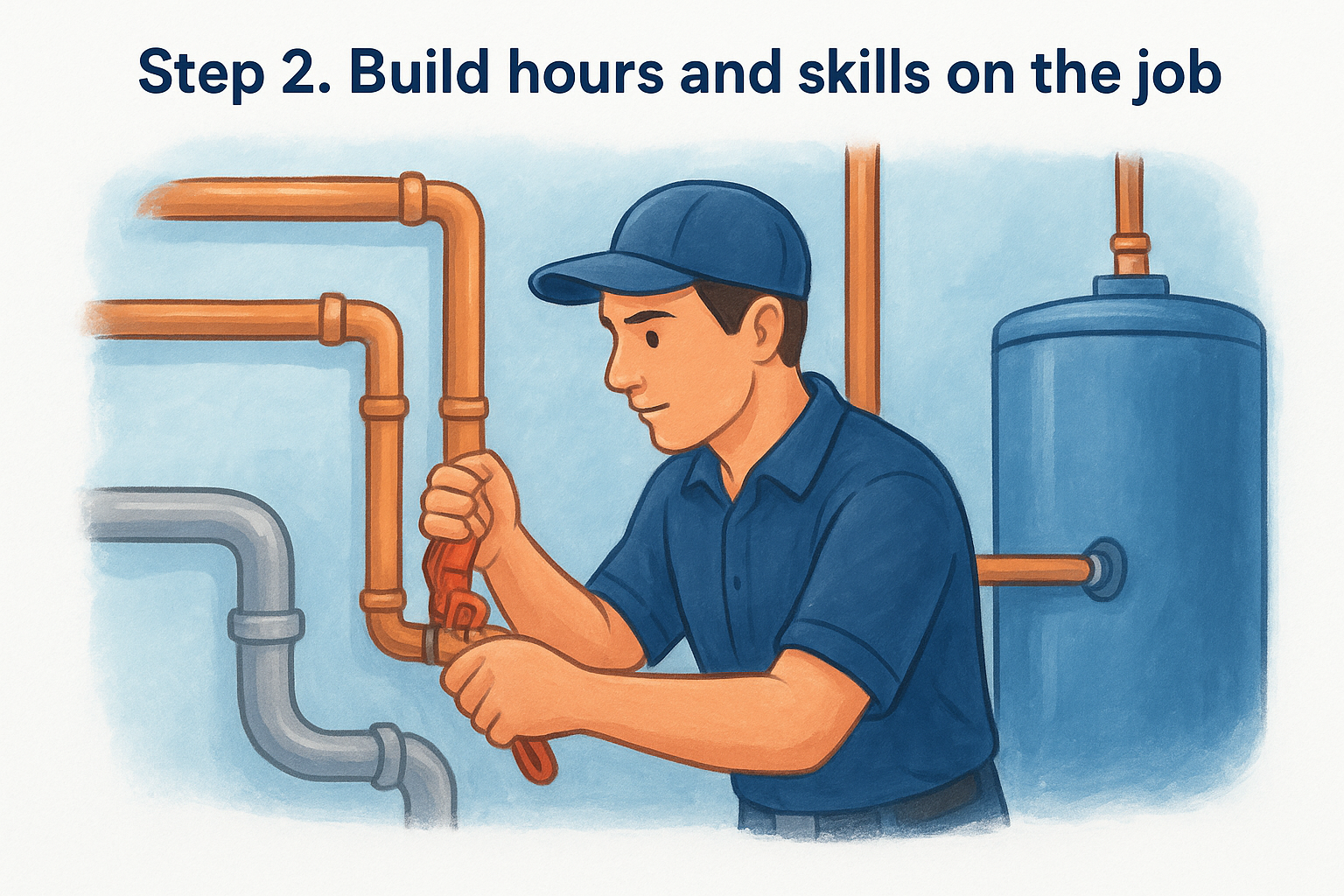
Step 2. Build hours and skills on the job
Your apprenticeship represents the longest phase in how long does it take to become a plumber. You’ll spend 4-5 years working under licensed journeyman or master plumbers while completing 8,000-10,000 hours of documented work (exact requirements vary by state). This phase builds the hands-on experience that classroom training can’t replicate. You’ll rotate through residential service calls, commercial installations, and repair work to develop well-rounded skills.
Track your hours religiously
Keep detailed records of every work hour from day one. Your state licensing board requires verified documentation showing you completed the minimum hours under licensed supervision. Use a simple spreadsheet or dedicated app to log daily start/end times, project types, and supervising plumber license numbers. Many apprentices lose months or years because they failed to document early work properly. Submit your logs to your supervising plumber monthly for signatures rather than waiting until you need them for licensing.
Failing to document your apprenticeship hours correctly can delay your licensing by 1-2 years, even if you completed the required work time.
What you’ll learn during apprenticeship
Your daily tasks evolve as you gain experience. First-year apprentices typically handle material preparation, pipe cutting, and tool management while observing installations. Second and third-year apprentices start running service calls independently for simpler repairs like faucet replacements and drain clearing. By year four, you’ll troubleshoot complex systems and handle installations with minimal supervision.
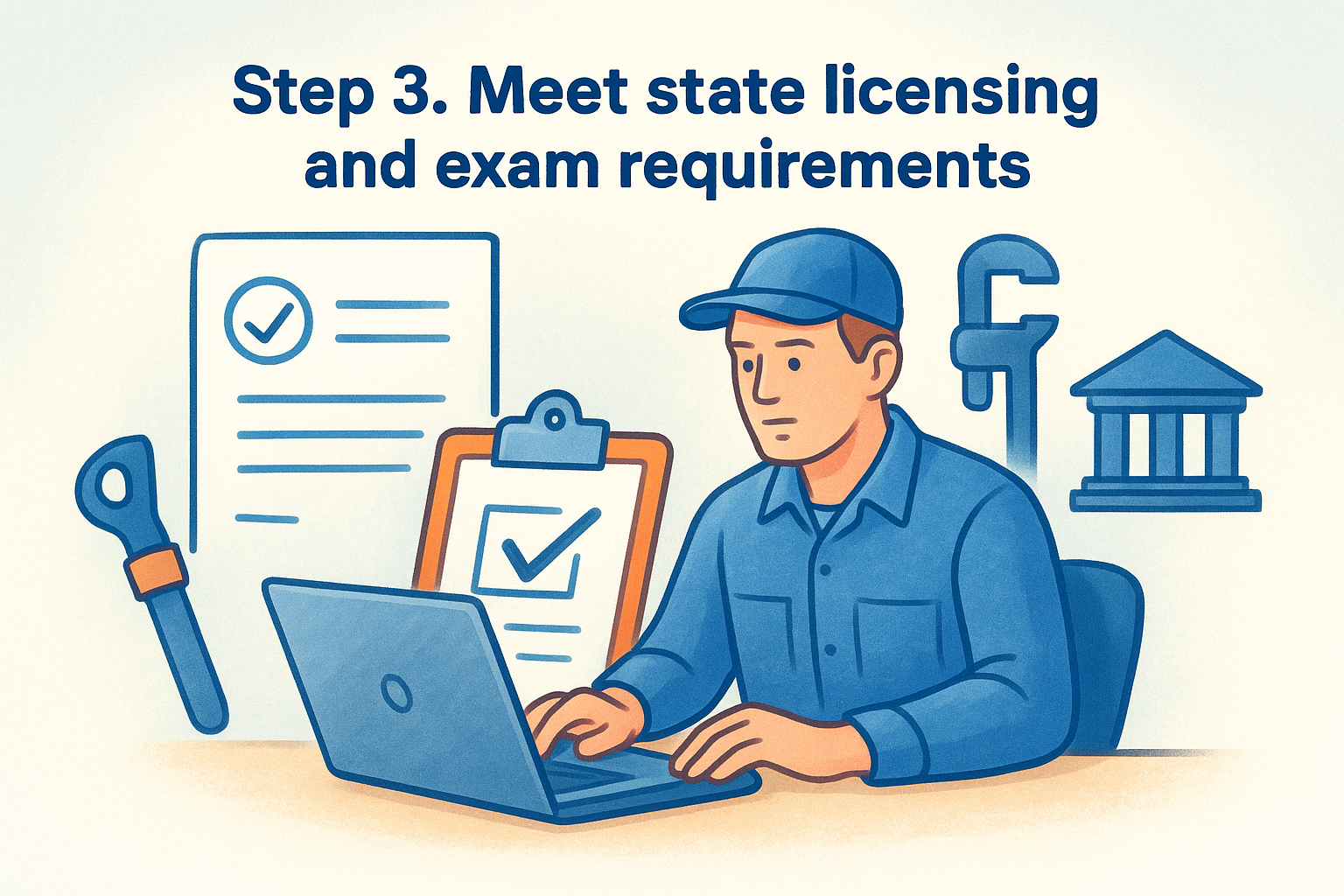
Step 3. Meet state licensing and exam requirements
After completing your apprenticeship hours, you need to apply for your journeyman license through your state’s licensing board. This process typically takes 2-6 months from application to receiving your license, adding to your total timeline for how long does it take to become a plumber. You’ll submit documented proof of hours, pay application fees ($50-$200), and schedule your licensing exam. Each state board operates differently, so check your specific requirements at least 3 months before completing your apprenticeship hours.
Application checklist
Gather these documents before applying: verified hour logs signed by your supervising plumber, proof of trade school completion (if applicable), government-issued ID, and completed background check forms. Most states require notarized signatures on hour verification forms, so plan ahead. Submit your application online or by mail depending on your state board’s system, and expect 4-8 week processing times before you receive exam eligibility.
The licensing exam
Journeyman exams test code knowledge, system design, and problem-solving skills through multiple-choice questions. You’ll face 80-150 questions covering local plumbing codes, pipe sizing calculations, fixture installations, and safety regulations. Study using your state’s adopted code book (typically IPC or UPC) and take practice exams. Most states allow 2-3 attempts before requiring additional training.
Plan to study 2-3 hours daily for 4-6 weeks before your exam date to ensure you pass on the first attempt.
Step 4. Plan your path to journeyman and master
Your journeyman license isn’t the final destination if you want to run your own business or supervise other plumbers. The master plumber certification requires additional years of experience and another exam, extending your total timeline for how long does it take to become a plumber to 7-10 years from your first day as an apprentice. Most states require 2-4 years working as a licensed journeyman before you qualify to test for master status. During this phase, you’ll handle increasingly complex projects and develop the supervisory skills needed to manage crews and permits.
Journeyman experience requirements
Work strategically during your journeyman years to build the experience your state requires. You need 4,000-8,000 documented hours as a licensed journeyman in most states before applying for master status. Focus on commercial projects, code interpretation, and system design rather than routine service calls. Many jurisdictions require specific experience categories like medical gas systems or backflow prevention to qualify.
Master plumber timeline
Plan for 2-4 additional years after receiving your journeyman license to meet master requirements. States like Florida require 1 year, while California demands 5 years of journeyman experience. The master exam tests advanced code knowledge, business management, and complex system design.
Master plumber status typically takes 7-10 years total from your first apprenticeship day, but this certification lets you pull permits, supervise others, and start your own plumbing business.
Next steps
You now understand that how long does it take to become a plumber depends on your chosen training route, state requirements, and work schedule. Most people reach journeyman status in 4-5 years, with master plumber certification requiring an additional 2-4 years of experience. Your timeline starts the day you commit to the trade, whether through trade school enrollment or your first apprenticeship application.
Start your plumbing career by researching apprenticeship programs in your area and verifying your state’s specific licensing requirements. Contact your local union JATC or reach out to plumbing contractors accepting apprentices. Document every work hour from day one to avoid licensing delays later in your career.
PlumbingJobs.com supports plumbing professionals at every stage of their careers. Visit our plumbing industry blog for more resources about licensing, training programs, and career advancement strategies that help you navigate each milestone of your plumbing journey.
Want plumbing jobs delivered to your inbox?
Want plumbing jobs delivered to your inbox?
Partner Site

